The Greek government has its eyes firmly set on the Brussels Summit of October 15–16, as the decisions made by European leaders will determine whether Greece can unlock up to €700 million in additional fiscal space. This would allow the country to expand its support measures for households and businesses beyond the €400 million reserve already earmarked in the Budget to counter the impact of the energy crisis.
Athens is seeking greater flexibility in fiscal rules, so that the additional VAT revenues flowing into state coffers — driven by rising prices and consumption — can be redirected toward targeted interventions without being counted against net expenditure limits.
However, for this path to open up, a European-level agreement must come first. Without it, any additional support will have to fit within already tight fiscal margins, without disrupting the Budget’s core projections. The first priority is heating oil, whose distribution season begins on October 15.
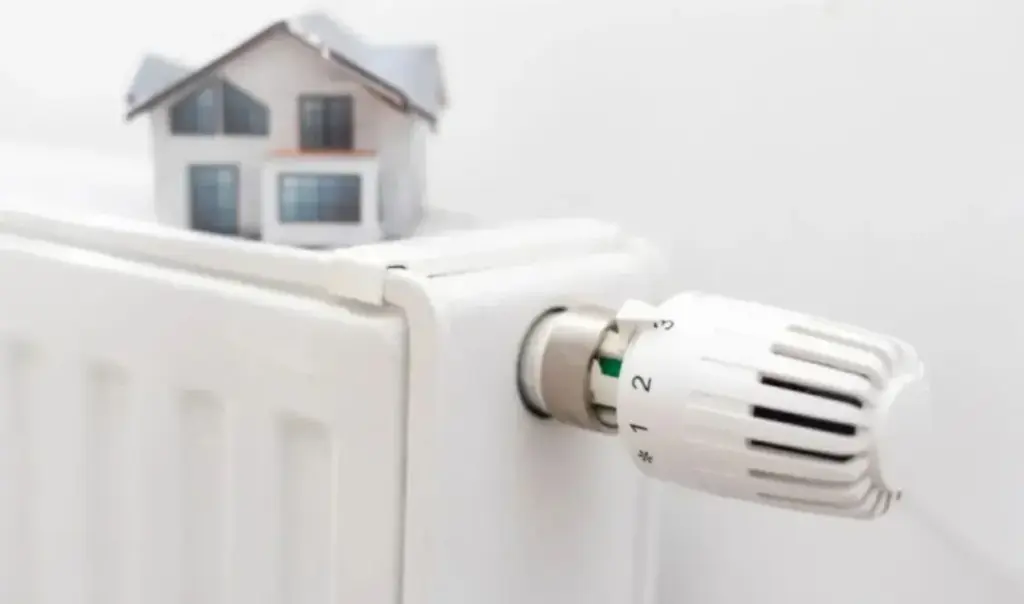
With international oil prices remaining elevated, the starting price on the Greek market is expected to exceed €2 per litre, placing a significant burden on households heading into winter. The government’s plan envisions a two-pronged intervention aimed at keeping the final price below €1.75 per litre and, if conditions allow, bringing it as close as €1.40 per litre.
According to information available, the package of measures includes:
A 20–30% increase in the heating allowance for those using heating oil, natural gas, LPG, electricity, wood pellets, and firewood, with no changes to the income or asset eligibility criteria. Following this adjustment, the calculation base for heating oil will rise from €300 to €360–€390, for natural gas from €325 to €390–€420, and for electricity from €380 to €455–€495. The additional amounts to be received by more than 1 million households are expected to range from €35 to €230, depending on the location of the primary residence. As an indicative example, according to market sources, a household without children in Velouchi received approximately €730 last year — with the increase, the allowance is estimated to rise to €840–€960, representing an increase of up to €230. Similarly, a family with two children in Attica will receive €245–€280, compared to €210 last year, with the boost amounting to €35–€70. Income and asset eligibility criteria remain unchanged, with the income threshold set at €16,000 for single individuals and €24,000 for married couples, with an additional €5,000 per child. For single-parent families, the threshold starts at €29,000, while for those running a business, gross revenues may not exceed €80,000. Property ownership limits also remain unchanged at €200,000 for single individuals and €260,000 for married couples and single-parent families, with the applicable increases for dependent children.
A pump subsidy on heating oil, involving participation from oil refineries, which could reach up to 30 cents per litre in order to reduce the final price for households. At the same time, the government is considering reinstating a cap on profit margins for fuel distributors and petrol stations, to keep costs in check across the entire supply chain. These two measures form the first line of defence against rising heating costs — but the government’s plan doesn’t stop at fuel. The next major challenge is preventing the energy price surge from spreading through the rest of the economy. Rising energy costs increase transportation and operational expenses for businesses, creating the risk that these costs will gradually be passed on to the prices of goods and services, reigniting inflation.
Rolling measures
This is precisely why the economic team does not want to exhaust all available resources from the outset, given that international developments remain fluid. As a result, interventions are being planned with specific time horizons, while a framework of “rolling” measures is on the table — measures that can be adjusted in line with energy price movements and activated according to the intensity and duration of price increases. Within this framework, the reactivation of previously implemented interventions is being considered, should conditions require it:
Fuel Pass, offering a fuel purchase subsidy ranging from €25 to €60, depending on vehicle category and place of residence.
Market Pass, providing a grocery allowance of between €100 and €200 for eligible households that meet the established criteria.
Coverage of up to 60% of the additional burden on electricity bills, for a defined period and under conditions yet to be determined. How far this plan can be extended will largely be decided at the October 15–16 Summit. Should additional fiscal space and greater flexibility in European fiscal rules be secured, the government will be able to go beyond the initial €400 million package — which in theory could cover household needs through to the end of February 2027.
Published in the newspaper “Parapolitika”