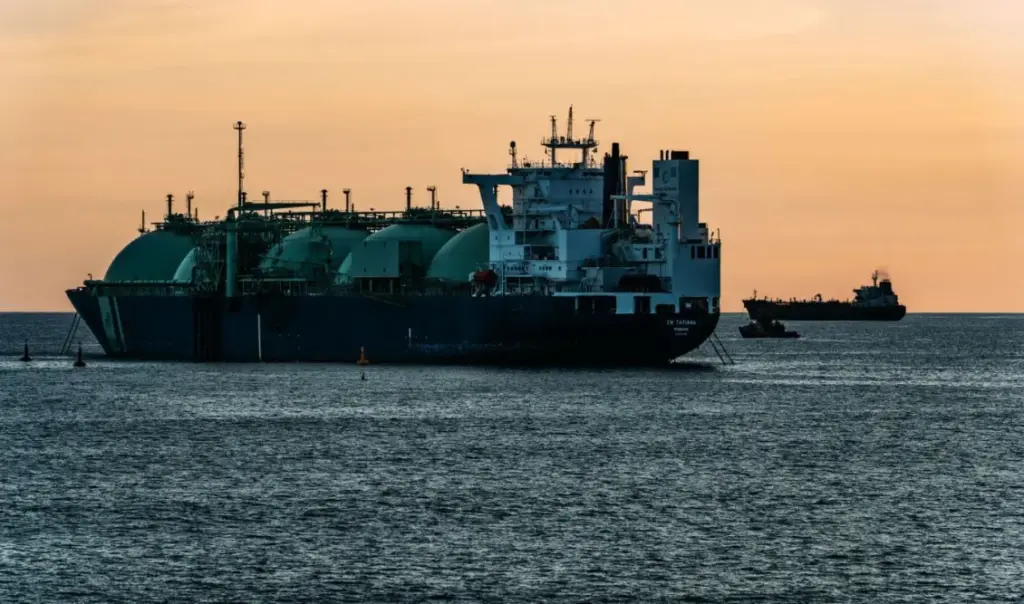
The Vertical Corridor represents a major opportunity for Greece to strengthen its role on the European energy map, leveraging its natural gas infrastructure to create an alternative supply route for Central and Eastern European markets. A 20-year American LNG supply agreement, a partnership between Aktor and DEPA Commercial, and strong political backing from Athens and Washington together form an initiative of significant economic and geopolitical importance.
At the same time, however, as this major energy and geopolitical effort unfolds, a critical question arises: who stands to gain if Greece’s efforts are weakened and its energy role is diminished — leaving greater room for Turkey and Albania to stake their claim on the regional energy map.
The Vertical Corridor: Greece as Europe’s energy gateway
Greece has the potential to become a major energy gateway. The Vertical Corridor connects natural gas infrastructure across the region. LNG arrives by tanker at Greek terminals, is regasified, and then travels via pipelines to Bulgaria, Romania, and other Central and Eastern European markets.
American LNG offers a credible alternative to Russian gas, significantly reducing Europe’s dependence on Moscow. Leading the commercial development of the initiative is Alexandros Exarchou, head of Aktor and CEO of Atlantic CLNG Trade, working alongside Konstantinos Xifiaris, CEO of DEPA Commercial and chairman of the joint venture.
The partnership between Aktor and DEPA Commercial — a company under public oversight through the Hellenic Corporation of Assets and Participations (HCAP) — bridges private enterprise with state participation. The agreement with Venture Global, as now expanded, provides for the supply of 1 million tonnes of LNG per year for 20 years starting from 2030.
Environment and Energy Minister Stavros Papastavrou and U.S. Ambassador to Greece Kimberly Guilfoyle have both played key roles in advancing this collaboration, reinforcing the political and diplomatic support behind the project.
The commercial agreement is therefore part of a broader effort by governments, businesses, and network operators to establish Greece as a strategic energy gateway for Europe.
Secretary of State Rubio’s visit to Athens further strengthens this strategic relationship. The American official expressed full commitment to energy cooperation with Greece and explicitly linked energy security to national security.
The Greek gateway also serves to boost American LNG exports — reinforcing shared interests, even if it does not constitute a guarantee of military protection. Support for the initiative extends beyond the current government. PASOK MEP and former Energy Minister Yannis Maniatis has argued that the Corridor has effectively countered Turkish strategic planning. Should Greece’s opportunity be lost, Turkish ambitions in the regional energy space could receive a significant boost.
The investigative reporting by the Wall Street Journal represents a critique driven by geopolitical and business interests opposed to Greece’s central role in the Vertical Corridor. Using that publication for political purposes could undermine Greece’s strategic prospects and strengthen Turkey’s position as an alternative energy supply hub.
“What is the Vertical Corridor? To put it simply, it is the government’s policy choice to leverage the energy infrastructure we already have — our pipelines and our LNG regasification terminals — so that we can supply our northern neighbors. We have chosen, for the time being, for that gas to be American gas, but these are commercial agreements that make use of Greek infrastructure. They primarily concern our northern neighbors. America and the government, as well as the companies involved, chose to do this through Greece. They could have done it through another country,” said Prime Minister Kyriakos Mitsotakis.
The Vertical Corridor is a significant national opportunity. With transparency and meaningful cooperation, Greece can solidify its position on the European energy map.