Four years after the Russian invasion of Ukraine and the collapse of the Germany–Russia energy relationship, a scenario that until recently seemed unthinkable is making a comeback: the return of Russian natural gas to Germany, through a political bridge running through the far-right Alternative for Germany (AfD). According to Reuters, Kirill Dmitriev — who has taken on high-level economic contacts on behalf of the Kremlin — and the AfD leadership are reportedly preparing a meeting for March 2027, based on two sources familiar with the discussions. The central focus of the talks is expected to be the potential restoration of Russian energy flows to Europe’s largest economy.
Read also: Germany: SPD pulls ahead of AfD in Mecklenburg-Pomerania
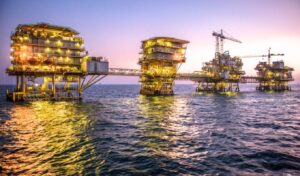
At the heart of the discussions are the Nord Stream pipelines — which before the war stood as the symbol of deep energy interdependence between Germany and Russia, but following the explosions of September 2022 became a symbol of the rupture between Moscow and the West.
According to the same sources, AfD co-leaders Alice Weidel and Tino Chrupalla are expected to attend the meeting, with potential venues including Israel, the United Arab Emirates, or India.
Representatives of both the AfD and Dmitriev declined to comment on the reports. The meeting, if it takes place, will depend on a peace framework between Russia and Ukraine being reached beforehand. The organizers, according to sources, are seeking to establish a platform that would bring together the AfD, Russia, and potentially representatives of the United States.
From energy dependence to crisis after 2022
Before Russia’s invasion of Ukraine in 2022 and the subsequent imposition of sanctions, Russia supplied more than one-third of Germany’s crude oil imports and over half of the country’s natural gas imports. The cutoff of Russian energy flows caused serious disruptions to the German economy, while the sabotage of the Nord Stream underwater pipelines in September 2022 effectively ended the previous energy relationship between Berlin and Moscow.
Alice Weidel has repeatedly come out in favor of resuming Russian oil and gas imports, arguing that cheap Russian energy was for decades one of the key pillars of German industrial strength.
AfD seeks a role in German foreign policy
The potential meeting carries particular political significance, given that while the AfD is not part of the governing coalition, its electoral rise has shifted the balance of power in Germany. The party recently recorded a strong performance in regional elections in Saxony-Anhalt and continues to consolidate its presence — particularly in the eastern regions of the country, where ties with Russia remain a more charged political issue.
The AfD is attempting to frame a return to Russian natural gas as an economically realistic option and a direct response to the high energy prices weighing on the German economy.
Reactions in Berlin
The prospect of such a rapprochement is already drawing pushback in Germany. Greens MP Michael Kellner, who held responsibility for energy policy during the crisis period, warned that Germany must not fall into a new dependency on Russia. “We cannot repeat the mistakes of the energy crisis,” he said, arguing that Moscow uses energy as a tool of political influence.
Similar concerns were raised by Roderich Kiesewetter, a Christian Democrat MP aligned with Chancellor Friedrich Merz, who argued that reactivating Nord Stream would have serious consequences for European security.
At the same time, the AfD continues to insist that energy cooperation with Russia could offer a viable solution for restoring the competitiveness of the German economy.
The behind-the-scenes contacts come at a moment when Germany is still searching for a new equilibrium following the loss of cheap Russian energy, while Moscow is working to maintain channels of influence across Europe.