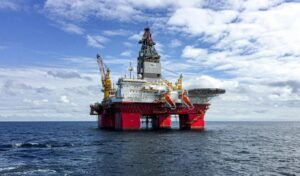
A significant step toward expanding the Vertical Gas Corridor into the Western Balkans is underway, as Serbia and North Macedonia prepare to join the Initiative. The move further elevates Alexandroupolis as a critical hub on the energy map of Southeastern and Central Europe. The natural gas system operators participating in the Initiative visited the Alexandroupolis Floating Storage and Regasification Unit (FSRU) on Thursday, September 3, with representatives from the two countries set to join the framework also in attendance.
Read also: Stavros Papastaurou: “Alexandroupolis is now becoming an energy hub”
Vertical Corridor: The next step with Serbia and North Macedonia
According to an announcement by Gastrade, the operator of the Alexandroupolis LNG terminal, the visit took place ahead of the signing of a Memorandum of Understanding (MoU) to expand the Initiative to include both countries.
The accession of Serbia’s and North Macedonia’s system operators is expected to strengthen cooperation between the energy markets of Southeastern and Central Europe, while laying the groundwork for new natural gas transmission routes into Western Balkans markets.
During the terminal visit, delegates received a comprehensive briefing on the facility’s operations and capabilities, as well as its contribution to regional energy security and resilience. Participants were also presented with the terminal’s role in developing new supply routes, along with the safety and environmental protection standards applied in its day-to-day operations.
Papastaurou: The Alexandroupolis FSRU is of strategic importance
At Gastrade’s facilities in the port of Alexandroupolis, the system operators’ representatives met with Greece’s Minister of Environment and Energy, Stavros Papastaurou.
The minister reiterated the strategic importance of the Alexandroupolis FSRU for both national and European energy policy and security. He also expressed the Greek government’s unwavering support for initiatives that strengthen Greece’s role as an energy gateway to Southeastern and Central Europe.
That same afternoon, a working session was held among the operators, focused primarily on finalizing the agreement to extend the Memorandum of Understanding to include the system operators of North Macedonia and Serbia.
The US message on Russian natural gas
The meeting was addressed by Joshua Volz, Special Envoy of the United States Department of Energy, who underscored the importance of regional cooperation and the development of energy infrastructure.
He stressed that such infrastructure can play a decisive role in permanently ending the European Union’s dependence on Russian natural gas, by diversifying both supply sources and delivery routes. At the same time, these projects can help build a more resilient European energy system capable of withstanding future shocks.
Alexandroupolis: A gateway to the Western Balkans
The Alexandroupolis terminal serves as a key piece of infrastructure and entry point for the broader energy initiative, enabling the flow of liquefied natural gas from global markets to countries across the region.
The participation of North Macedonia and Serbia is described as a crucial step toward completing and extending the initiative’s reach into Western Balkans markets. It also creates additional alternative supply routes for landlocked Central European markets, such as Hungary and Slovakia, offering them a pathway to accelerate diversification of their energy supply and gain greater access to gas from the global market.