Setting the next election for the spring of 2027 has reshuffled the deck, transforming the electoral battle from a sprint into a marathon — one that will demand endurance and resilience above all else. The parties that stand out during this extended pre-election period will be those that demonstrate political cohesion, well-developed policy platforms, and experienced figures to champion them. With so much time ahead, communication fireworks alone won’t be enough to paper over political shortcomings. The shift in the election date has effectively neutralized the element of surprise that newly founded parties might theoretically have exploited.
The road ahead is a long one, yet every political player is eager to secure the best possible starting position — and the Thessaloniki International Fair (TIF) has traditionally served as that starting line, more so this year than ever. As this lengthy pre-election period gets underway, each party has set its own goals and milestones. Through his presence in Thessaloniki, the Prime Minister will seek to demonstrate and convince voters that New Democracy remains the only realistic governing option — one that guarantees continuity, stability, and security for citizens.
Read also: The key dilemmas that will decide the elections: How Greece’s political climate is shifting ahead of the vote
Testing their strength
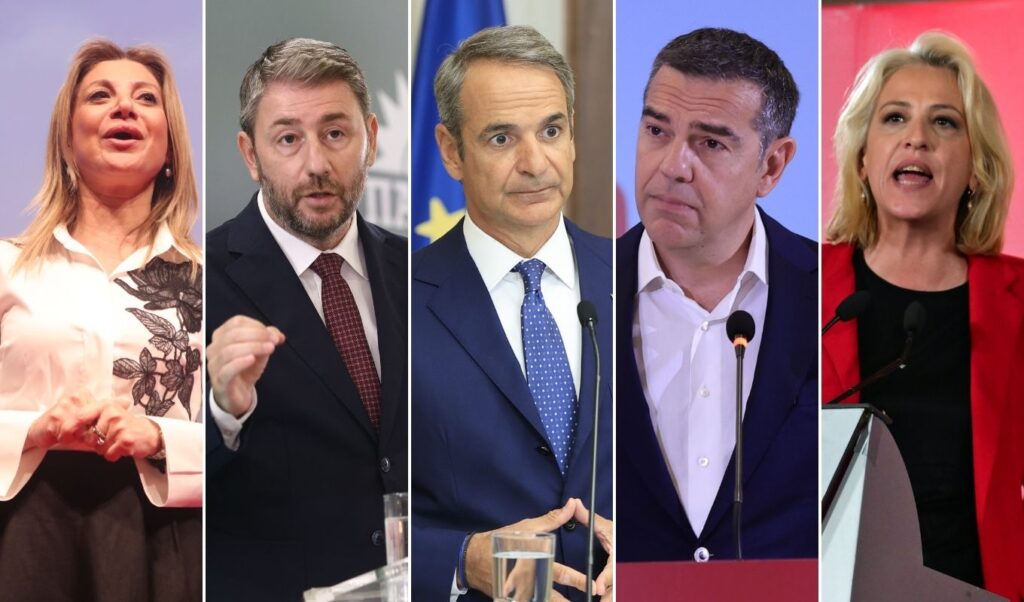
The government faces a public opinion landscape where a majority would prefer political change at the next election — yet that desire remains politically unrepresented, as no dominant political voice has emerged to channel it. On the other side of the spectrum, the ruling party appears, at least in the polls, to be holding steady at around 28–30%, a figure that gives it reason to believe it can build further. The role of champion of political change is currently being contested — with modest poll numbers — by ELAS and PASOK.
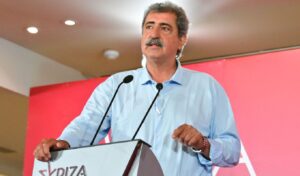
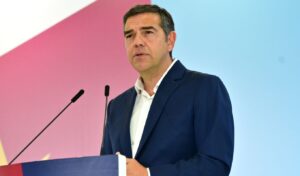
N. Androulakis has been active throughout the summer, bringing in new figures from the progressive camp and leveling sharp criticism at A. Tsipras. The latter, following his initial positive polling results that placed him in second place, is now attempting to project a softer political image — one that distances him from his recent governing record and allows him to broaden his appeal. ELAS, however, faces battles on multiple fronts. Beyond New Democracy and PASOK, SYRIZA will also seek to stem the losses it has been suffering and reposition itself as the authentic force of left-wing renewal, in contrast to what it portrays as Tsipras’s personality-driven project. Hope for Democracy, led by M. Karystianou, is struggling to develop into a solid political force, hampered by ideological missteps and a lack of experience. Meanwhile, the Communist Party (KKE) and Greek Solution continue to appear comparatively more stable.
Samaras holds the key
Current events are working in Ms. Latinopoulou’s favor and bringing her political positions into sharper relief. Yet she — like the other parties of the patriotic right and New Democracy itself — is waiting to see what Samaras decides to do. The ruling party has already begun pushing back against the former Prime Minister over national issues, sensing the damage he could inflict — damage that may well prove greater than anything the center-left opposition is capable of. A center-left whose component parts have now decided to go head-to-head, leaving behind any thought of alignment or cooperation.
Originally published in the newspaper Karfi