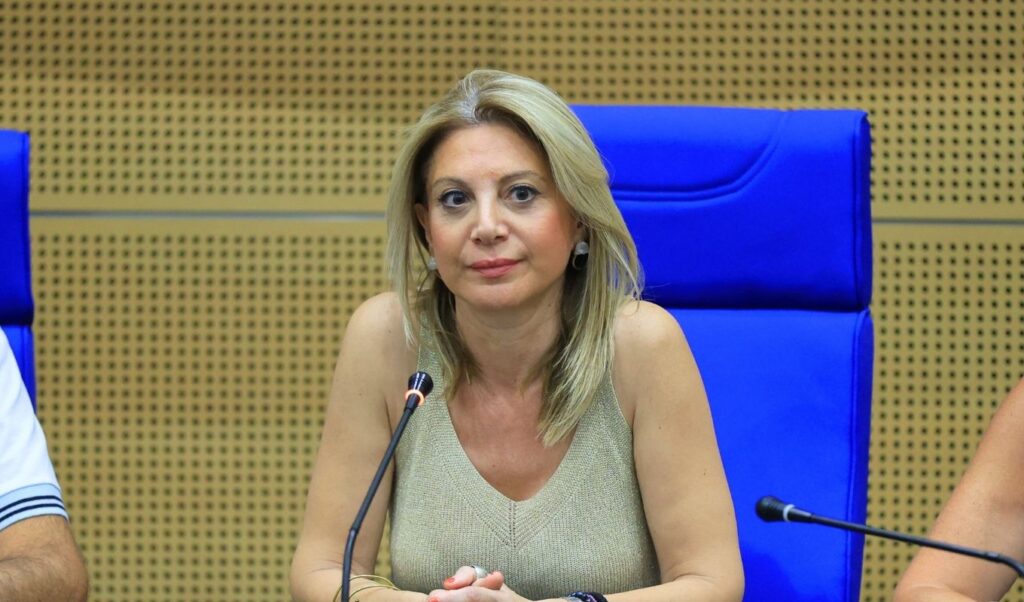
The damage inflicted on Maria Karystianou‘s party by the mass exodus of senior members over the summer appears to be irreversible. Thanasis Avgerinos ultimately proved to be a far tougher political operator than many within the party had anticipated, as he relentlessly attacked his former party and its informal vice president, Maria Gratsia, on a daily basis.
Read also: Maria Karystianou prepares regional tour of Achaia — where she is expected to visit
Maria Karystianou will find it extremely difficult to rebuild her party, as deep resentment continues to simmer over the allegations made by those who walked out. And as her bitterest political rivals are quick to point out, not even the prayers she offered last week at the church of Saint Nektarios on Aegina — alongside Maria Gratsia — are likely to save her now.
Major poll collapse for Maria Karystianou’s party
Polling companies are reportedly painting a grim picture: Maria Karystianou’s party is hurtling toward the edge with its brakes cut. The polling firm Interview recorded a sharp decline for “Hope for Democracy,” dropping from 5.3% in July to just 3.6% in August. Political analysts have attributed this dramatic fall to the fact that the crisis originated from within the party itself — and that the accusations were levelled by individuals who had previously been among Karystianou’s most vocal and committed supporters.
How the crisis unfolded
The crisis did not, in other words, stem from external forces — a scenario in which Maria Karystianou could have once again claimed she was under attack from the political establishment.
At the same time, people who have worked closely with her in the past say that the way she handled both the crisis and her former party members displayed a striking degree of arrogance and contempt toward those who had supported her. By sweeping them all under the label of saboteurs, Karystianou projected the image of a vain and dismissive leader.
The president of “Hope for Democracy” failed to convince even her own people that “the changes she made were necessary because the party had turned inward — since Avgerinos’s habit of seeing enemies everywhere had isolated it from both the media and wider society.”
A critical shortage of experienced cadres
She did not even bother to explain why she made those decisions — despite the fact that, as her own allies acknowledge, there were legitimate reasons behind them. Her refusal to publicly present her party’s programme, citing fears that “rivals would steal it,” only reinforces the impression that her leadership lacks seriousness — or that no coherent programme actually exists yet.
The truth is that Maria Karystianou is critically short of members with genuine experience in developing party policy. Those who remain can be counted on one hand, and it is from this shrinking pool that the most experienced voices must somehow be found.