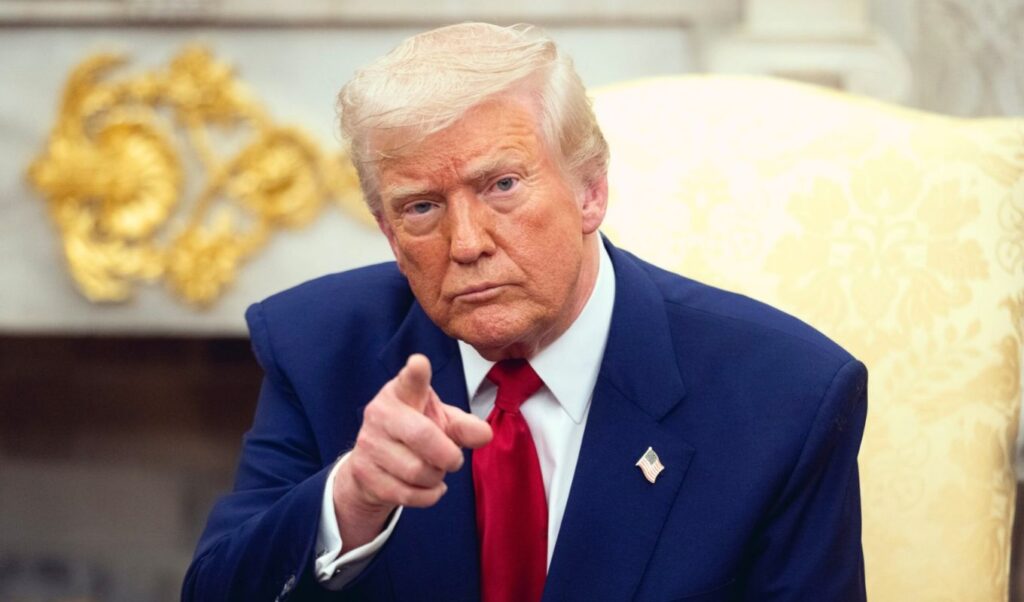
The confrontation between the United States and Iran is entering a new phase, as Donald Trump dramatically escalates economic pressure on Tehran and now warns even third-party countries of consequences if they continue providing economic support to Iran. Tehran responded on Thursday (August 20) by condemning the new US economic and trade sanctions, labeling them “economic terrorism,” and arguing that they primarily harm ordinary Iranian citizens. The new confrontation is no longer confined to bilateral relations between Washington and Tehran, as American threats now extend to countries, businesses, and financial institutions that continue to maintain economic ties with Iran.
US to allies on the “economic D-Day” against Iran: “You’re either with us or against us”
US Treasury Secretary Scott Bessent warned Washington’s allies on Thursday that they will face sanctions if they continue economic dealings with Iran, as the Trump administration prepares to announce new, stricter measures against Tehran. Speaking on CNBC’s “Squawk on the Street,” Bessent sent a clear message to countries and businesses that continue to cooperate with Iran, stating bluntly: “You are either with us or against us.” The Treasury Secretary announced the activation of secondary sanctions targeting countries and companies that continue to conduct transactions with Tehran. “If you insist on doing business with them — whether transferring money, buying oil, or conducting ship-to-ship cargo transfers — the Treasury Department and the US government will use every tool and resource at their disposal against you,” said Bessent, 63.
Bessent argued that the time has come for US allies — and the international community at large — to decide whether they will support American policy toward Iran. “It is time for our allies and the rest of the world to make a decision,” he said, adding that Washington would seek to “crush the economy of this murderous regime.” According to Bessent, the new measures will limit Tehran’s ability to fund and support the armed organizations it backs across the region. He also estimated that the sanctions will make it harder for the Iranian government to cover military expenditures, at a time when the country is already grappling with high inflation in both food prices and the broader economy.
A “two-phase strike” against Tehran
The US Treasury Secretary described the American strategy as a “two-phase strike,” combining a blockade with sweeping new economic sanctions. “We have the blockade and we will have the toughest sanctions in history,” he declared, expressing confidence that the policy would deliver results. He cited Venezuela and Cuba as examples, arguing that the same approach has worked or is working in both cases. “It worked in Venezuela when we imposed the blockade. It’s working in Cuba right now, and it will work in Iran — and this regime will collapse,” he said.
Trump warns of “terrible economic consequences” for any country that aids Iran
On Wednesday (August 19), Donald Trump threatened “terrible” economic consequences against “any country” that offers assistance to Iran, further intensifying Washington’s pressure on Tehran — months after the war began with the US-Israeli strikes of February 28. “I hereby announce that any country that allows its financial institutions, businesses, airports, or government institutions to provide a lifeline of any kind to Iran will itself face terrible economic consequences,” Trump wrote on Truth Social.
In his post, Trump accused Tehran of failing to seize the “great opportunity” he had offered to reach a “deal” with him. “I am therefore announcing the most crushing economic warfare operation ever conducted against any country,” he continued, promising “economic war and isolation at an unprecedented level.” “Oil smuggling, currency exchanges, liquidity transfers, foreign exchange bureaus, ship registries, shell companies — all of this must stop now,” he added, in what was clearly a warning to countries he suspects of providing assistance to Iran — openly or covertly. He did not, however, specify the exact measures and sanctions he intends to implement.
Tehran labels new US sanctions “economic terrorism”
Iran’s Foreign Ministry condemned the newly announced US economic and trade sanctions, stating that they deliberately target ordinary Iranian citizens and amount to “economic terrorism” and crimes against humanity. Iranian Foreign Minister Abbas Araghchi also hit back at the Trump administration, arguing that the new economic campaign is an attempt to distract attention from the United States’ own domestic economic problems. He further warned that the continuation of such a policy will deepen Iranian hostility toward the US, while also cautioning that American economic pressure poses a broader threat to the global economy and the sovereignty of other nations.