The summer recess of the Dormition of the Virgin Mary holiday is over, and starting today the government machine returns to its posts in a state of full operational readiness, focusing on preparations for the Thessaloniki International Fair and subsequently on accelerating and completing projects tied to Recovery Fund resources.
Read: “Operation North” by New Democracy: Mitsotakis’ “landing” in Thessaloniki ahead of the polls
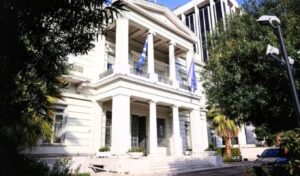
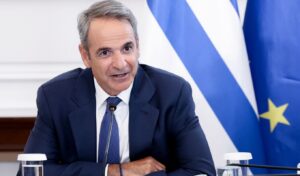
In this climate, the return to Maximos Mansion marks the starting point of an intensive political stretch, with the prime ministerial team tasked with finalizing the mix of measures and announcements to be presented from the podium of the Thessaloniki International Fair. The central objective running through all planning efforts up to the spring elections — now as before — is to rebuild the broad social majority that secured New Democracy two consecutive majority governments. Along this axis, the focus — beginning with the Thessaloniki Fair — falls on re-engaging right-wing and centrist voters who have drifted away in recent years and now find themselves in the “grey zone” of the undecided.
The new political season officially opens with a cabinet meeting on August 24, where the roadmap for legislative initiatives and reforms to be pushed through in the autumn, with a horizon extending to Christmas, will be set out.
Mitsotakis: Infrastructure on track, the Thessaloniki Fair package, and voter realignment
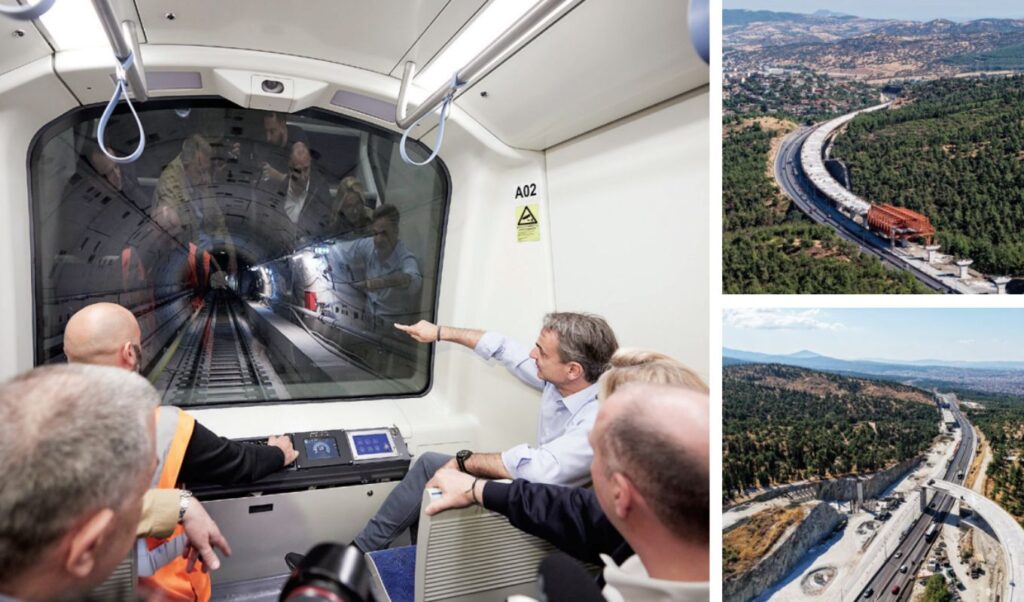
Shortly after, Kyriakos Mitsotakis travels to Thessaloniki on August 27 to inspect major infrastructure projects currently under way — including the metro extension to Kalamaria, the Fly Over highway project, and the prospect of a large-scale urban regeneration of the Thessaloniki International Fair grounds, among others — as well as a series of meetings with business and productive sector bodies. On August 28, he will conduct a tour of Western Macedonia.
That region, and more broadly Macedonia and Thrace, are acquiring particular political significance — on one hand due to the challenges posed by the shift away from the lignite-based energy production model and the transition to the post-lignite era, and on the other due to the fragmentation being recorded in the party’s traditional voter base, with some supporters drifting toward formations to its right or into the pool of undecided voters.
Winning back this audience as a whole, starting from Central and Western Macedonia, is the primary objective of Maximos Mansion, with the Thessaloniki International Fair serving as the first major political milestone in that direction.
Optimism prevails within government circles, with senior staff estimating that the voter realignment goal is achievable through the rollout of a social agenda — to be included in a prime ministerial announcements package worth close to €2 billion — featuring targeted relief measures for the middle class and the self-employed, initiatives to support vulnerable social groups, and further steps toward a sweeping modernization of the state.
Within this framework, Maximos Mansion is firmly banking on a three-pronged approach of “fiscal responsibility–reforms–social policy,” aiming to convert dissatisfaction into renewed consolidation and restore the bonds of trust between the ruling party and broad sections of society.
The central message to voters is that, despite eight consecutive years in government, Kyriakos Mitsotakis and his ministers retain the political energy, the reformist resolve, and a clear vision for what still needs to be done, with a horizon set on Greece in 2030.
Priority: absorbing committed funds in full
Regarding the Recovery Fund, the countdown has begun, as Greece — like the other EU member states — must submit its final payment requests by September 30.
The completion of these formal procedures, however, does not mark the end of the road. The projects and capital of the European mechanism will continue to feed the Greek economy and shape the development landscape at least until 2031. The government’s central priority remains the full absorption of committed funds, without a single euro being lost.
To achieve this goal, the national plan Greece 2.0 has undergone adjustments, taking advantage of the flexibility shown by the European Commission in the completion of national programmes. According to the European Commission’s roadmap, the preliminary assessment is to be transmitted to the Economic and Financial Committee by November 20.
Following the committee’s opinion, due by December 8, the Commission will issue its final approval decisions by December 18, enabling the disbursement of funds by December 31, 2026.
Published in Apogevmatini