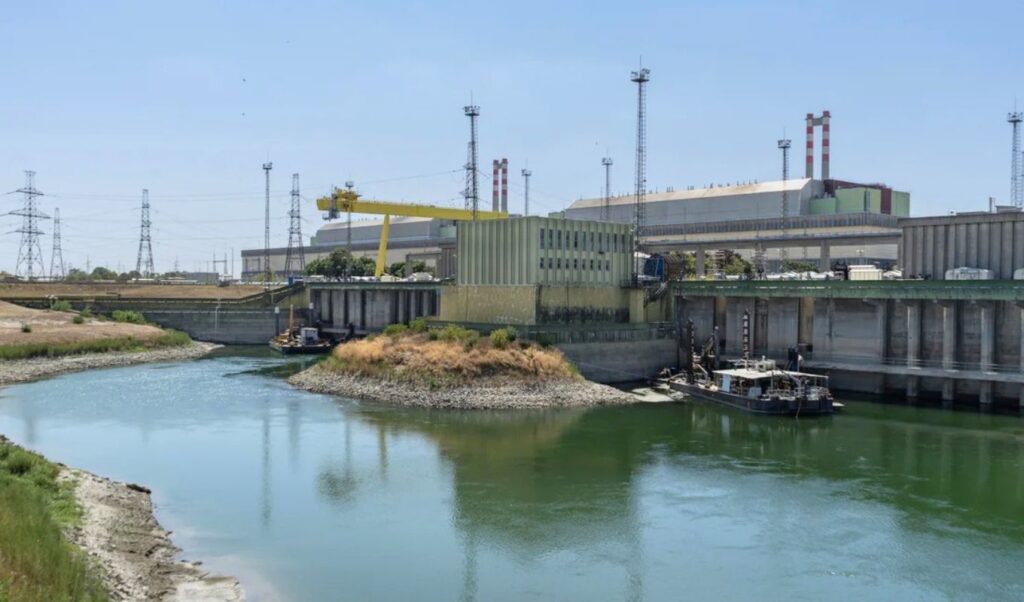
The Hungarian government expects the sinking of two barges in the Danube river near the Paks nuclear power plant to begin later today, Prime Minister Péter Magyar announced. The plant is currently operating at approximately 25% of its capacity due to an unprecedented historic drought and record-low water levels in the Danube river, from which the nuclear facility draws the water essential for cooling. Neighboring Romania shut down its last operational nuclear reactor on Thursday, as the drought that has gripped Europe this summer has caused severe disruptions to power generation, transportation, and public health systems. The drought has also raised urgent questions in both Hungary and Romania about how nuclear energy can adapt to an increasingly extreme climate.
Read also: Hungary: Nuclear power plant on the brink of shutdown due to heatwave and drought
Why is Hungary sinking two barges in the Danube?
The government stated that two barges, each 80 meters in length, will be deliberately sunk near the nuclear power plant in order to temporarily raise the water level, allowing the plant’s two turbines to continue operating while a dam is constructed across the riverbed. Authorities also announced plans to build a “weir” — a barrier placed transversely across the riverbed — designed to regulate water flow. This process is expected to take several weeks. “The controlled sinking of the barges is expected to begin in the late afternoon, with the aim of raising the water level in the Danube,” Magyar said in a video posted on Facebook. The sinking of the barges could raise water levels by up to 20 centimeters in the short term, while the river dam is expected to raise them by as much as one meter.