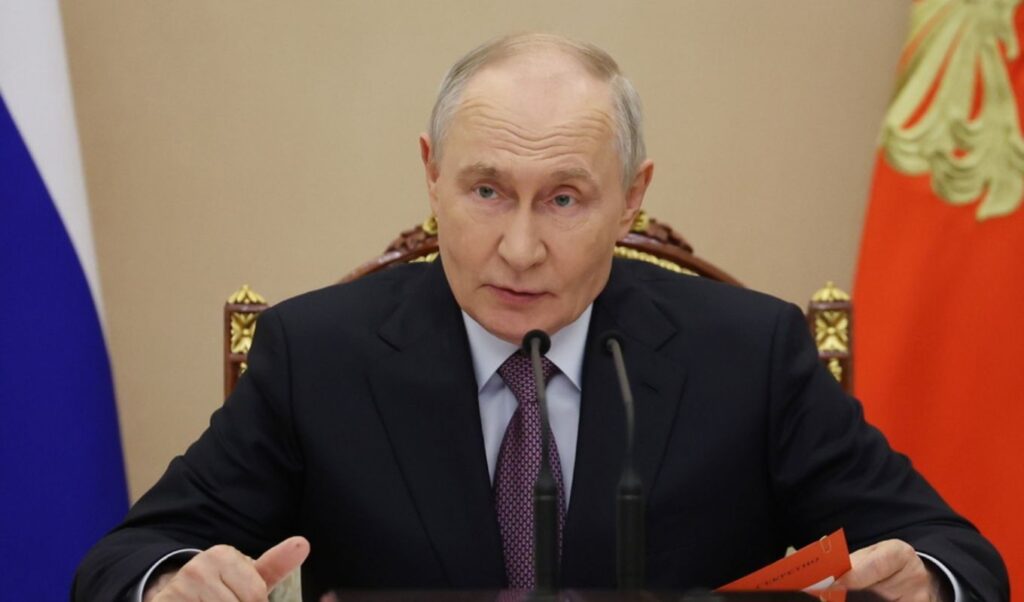
A report by The Times examines the agreement between Russia and Syria regarding Russian military presence in the country, questioning whether President Vladimir Putin’s withdrawal from the Middle East signals the end of Russia’s global role — at a time when the Kremlin remains laser-focused on its war in Ukraine.
The report highlights growing doubts over whether Russia will be able to continue using its main military bases in Syria in the future. These bases have served as a critical hub for transporting supplies and fighters to the Africa Corps — the successor organization to the Wagner Group, operating under Kremlin control across Libya, Mali, the Central African Republic, and other African nations.
Hannah Notte, an expert in Russian foreign policy, stated that it is now considered less likely that Russia will be able to use Syrian bases for military purposes going forward, though she stopped short of ruling out the possibility entirely.
According to the report, the new agreement grants Russia only limited refueling rights for military aircraft at Hmeimim Air Base. Beyond that, the deal contains little that could be seen as a morale boost for Moscow, according to Nikita Smagin, an expert on Iran and Russian policy in the Middle East.
The newspaper argues that recent weeks have delivered a series of successive blows to the Kremlin’s hopes of maintaining its global influence while the war in Ukraine drags on. In addition to losing the Assad regime, Russia failed to prevent the capture of Venezuela’s pro-Russian president, Nicolás Maduro, by US special forces. Meanwhile, Hungarian Prime Minister Viktor Orbán — whose government was long regarded as the Kremlin’s “Trojan horse” inside the European Union — suffered a significant electoral defeat.
The report also notes that Russian influence has been fading in the South Caucasus, as Armenia and Azerbaijan, two former Soviet republics, appear to be gradually drifting away from Moscow’s sphere of influence.
At the same time, traditional Russian allies are sending troubling signals to the Kremlin. Serbia, one of the few European countries that did not impose sanctions on Russia following the invasion of Ukraine, welcomed Ukrainian President Volodymyr Zelensky last week for his first visit since 2022.
The report cites a Ukrainian official who described Zelensky’s talks with Serbian President Aleksandar Vučić as “a slap in the face” for Putin, framing the visit as part of a broader effort to pull Serbia away from Russia’s orbit.
Zelensky’s Belgrade visit came on the heels of a public appeal by Kazakhstani President Kassym-Jomart Tokayev, who urged Putin to end the war in Ukraine during talks held in the Siberian city of Omsk. “It is sad to see young people dying,” Tokayev said — and according to the report, Putin appeared visibly uncomfortable throughout the Kazakhstani leader’s remarks.