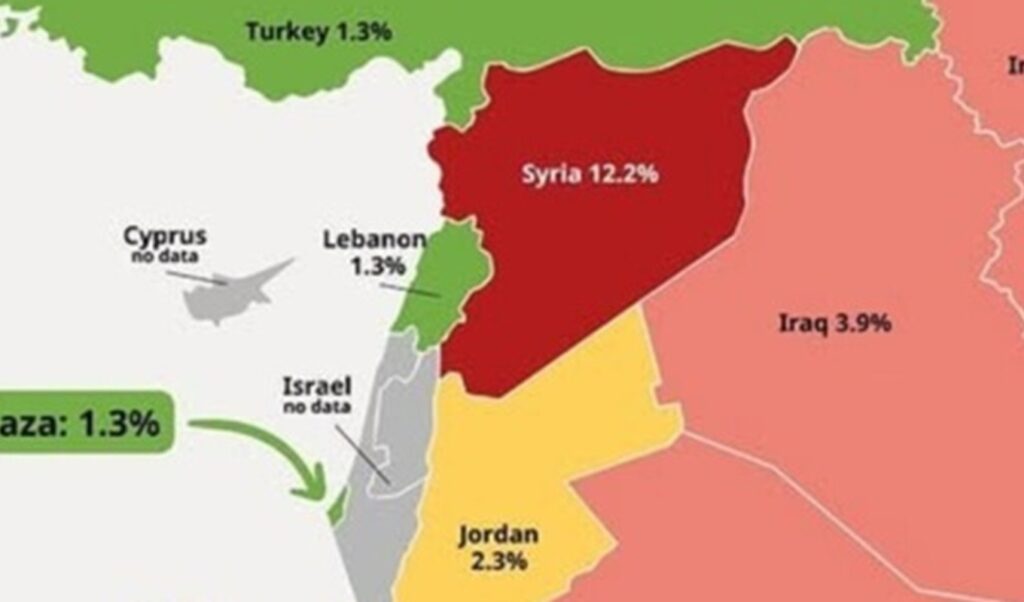
A map published by the Israeli Ministry of Foreign Affairs on platform “X” sparked widespread controversy after it depicted parts of southern Lebanon as incorporated into Israeli territory. The map was included in a post about acute child malnutrition rates in the Gaza Strip.
Following diplomatic pressure from Lebanon, the Israeli Ministry of Foreign Affairs deleted the map from its official English-language account. However, the map remained published on the official Arabic-language account “Israel in Arabic” on platform “X”.
A Lebanese diplomatic source told Al Arabiya/Al Hadath: “We contacted Washington to pressure Israel to withdraw the map that distorts the borders.” The same source added: “Our efforts led to Israel deleting the map that incorporated Lebanese territories within its borders.”
The map contained color-coded indicators and statistical data from a UNICEF nutritional survey in Gaza. However, the depiction of borders showed Lebanese areas as part of Israel, which is inconsistent with internationally recognized boundaries.
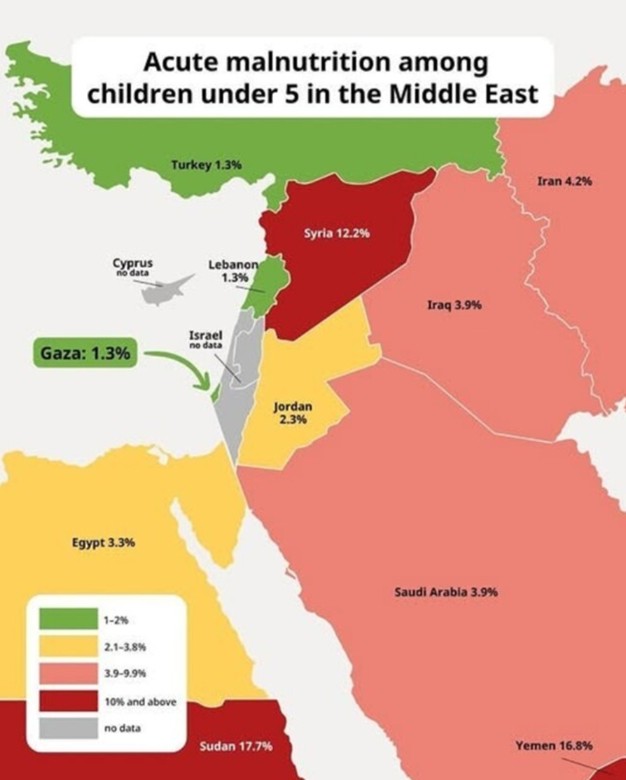
For its part, Hezbollah commented on the map, stating in a Sunday announcement that the Israeli Ministry of Foreign Affairs publication serves as proof of Tel Aviv’s “ambitions” toward Lebanon’s wealth and resources. The group also called for an end to direct negotiations.
The organization further argued that Israel’s participation in direct negotiations with Lebanese authorities represents “a clear attempt to buy time and impose new facts on the ground.”
The map’s publication came just days after the conclusion of the seventh round of Lebanese-Israeli negotiations in Rome on Thursday, held under American mediation. The talks focused on issues relating to the implementation of the June 26 framework agreement.
The latest round failed to reach an agreement on the next area from which Israeli forces would withdraw, while a new round of talks is expected in early September.
The framework agreement provides for a gradual Israeli withdrawal from occupied Lebanese territories, initially through a pilot implementation in specific areas. In return, the Lebanese army would deploy to those areas and proceed with the disarmament of Hezbollah.
Israel maintains a presence in areas of southern Lebanon, some of which have been under occupation for decades, while others were seized during the 2023–2024 conflict. According to reports, Israeli forces have recently advanced more than 10 kilometers deep into Lebanese territory.
Source: Al Arabiya, ERT