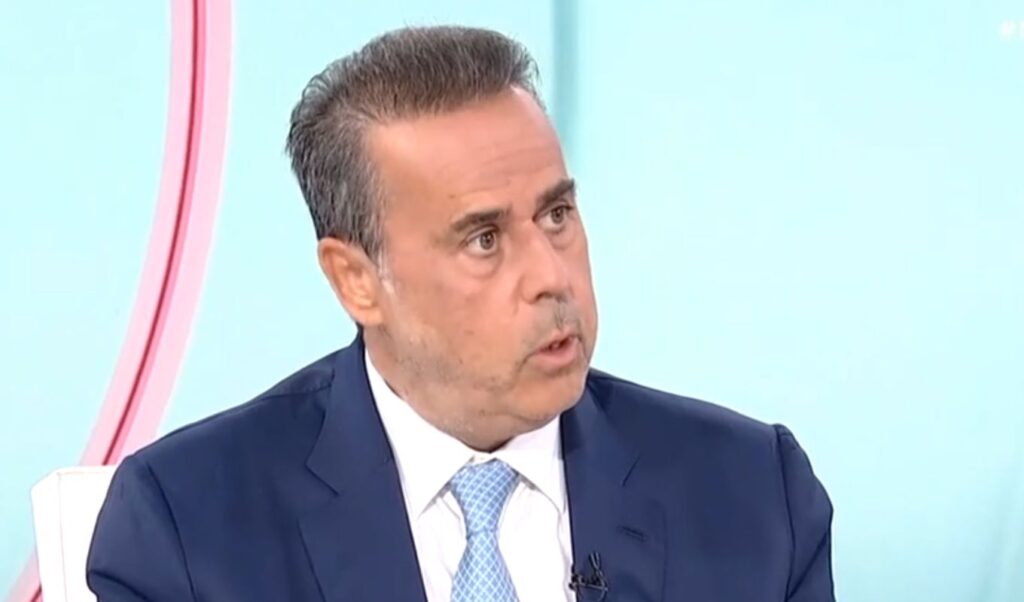
Greece’s Minister of Environment and Energy, Stavros Papastayrou, spoke in an interview on Thursday (6/8) about the new momentum gained by the Greece-Cyprus electricity interconnection following the entry of French investment group Meridiam as majority shareholder in the Great Sea Interconnector company. He emphasized that this is a major European Union project whose implementation runs through Europe — not through Turkey. Speaking to ERT, Papastayrou addressed the strategic and geopolitical significance of the project, the next steps toward its realization, and Greece’s first exploratory hydrocarbon drilling in the northwestern Ionian Sea. He also outlined plans for the environmental restoration of areas devastated by the major wildfires in Boeotia and Western Attica.
Read also: The Greece-Cyprus electricity interconnection gets a French stamp: What Meridiam’s entry means for Greece
New momentum for accelerating and delivering a critically important project
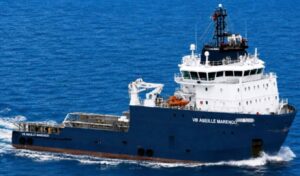
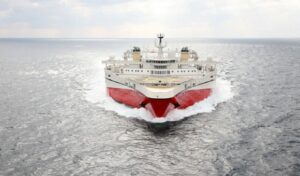
The agreement for Meridiam’s entry as majority shareholder in GSI was signed at Maximos Mansion in the presence of Prime Minister Kyriakos Mitsotakis. Simultaneously, a trilateral agreement was signed between ADMIE, GSI, and Nexans covering the seabed surveys required for the interconnection’s implementation. As Minister Papastayrou explained, the government had conducted exploratory outreach across Europe, the Gulf states, and transatlantic partners with the goal of broadening the project’s investment base. Meridiam was selected for its expertise in large and complex infrastructure projects, including the UK–Germany electricity interconnection. According to the minister, Meridiam’s technical know-how will complement the experience of ADMIE, which remains a strategic shareholder in the project. “A new dynamic is being created for the acceleration and delivery of a very important project,” Papastayrou stated.
A new energy corridor strengthening security in the Eastern Mediterranean
The Minister of Environment and Energy described the Great Sea Interconnector primarily as a European project that will end Cyprus’s energy isolation and strengthen energy supply security across the Eastern Mediterranean. The project has been included in the EU’s Projects of Common Interest and is expected to enable the integration of larger quantities of renewable energy into the European electricity grid. In parallel, ADMIE is finalizing a cost-benefit study for the Cyprus–Israel segment, which will be submitted to the regulatory authorities of both countries.
As Stavros Papastayrou underlined, the prospect of establishing a broader energy corridor in the Eastern Mediterranean takes on even greater geostrategic importance in light of developments in the Middle East and the Strait of Hormuz.
Greece and France maintain strategic cooperation, and French involvement “shields” the project
When asked about Turkey’s reactions, the minister noted that Greece’s sovereign rights are protected by Greece itself. He acknowledged that this is a complex undertaking facing technical, economic, and geopolitical challenges. However, he stressed that the entry of a major French investment group significantly strengthens Greece’s position and the prospects for completing the interconnection. “The technical and geopolitical difficulties won’t disappear overnight with a single signature. But Meridiam’s involvement significantly reinforces and shields the project’s implementation,” he emphasized.
Stavros Papastayrou stressed that Greece and France maintain a strategic partnership, and that Paris holds a strong presence and interest in the Eastern Mediterranean. “This is not a Greek or a Cypriot project. It is a major EU energy project. Its implementation runs through Europe — not through Turkey,” Papastayrou stated.
Next steps toward launching the seabed surveys
Asked when the seabed surveys would begin, the minister noted that the required procedural steps would be completed in the near term. “I don’t want to say whether it will be in one month or six weeks. But it is clear that the project is now on a path toward implementation,” he said. According to the minister, the decision of a major private investment group to participate in the project also serves as tangible confirmation of its economic viability and strategic value.
On hydrocarbon exploration and the 270 billion cubic meters target
Minister Papastayrou also addressed hydrocarbon exploration, noting that the target is to carry out Greece’s first offshore exploratory drilling in nearly half a century by mid-February 2027. The drilling is scheduled at the “Asopos 1” location in Block 2 of the northwestern Ionian Sea, by the consortium of ExxonMobil, Energean, and HELLENiQ Energy.
According to the consortium’s preliminary estimates, the potential deposit could reach 270 billion cubic meters of natural gas. Should these estimates be confirmed and the deposit prove commercially viable, potential revenues for the Greek state are estimated at approximately €10 billion over the long term. “Let us hope the estimates are confirmed, so that by the first half of 2027 we will have a different picture for all Greeks,” the minister remarked.
On the wildfires in Western Attica and erosion control works
Responding to questions about the wildfires that struck Western Attica and Boeotia, the minister first paid tribute to those who lost their lives during firefighting operations, including the Danish pilot and the Greek liaison officer aboard the firefighting helicopter at Psatha. Addressing the response to the fires and their aftermath, he set out three priorities: strengthening prevention efforts, leveraging technology for early detection of fire outbreaks, and rapid environmental restoration.
He also announced that anti-erosion and flood prevention works in the affected areas will begin no later than September 15, ahead of the first heavy autumn rainfall. The works aim to protect residents from flooding and debris flows, while also accelerating the natural regeneration of burned forest areas. “If the anti-erosion works are completed within the first year, forest regeneration is accelerated. If they are delayed by two or three years, restoration is set back even further,” the Minister of Environment and Energy emphasized.