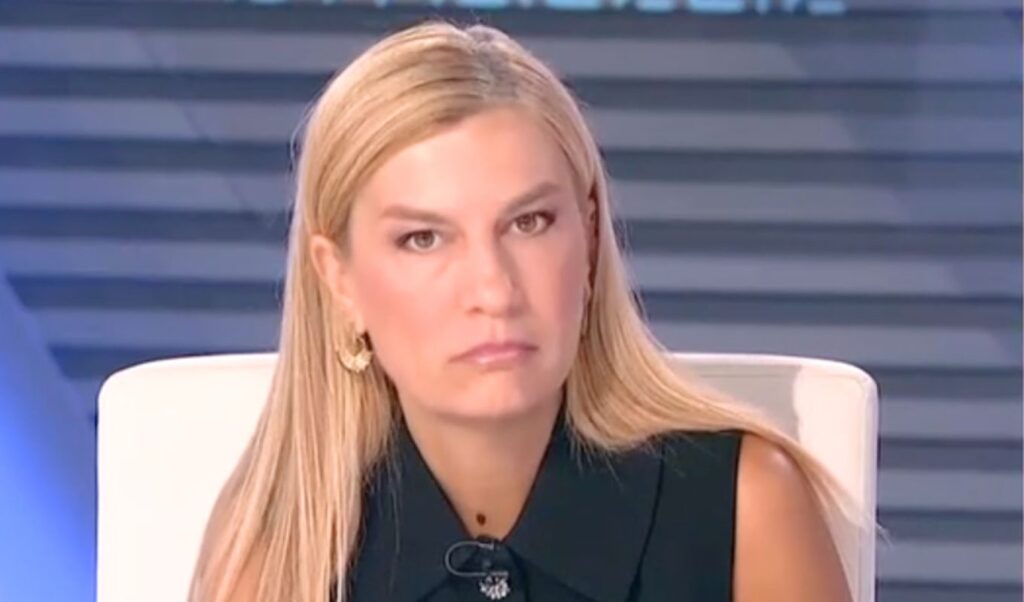
The need for a common and strict European migration policy was underlined by Greece’s Deputy Minister of Migration and Asylum, Sevi Voludhaki, in light of recent developments in Ceuta and the ongoing debate within the European Union on managing rising migration flows. Speaking on the television program “Connections,” Deputy Minister Voludhaki stated that Greece has been implementing a “strict border protection policy” since 2019, arguing that this approach has delivered tangible results.
She also emphasized that the European Union needs a common mechanism to address emergency migration pressures, so that member states are not left applying different policies and rules when managing crises. The Deputy Minister stressed that effectively tackling migration requires coordination at the European level, with shared procedures and greater cooperation among EU member states.
“This was a policy that we as a country implemented from the very beginning, from 2019. We applied a fair, yet very strict migration policy,” she said on the “Connections” program. Commenting on the situation in Ceuta, she also recalled that Greece faced a similar challenge years ago at the Evros border region.
“Our borders must be guarded and migration must take place through legal channels,” she said, adding that all those who enter the country illegally now know that “under no circumstances will they be granted legal status” — a fact which, according to her, has helped reduce migration flows.
“When incidents like these occur, no country can be left to decide on its own how to manage migration,” she noted, adding that the ability to suspend asylum application processing during mass arrivals is essential, as is the swift return of those not entitled to international protection. She also called for a strengthened role for Frontex, stressing that the European border agency should not be limited solely to search-and-rescue operations.
“The role of Frontex must be strengthened and expanded further, so that it can also carry out genuine border protection,” she told journalists Nina Kasimati and Alexandros Mordountак.
“Europe needs a common strategy”
Deputy Minister Voludhaki argued that diverging policies among member states act as a pull factor for migration flows and ultimately affect the European Union as a whole. “It cannot be the case that we apply one policy, Spain applies another, and all EU countries are left to deal with the consequences,” she stressed.
Finally, she underlined that legal migration must take place through bilateral agreements and specific procedures designed to meet labor market needs, while those entitled to international protection should follow the asylum process in accordance with the existing European legal framework.