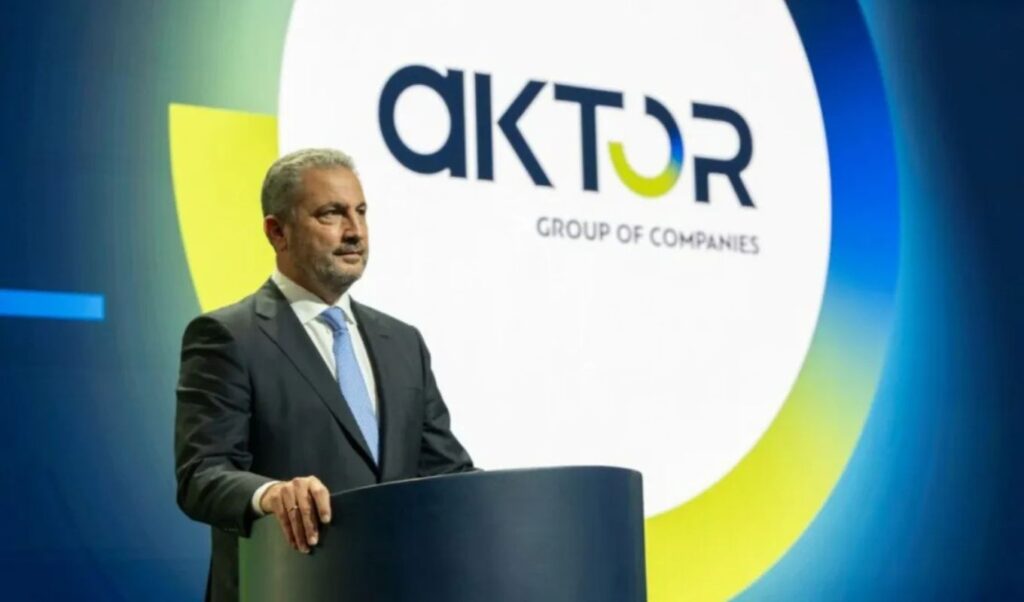
The order book for AKTOR Group’s international bond offering worth €300 million has officially closed. According to Bloomberg sources, the issue was 1.8 times oversubscribed, with the interest rate set at 7.87%.
Read also: AKTOR: Entering the markets with a €300,000,000 bond — strong investor interest
AKTOR enters capital markets with €300 million bond offering
Earlier today, we reported the following:
Monday, July 27 marks the completion of a dual financing move through which AKTOR Group is amassing a war chest of €950 million. Following a highly successful share capital increase of €650 million — which was concluded last week — the group has now launched an international bond offering worth €300 million.
According to sources, the order book opened and closed within a single day, with AKTOR’s management once again — as was the case with the capital increase — receiving overwhelming investor interest during roadshow presentations held in the preceding days.
Sources also indicate that UBS Europe, the lead underwriter for the offering, conducted extensive groundwork through meetings with investors both in Greece and abroad to ensure the successful placement of AKTOR’s international bond. The emerging success of the bond issue is closely tied to the massive oversubscription of the capital raise, during which €650 million was sought but demand exceeded €2.2 billion. The new shares are set to begin trading on Euronext Athens on Tuesday, July 28, with AKTOR’s Chairman and CEO, Alexandros Exarchos, ringing the opening bell to mark the beginning of a new chapter for the Group.
EBITDA target of €700 million
The bond issuance is expected to further confirm the confidence of fixed-income funds in AKTOR Group’s growth story. The net proceeds raised from the offering are intended to cover general corporate purposes, with a particular focus on funding planned capital expenditures and new investments outlined in the Group’s business plan. The combined financing firepower of approximately €1 billion — derived from both the capital increase and the bond issue — will serve as the foundation for executing €3 billion worth of investments by 2031, as the group seeks to gradually transform itself into a fully integrated leader in Southeastern Europe across LNG, renewable energy, infrastructure, and concessions.
Management has set a medium-term target for the 2028–2029 period of revenues between €2.3 billion and €2.8 billion, with EBITDA in the range of €375–425 million. Looking further ahead, beyond 2030, the bar is set even higher, with revenue targets of €4.5–5 billion and EBITDA of €600–700 million — figures that, according to market observers, would fundamentally transform the group’s size and investment profile.
A vote of confidence in AKTOR from international investors
Market participants note that the business plan presented by management to international investors received more than just a positive reception. The prospect of generating strong recurring cash flows from concessions, energy infrastructure, PPP projects, and renewables — combined with ambitious profitability targets — led several foreign portfolios to view the company’s current valuation as attractive.
At the same time, the capital increase and bond proceeds are expected to broaden the institutional investor base, a key objective of Alexandros Exarchos and his management team.
The capital raised will be directed primarily toward concession and PPP projects, the expansion of the renewable energy portfolio, LNG infrastructure development, and strategic acquisitions.
Executing the investment plan and achieving operational targets remain top priorities
Particular significance is being attached to the agreements being developed with Motor Oil. AKTOR is currently in exclusive negotiations for the acquisition of a 75% stake in HELECTOR and Thalis, with the relevant processes expected to be completed by September. The transaction is anticipated to significantly strengthen the group’s presence in the circular economy and environmental management sectors.
In addition, a 50% participation in Dioriga Gas and the Agioi Theodoroi FSRU project broadens the group’s exposure to energy infrastructure and creates an additional source of recurring operating profitability, gradually reducing its dependence on the construction sector.
Management has made clear that executing the investment plan and achieving operational targets remain the top priority. Should these be met, it is estimated that from 2028 onward, increased cash flows will enable the commencement of dividend distributions to shareholders — though this may be deferred should high-return investment opportunities emerge in the meantime.