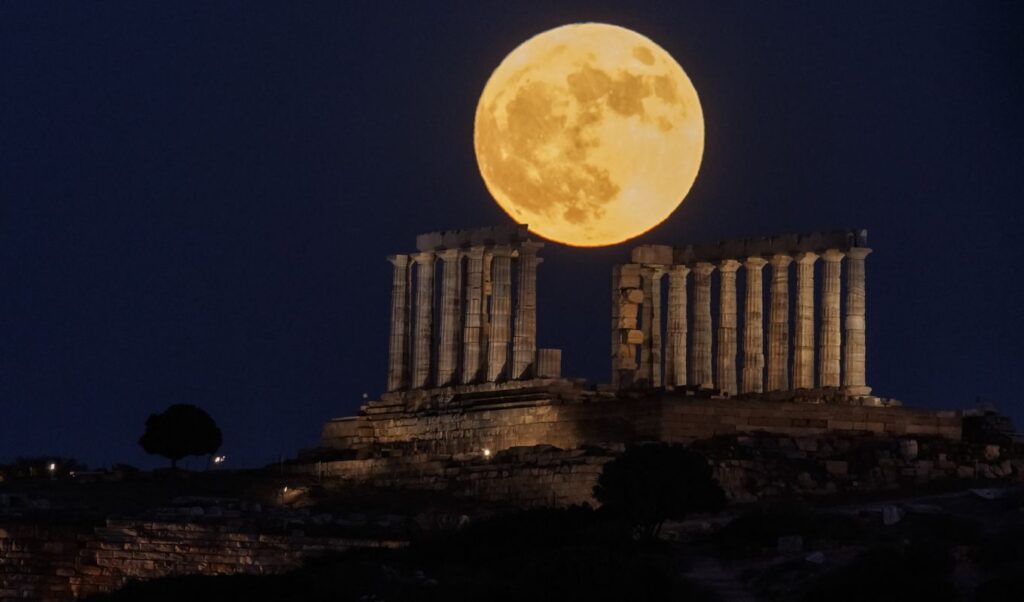
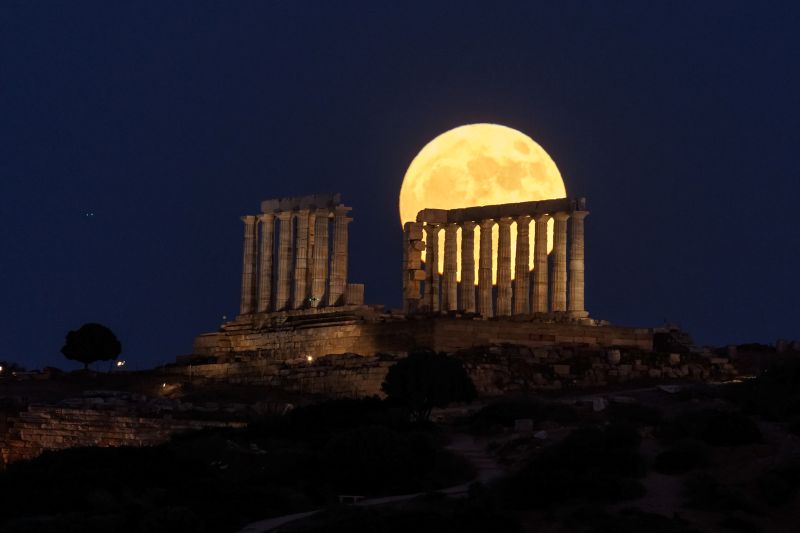
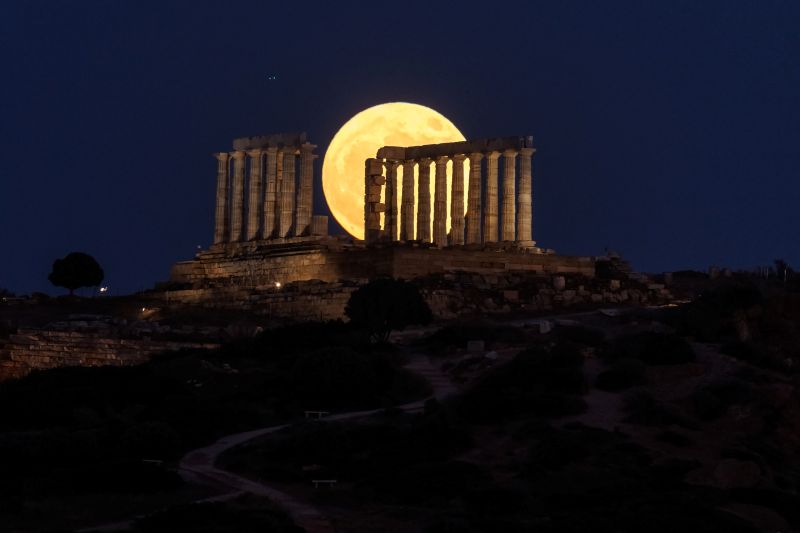
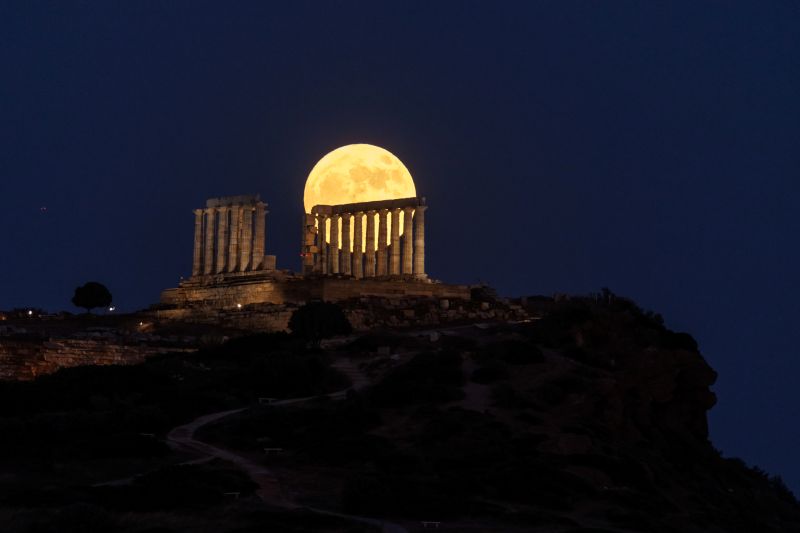
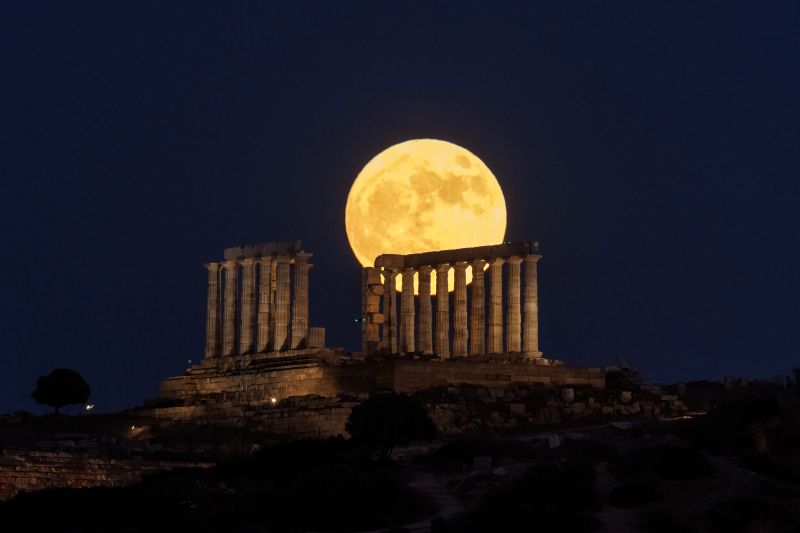
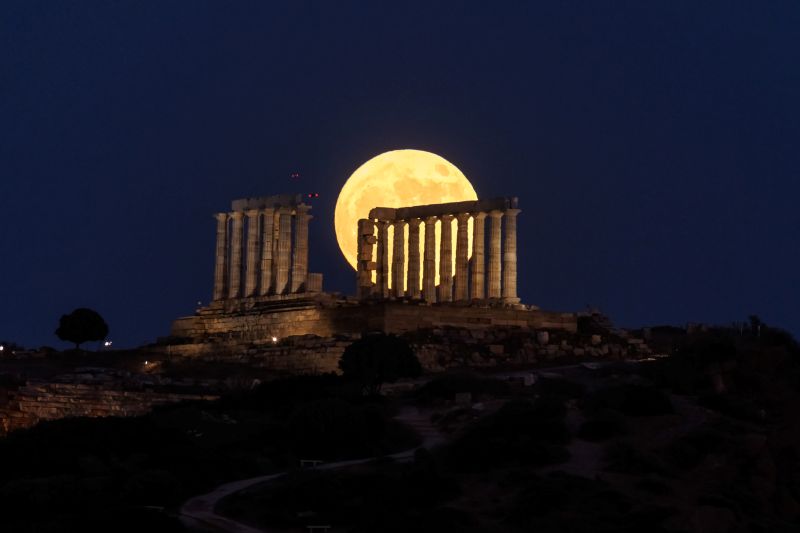
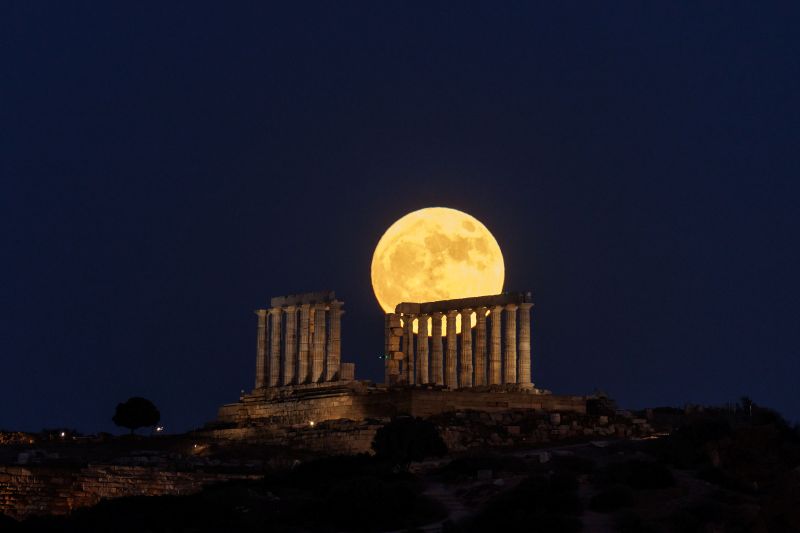
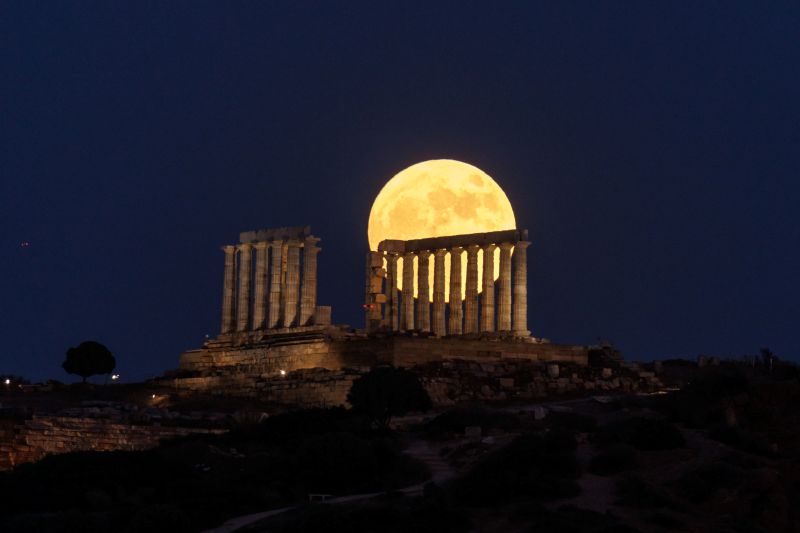
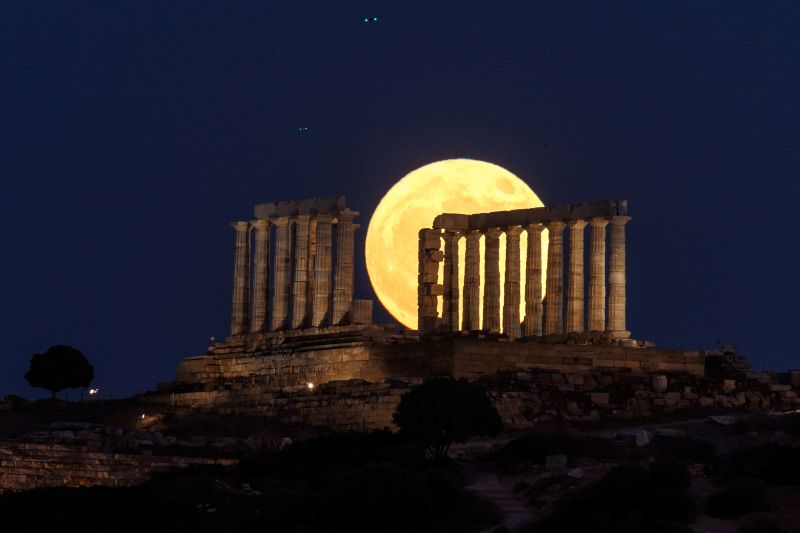
The Strawberry Moon, like nearly all full moons during the summer months, lived up to every expectation — as vividly captured in stunning photographs taken at the Temple of Poseidon at Cape Sounio. The Moon appears to play with the ancient structure, rising slowly above it as if watching over and protecting it. The June full moon is, after all, the first of the summer season, and it carries its own special, deeply romantic and lyrical significance — one that has long pointed dreamers and artists toward the realm of imagination. On June 29, the Strawberry Moon lit up the sky for the first time this summer. By the early hours of Tuesday, June 30, it was expected to shine even brighter.
Read more: June full moon: Tonight’s Strawberry Moon lights up the sky
Strawberry Moon: Why the June full moon is so special
The June full moon stands apart from all others throughout the year, as it rises unusually low on the horizon in the Northern Hemisphere. This distinctive position gives rise to the well-known optical phenomenon called the Moon Illusion.
As part of this phenomenon, the full moon appears significantly larger than when it sits high in the sky. In reality, its size remains unchanged — what we perceive is simply an optical effect caused by its low position and its visual comparison with objects along the horizon.
The color of the June full moon
Despite its warm and summery name, the Strawberry Moon does not typically take on a pink or red hue. However, when it sits low on the horizon, it can appear slightly reddish or amber in tone, due to the scattering of light through the Earth’s atmosphere.
The origin of the name “Strawberry Moon”
The name originates from the Algonquin Native American tribes of North America. For the Algonquin, the June full moon marked the season for harvesting wild strawberries, which ripened around that time of year.
European names for the June full moon
Across Europe, the same full moon is traditionally known as the Honey Moon or Mead Moon, as it coincided with the honey harvest season. In some regions, it is also referred to as the Rose Moon, inspired by the soft, warm tones that its light can take on under certain atmospheric conditions.