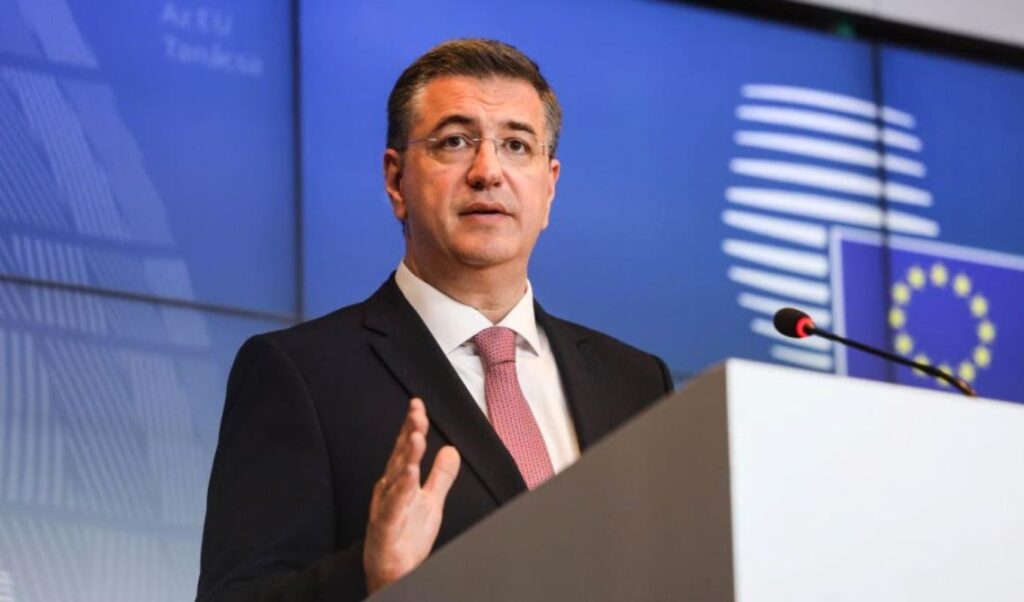
The Commissioner for Sustainable Transport and Tourism, Apostolos Tzitzikostas, once again brought to the forefront of European dialogue his proposal regarding the abolition of time changes, an initiative that enjoys the support of 84% of European citizens. The proposal was discussed at the Council of Ministers, highlighting the need for a definitive solution to a measure that is now characterized as outdated and problematic. According to the available data presented by Apostolos Tzitzikostas, the twice-yearly time change causes significant adverse consequences such as: negative impact on people’s health and biological rhythms, confusion in citizens’ daily routines and activities, difficulties in the smooth operation of economic activity, and absence of substantial energy savings, which was the original goal.
Apostolos Tzitzikostas’ position on abolishing time changes
Apostolos Tzitzikostas emphasized that the Commission maintains as a core priority the definitive abolition of time changes. The measure of twice-yearly time changes was characterized as disruptive, unjustified, and without substantial utility in the modern era. Specifically, regarding the abolition of time changes, Mr. Tzitzikostas stressed that “it remains a priority for the Commission to abolish this disruptive measure that is now unjustified, unnecessary, and serves no purpose. We have evidence that it negatively affects people’s health, confuses citizens’ daily lives, and brings difficulties to economic activity, while energy is no longer saved. The time has come to push forward the abolition of this measure and I am determined to work closely on this with the European Parliament and the European Council. It’s time for realism in Europe and we will further substantiate the necessity of abolishing the measure, after completing the relevant study that is being conducted“.
Package of measures for military mobility
“Europe needs greater security, stronger competitiveness, and better connectivity, especially with the instability prevailing globally. Resilient ports and a strong maritime sector are not merely economic, but strategic advantages for Europe,” emphasized the Commissioner for Sustainable Transport and Tourism Apostolos Tzitzikostas, speaking at the EU Council of Infrastructure and Transport Ministers in Luxembourg. The Council approved the two new EU policies, one for shipping and shipbuilding and one for ports, according to a related announcement. Mr. Tzitzikostas, referring to the package of measures for military mobility, which also constituted a central topic of discussion at the Council of Ministers, stressed that “Europe needs the infrastructure and procedures for the rapid and smooth cross-border movement of military personnel and equipment. There is an urgent need to proceed with speed, while also examining the importance of drones in this context. We have no time to waste“.
Package of measures for travelers and easy issuance of train tickets and multimodal journeys with one click
The Council of Ministers also discussed the package of measures for travelers regarding the easy issuance of train tickets and multimodal journeys with one click, which the Commissioner presented a few weeks ago.
“Our goal is to listen to society. My goal is to make travel throughout Europe easier, more transparent, more passenger-friendly. One journey, one ticket. European citizens should be able to plan, compare, and purchase trips with various and different modes of transport, without asterisks, with simplicity and clarity. This is what they expect from us: reliable, transparent, and fair transport. And this is also a crucial week for passenger rights in air transport. We need a balanced agreement that works for the benefit of all involved and we will achieve it together,” stated Mr. Tzitzikostas.
Additionally, the Council of Ministers discussed railway and rail industry issues, which are crucial for Europe’s competitiveness, while on the sidelines of the Council of Ministers, agreements were signed with member states for progress in two key areas: autonomous vehicle testing in Europe and electric truck charging infrastructure, which are important for innovation and competitiveness in the EU. “With these agreements we demonstrate that in Europe we are all determined to transform policy commitments into concrete actions, making transport as a whole more efficient, more sustainable, more citizen-friendly, and more competitive,” noted Mr. Tzitzikostas.