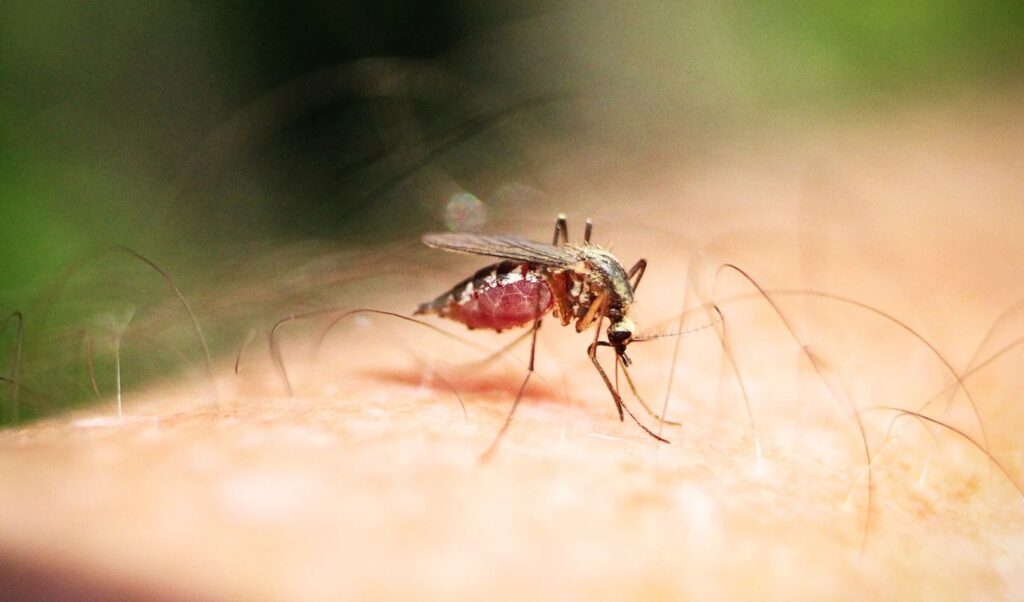
Official data from European health mechanisms show a gradual but steady expansion of the geographical spread of dangerous disease-carrying insects, such as mosquitoes, midges, and ticks. These specific species have the ability to transmit serious and potentially fatal diseases that can pose an immediate threat to patients’ lives.
Read: The plant with the incredibly strong scent that mosquitoes hate – keeps them away
The systematic collection, mapping and analysis of this data is carried out through the European VectorNet network, which closely monitors where these disease vectors are detected and how they spread. In this way, early identification of risks threatening both public health and livestock is achieved, allowing authorities to take immediate necessary prevention and response measures.
ECDC warnings about the expansion of dangerous mosquitoes in Greece
Recent scientific reports from the European Centre for Disease Prevention and Control (ECDC) reveal two very significant changes in Europe’s health map. On one hand, the Aedes aegypti mosquito, which carries dengue fever and did not previously belong to European ecosystems, was detected for the first time in Luxembourg.
On the other hand, the development directly affecting Greece concerns the organization’s updated maps, which show a clear and further expansion of the Culex tritaeniorhynchus mosquito in the country’s territory. This specific species is under strict scientific monitoring as it is a known and potential vector for transmitting Japanese encephalitis.
Which mosquito appears in Greece
Culex tritaeniorhynchus is considered the most important vector for Japanese encephalitis transmission worldwide.
Although its natural distribution is mainly connected to northern Asia, where it has been extensively recorded in countries like India, Thailand, Vietnam, Cambodia, Bangladesh, Indonesia, Malaysia, Myanmar, Nepal, Singapore and Sri Lanka, the species has extended its presence to regions of northeastern and sub-Saharan Africa.
The ecosystems where the Culex tritaeniorhynchus mosquito appears are:
- In rural areas, specifically in regions with lower altitude, vegetation, swamps, lakes, wells and canals
- In urban points, such as residential areas, tanks and containers with stagnant water
Japanese encephalitis can cause everything from infection to serious brain complications.
In most cases, infection from the Japanese encephalitis virus manifests with mild symptoms and has a normal course. However, when the virus attacks the central nervous system, specifically the brain, it can cause serious illness with severe health consequences.
Among the most common initial symptoms are high fever, severe headache and neck stiffness, while confusion and disorientation are not uncommon. In the most serious cases, the disease can lead to seizures, coma, paralysis, as well as permanent neurological damage.