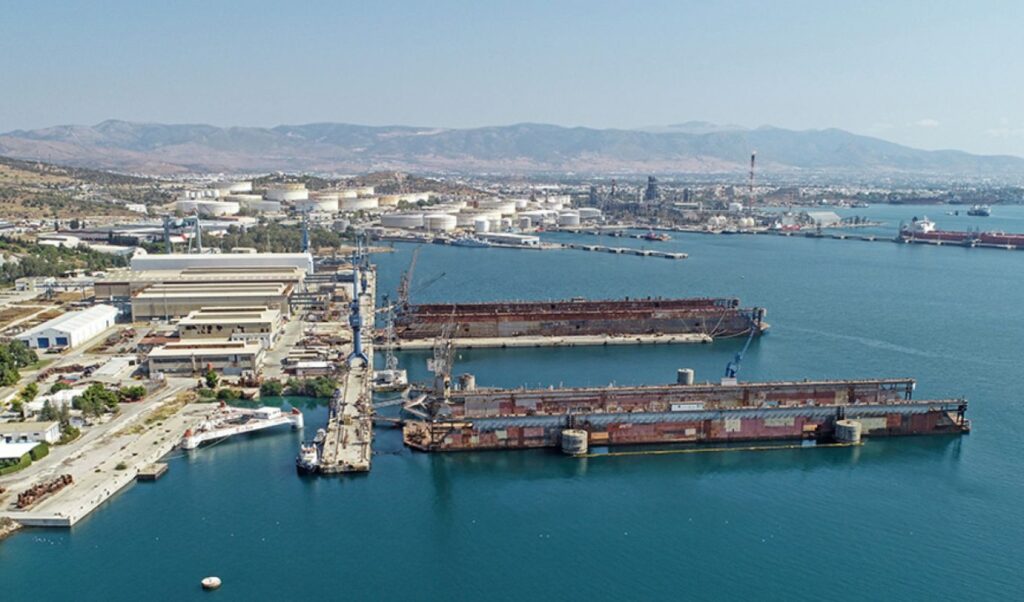
According to reports, the tender by the Hellenic Corporation of Assets and Participations for the development of Elefsina port is expected to launch in June, representing one of the most significant development projects for Western Attica and the coastal industrial zone overall. According to the same sources, the preparation of tender documents is being finalized to open the sub-concession process for part of the port’s land zone.
The process is expected to attract significant investment interest, as the port has a strategic geographical position, direct connection to major road networks and significant development prospects in sectors such as commercial activity, energy, shipbuilding industry and supply chain.
Elefsina port: Gateway for investments, job creation and regional upgrade
Elefsina has been undergoing gradual transformation in recent years, attempting to leave behind its image as a purely industrial area and acquire a new developmental footprint. The port is considered a key element of this transition, as it can function as a gateway for investments, job creation and upgrading of the entire region. The Hellenic Corporation’s plan provides that the tender will concern the sub-concession of part of the Elefsina Port Organization’s land zone, at Vlycha location, an area of approximately 800 acres that today remains essentially unutilized and is connected to the area’s heavy industrial history.
This specific zone currently hosts old industrial and port facilities, storage areas and activities with limited commercial exploitation, while for years it constituted a degraded area next to Elefsina bay. The plan provides for its transformation into a modern commercial and transshipment center, with possibilities for developing activities related to shipping, supply chain, energy and the shipyard sector.
The strategic importance that Elefsina port can acquire for the economy, energy, shipping and combined transport was recently highlighted at a conference by AKTOR Group CEO Alexandros Exarchou and ONEX Group president and CEO Panos Xenokostas.
It should be noted that the two companies have already announced their cooperation for pursuing the project. The two leaders described a plan that goes beyond simple commercial exploitation of a port and concerns creating a new hub for logistics, shipbuilding, energy and transport, with broader impact on the Greek economy and the country’s geostrategic role.
Exarchou: “Major needs for new energy facilities, storage and LNG transport”
According to Alexandros Exarchou, Greece needs more and better organized ports, as geopolitical developments, changes in commercial flows and increased need for energy transport create new realities for Southeast Europe.
As he mentioned, Elefsina has significant comparative advantages, as it is located near Attica, can connect with railway and road networks and has available spaces for developing organized logistics centers. According to him, the port’s development can function complementary to Piraeus and contribute to creating a second strong transshipment hub, capable of serving increased trade and energy needs toward Northern and Central Europe.
The AKTOR head directly connected Elefsina with the so-called “vertical energy corridor” and Europe’s new needs for natural gas and LNG. As he noted, the European Union’s gradual independence from Russian natural gas creates major needs for new energy facilities, storage and LNG transport. “The issue is not only price, it’s also securing quantities,” he characteristically mentioned, warning that Europe will need significant new LNG quantities in the coming years.
“Elefsina can evolve into an integrated port and industrial hub”
In the same context, Panos Xenokostas emphasized that Elefsina can evolve into an integrated port and industrial hub, combining commercial activities, shipyards, logistics and energy services. As he mentioned, the goal is creating a “holistic infrastructure,” where a ship can load and unload cargo, perform repairs, refuel energetically and simultaneously connect directly with railway and road networks. “It’s not simply commercial exploitation,” he stressed, noting that the plan concerns creating a new ecosystem around the sea, shipping and energy.
According to him, one of the basic benefits that can emerge is strengthening combined transport and faster cargo movement from Greece to the rest of Europe. The ONEX president and CEO noted that connecting the port with railway, road networks and shipyards can reduce transport time and costs, while simultaneously creating conditions for developing new activities around the supply chain.
He made particular reference to ship construction and maintenance, pointing out that operating a modern port combined with shipyards can create an integrated network of services for shipping. As he said, a ship will be able in the same area to perform loading-unloading, refueling, technical support and repairs, an element that —according to him— significantly enhances the country’s competitiveness. Simultaneously, Mr. Xenokostas connected Elefsina’s development with the need to create new energy and port facilities for LNG, which he characterized as a basic transitional fuel for shipping and industry. “It came to stay,” he characteristically mentioned about LNG, estimating that alternative technologies don’t yet have the required scale to cover market needs.
According to him, developing related infrastructure can create new investments, new jobs and greater domestic added value around shipping, energy and transport. The two leaders also focused on the project’s geopolitical dimension, noting that Greece can acquire a stronger role in international energy and commercial flows.
Alexandros Exarchou noted that geopolitical changes and competition between the United States and China are changing the map of transport and energy, creating new opportunities for the country.
For his part, Panos Xenokostas emphasized that ports, shipyards, energy and transport networks can no longer function fragmentarily, but must be treated as a unified ecosystem. As he mentioned, connecting ports with mainland networks and with activities around shipyards constitutes a critical prerequisite for Greece to acquire greater economic and geopolitical footprint in the coming years.