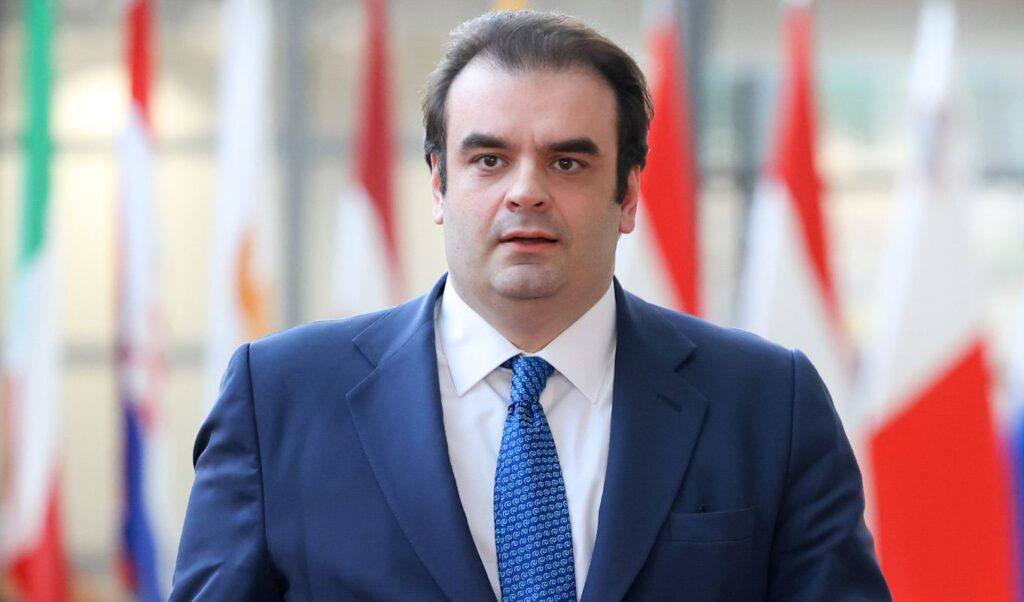
At a time when the economic cohesion of the European Union is being tested by successive challenges – from inflation and geopolitical tensions to new fiscal rules – a visit with strong symbolism and substantial content is set to attract the attention of European institutions. Minister of National Economy and Finance and Eurogroup President Kyriakos Pierrakakis is expected to travel to Hungary on June 25, as part of a scheduled meeting with the country’s new Finance Minister, András Karman.
Read: European Commission: Unlocks 16 billion euros for Hungary under strict conditions
This visit takes on particular significance as it occurs at a time when Hungary appears to be seeking a more stable European path. According to polls, 75% of Hungarian citizens declare themselves ready to adopt the euro, a fact that reflects their desire for greater European convergence.
Hungary opens euro dialogue through Pierrakakis
Hungary, although an EU member state since 2004, has at times diverged on key European policies, including rule of law issues, European funding, and foreign policy. This makes dialogue with European institutions even more important. The presence of the Eurogroup President in Budapest is interpreted as an attempt to bridge differences and strengthen institutional cohesion within the European Union.
Moreover, the country’s new political leadership, under Péter Magyar, has sent messages of rapprochement with the EU, emphasizing the restoration of trust relations and stabilization of economic cooperation. In this context, economic diplomacy takes on a pivotal role, as Hungary recognizes that access to European capital and investments is a fundamental prerequisite for its development.
According to European sources, the meeting is part of a broader cycle of contacts between eurozone member states aimed at better coordinated implementation of new fiscal rules. The return to a framework of stricter but also more flexible economic governance is at the center of discussions, as many countries seek to balance between fiscal stability and growth dynamics.
What will be discussed
The discussion table is also expected to include issues such as the course of inflation in the eurozone, energy security, as well as the implementation of new rules for public debt and deficits. At the same time, the effects of international economic developments will be examined, including the slowdown of major economies and the consequences for investments within the European market.
The meeting in Hungary will provide an opportunity for an exchange of views on the progress of reforms being promoted at national level, as well as for strengthening cooperation on tax policy and financial stability issues. The role of the Eurogroup is considered pivotal in this process, as it functions as a central forum for coordinating the economic policies of the eurozone.
The visit also takes on a political dimension, as it takes place during a period when the European Union seeks to strengthen its role as a global economic player. Coordination between member states is considered a critical factor for enhancing the competitiveness and resilience of the European economy against international challenges.