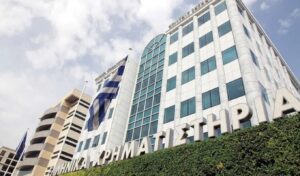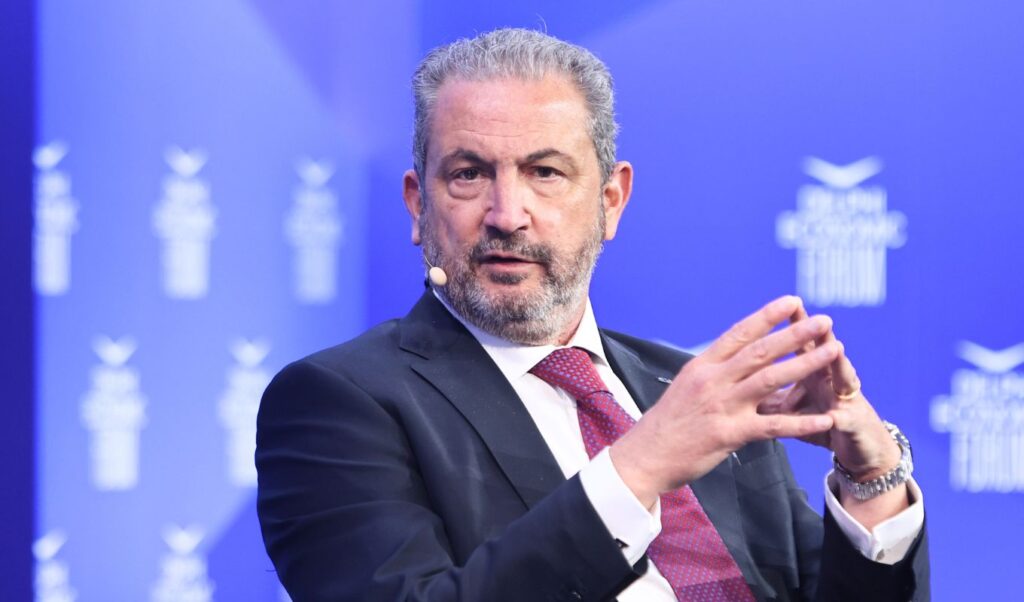
At the Blue Strategy Summit 2026 organized by the Union of Greek Shipyards, Alexandros Exarchou, Chairman and CEO of AKTOR Group and CEO of Atlantic SEE LNG Trade, delivered a keynote speech. During the discussion with ONEX Group Chairman and CEO Panos Xenokostas, he emphasized that new geopolitical developments make it necessary to develop additional ports in Greece, and this recognition is at the center of the joint interest between AKTOR Group and ONEX Group for the commercial concession of Elefsina port.
Elefsina, the best choice
As he emphasized, the development of the Greek economy, geopolitical changes and new conditions require the creation and modernization of additional ports in Greece. While our country is located at the junction of three continents, it essentially has only one major international port, which will not be sufficient for the transformations and developments expected to emerge in the international environment in the future.
Mr. Exarchou highlighted that the vertical energy and road corridor creates the need for well-organized ports that will supply Southeast Europe and noted that Elefsina constitutes the best choice because it has easy access to transportation infrastructure and sufficient space for developing a well-organized logistics center. He also commented that the ever-increasing competition between the US and China forces Europe to monitor developments more closely and creates further needs not only for infrastructure, but also energy connections due to the war in Ukraine and the conflict in the Middle East.
The vertical corridor and LNG
Referring to LNG, he noted that it represents an opportunity not only for the Group, but primarily for Greece, as it changes the geopolitical balance in the region in favor of the country. He added that the vertical corridor can ensure adequate supply of Europe with significant quantities of American LNG in view of the ban on Russian natural gas and the difficulties that will also arise in Azerbaijani natural gas imports.
As he added, this venture will be achieved through long-term contracts that will bring balance to Europe both in terms of price and securing required quantities. Mr. Exarchou emphasized that the coming winter will likely be difficult for Europe, as there will be difficulty securing natural gas and estimated that this will impact the European economy, as it will ultimately be forced to buy it at higher prices.
At the same time, Mr. Exarchou predicted that the EU will attempt to solve the issue centrally, following the Covid vaccine model, either through a new financial instrument, like the Recovery Fund, or by issuing eurobonds. Because, if it doesn’t, increased energy costs will lead to inflation spiraling to unmanageable levels. Furthermore, he continued, long-term LNG contracts can create conditions for developing new energy infrastructure, such as FSRU and gas network improvements, as long-term purchase and sale commitments and revenue predictability make the project easily eligible for financing from the banking sector.
AKTOR Group: Memorandums of Understanding (MoU) with Southeast European organizations by summer
Additionally, Mr. Exarchou reiterated that it is essential for both the vertical corridor and Europe to have balance among natural gas suppliers. He added that beyond the two long-term agreements that AKTOR Group has secured with Albania and Bosnia-Herzegovina, by summer the Memorandums of Understanding (MoU) signed with other organizations in Southeast Europe are expected to take the form of final agreements. Mr. Exarchou emphasized that this development, beyond the clear benefits for the Greek economy, offers our country an influence in regional energy affairs that it never had before.
Challenges in the infrastructure sector
Referring to difficulties traditionally found in the infrastructure sector, Mr. Exarchou emphasized that no one expects pathologies that come from many decades back to be solved within a few months. He underlined that if one compares the state of infrastructure 10 years ago to today, they will see that the distance the country has covered is enormous.
He commented that the model applied to concession projects, which requires better preparation and project maturation and high-quality studies, is the optimal way to produce next-generation infrastructure. This is because traditional public works had tenders for projects with low design maturity and errors, as happened with the Thessaloniki Metro, which cause major delays and create problems. He estimated that from now on, major projects in the country will be implemented through the concession method, as will happen with the case of Elefsina port.