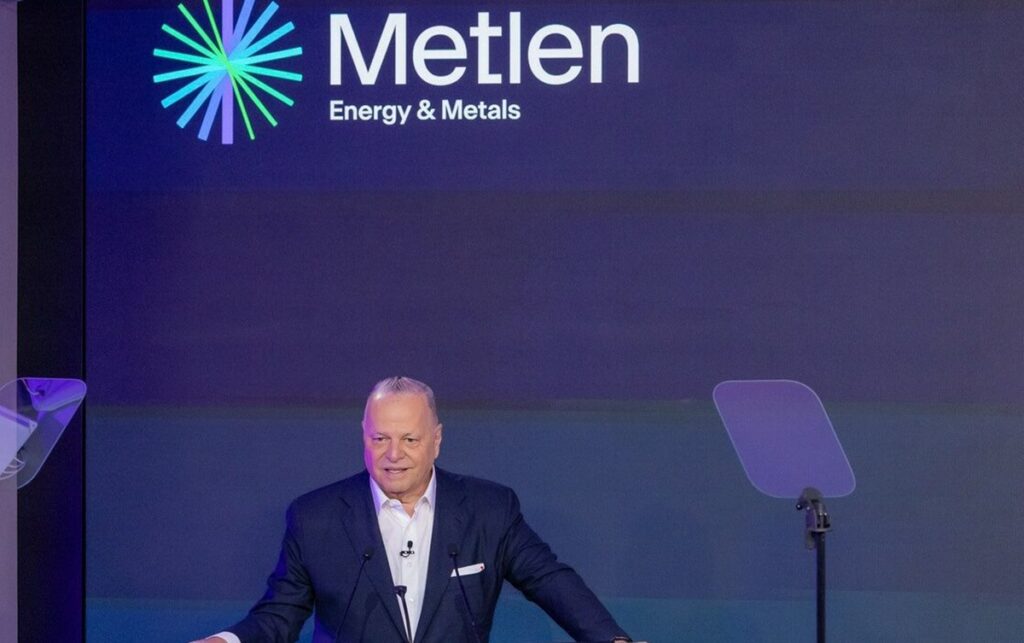
Metlen is embarking on a new expansion cycle with an ambitious plan targeting €2 billion EBITDA within three to five years. Evangelos Mytilineos, Executive Chairman of the group, presented at the Annual General Meeting of Shareholders the strategic direction that will transform the company into a reference point of the FTSE 100 index. For the first time, the assembly followed the standards of London-listed companies, signaling the group’s maturity and international ambitions.
Read: Metlen: Strong development for Evangelos Mytilineos’ group in Q1 – 37% revenue increase
The Metlen leader openly acknowledged the obstacles that affected 2025 performance. Problems in implementing specific projects, such as the Protos waste-to-energy conversion unit in the UK, caused cost overruns and program delays. Mytilineos characterized the period as a “demanding learning process” in managing large construction ventures.
Taking personal responsibility, he admitted that certain issues could have been anticipated and addressed more quickly. Management’s response was immediate: strengthening organizational structures, stricter control procedures, and improved accountability systems. Metlen’s leadership team made difficult decisions to guide the company through this transitional phase while simultaneously creating conditions for future growth.
Record-high revenues and profits expected for Metlen in 2026
Despite challenges, Metlen forecasts record revenues for the current year with EBITDA ranging between €1 and €1.5 billion. The first quarter confirmed the group’s momentum in Energy, Metals, and Infrastructure sectors, while the investment program proceeds according to plan. The ambition for inclusion among FTSE’s top companies reflects management’s determination to transform the group into a European leader.
In the energy sector, Metlen is implementing Greece’s largest standalone electrical energy storage project. The 330 MW power system ranks among Europe’s most significant and is expected to operate in Q3 2026. Storage technology is crucial for grid stabilization and renewable energy integration.
Through M-RESET, the new business unit consolidating all renewable energy activities, the group manages 87 construction sites distributed across eleven countries. Projects include:
- Large-scale solar parks
- Standalone energy storage systems
- Hybrid generation and storage facilities
- Grid enhancement and modernization projects
Energy and metals constitute the two central development axes, while the portfolio expands with circular metallurgy, defense systems, infrastructure, and METKA’s restart.
Circular metallurgy with 65% completion
In the metals sector, Metlen strengthens its position in the European industrial ecosystem. Expanding alumina production capacity and investing in gallium, a strategic raw material with European recognition, demonstrate the commitment to creating new value chains.
The circular metallurgy pilot unit has progressed 65% and is scheduled to begin operations in Q1 2027. The facility will produce cobalt, copper, and zinc from recycled materials, contributing to the circular economy and reducing import dependence.
Defense, infrastructure and METKA’s return
The defense sector continuously gains ground in Metlen’s development plan, while infrastructure maintains a critical role. Special importance is attributed to METKA’s new cycle, preparing for Athens Stock Exchange listing. This move aligns with the overall strategy of highlighting individual business value and enhancing transparency.
Group management recognizes that the business environment will continue presenting challenges and uncertainty. However, Mytilineos emphasizes that Metlen enters this phase from a position of strength, possessing a diversified portfolio, strong capital base, and clear strategic direction.
Flexibility and adaptability acquire equal importance with growth, especially when unpredictable factors can affect costs, schedules, and returns. The leadership’s vision is clear: Metlen, founded on metals and fueled by energy, advances toward higher targets, supported by its two core pillars and new activities that expand its developmental footprint.