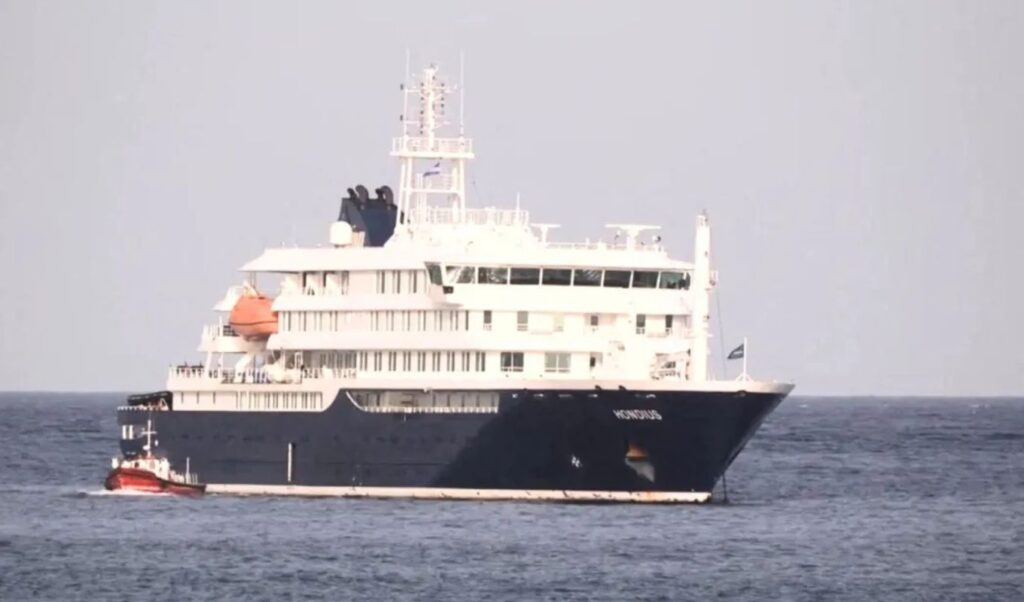
A New Zealand citizen who stayed aboard the cruise ship MV Hondius, where a hantavirus outbreak was detected, is currently in quarantine at a hospital in Taiwan, according to an announcement by the country’s health authorities. As reported, the man tested negative for hantavirus and shows no symptoms. He arrived in Taiwan on May 7, after disembarking from the ship on April 24 at the British island of Saint Helena in the South Atlantic.
Taiwan’s Centers for Disease Control (CDC) were notified on Wednesday by New Zealand authorities that this person was in Taiwan, CDC spokesperson Tseng Su-hui told AFP. The individual was admitted to hospital the same day and will remain until June 6, Tseng clarified, who declined to provide any information about his identity.
“Currently, we assess that the probability of him being infected with the disease is relatively low,” Tseng noted. “His last contact with other passengers was on April 25, which was about 20 days ago.” It should be noted that hantavirus has an incubation period that can reach up to 42 days.
CDC Director-General Lo Yi-chun told reporters that the New Zealand citizen did not return to his home country after leaving the cruise ship, but provided no information about the route he followed to reach Taiwan.
A spokesperson for New Zealand’s Ministry of Foreign Affairs and Trade (MFAT) said that his administration “provided consular assistance to a person with dual citizenship” in Taiwan. “This person resides outside New Zealand and requested MFAT assistance on Wednesday, May 13,” the ministry clarified in its statement.
Health authorities have repeatedly emphasized that the risk to public health associated with the outbreak of the Andes strain of hantavirus—which is the only known strain that transmits from human to human—is low.
Three deaths from hantavirus
Globally, the death toll stands at three. The MV Hondius ship had departed from Argentina on April 1 for a voyage in the Atlantic Ocean.
There is no vaccine or specific treatment for hantavirus, but health authorities confirm that the risk is low and reject any comparison with the COVID-19 pandemic.