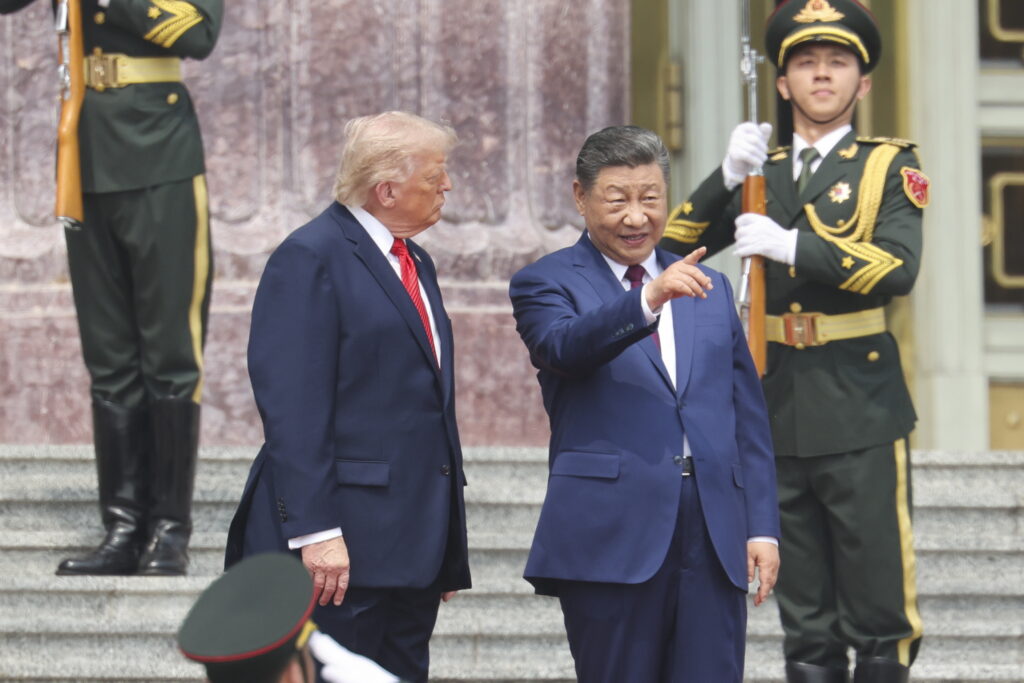
During his two-day stay in Beijing, American President Donald Trump was forced to make one of his most difficult decisions. He had to part with his beloved mobile phone, in one of the most unusual security measures implemented during his trip to the Chinese capital. According to the New York Post, like all travelers visiting China, the American President was informed that he should not use personal electronic devices in order to protect his data from potential hacker attacks or surveillance.
Trump’s posts on his Truth Social account were noticeably limited during the summit with Xi Jinping, and it is estimated they were published from Washington, where White House staff members were working… on Beijing time to provide remote support to the mission. Trump, however, was not the only one forced to operate without a personal device in this “digital lockdown.”
American government officials used special “burner phones” (small, inexpensive phones for short-term use that ensure anonymity) and temporary email addresses during the two-day summit, as part of White House security measures to protect information and ensure the smooth conduct of the visit.
Trump in Beijing: What the phone ban means
The ban was considered particularly difficult for Trump, who is known for his constant use of his phone – whether to communicate with friends and associates, take calls from journalists, or post messages and memes on Truth Social.
A White House official confirmed that Trump would not use his personal mobile phone during his stay in China.
The specific devices had almost all basic functions and applications removed, operating as “clean” phones with minimal stored data to limit damage in case of a breach.
The U.S. State Department has long warned Americans traveling to China that “there is no expectation of privacy on mobile or other networks in China,” noting that many travelers choose to carry electronic devices without personal data.
For White House officials, personal devices were stored on the presidential aircraft Air Force One in special cases that block all types of signals, including GPS, Wi-Fi, Bluetooth and RFID. These cases protect sensitive data from potential remote cyberattacks.