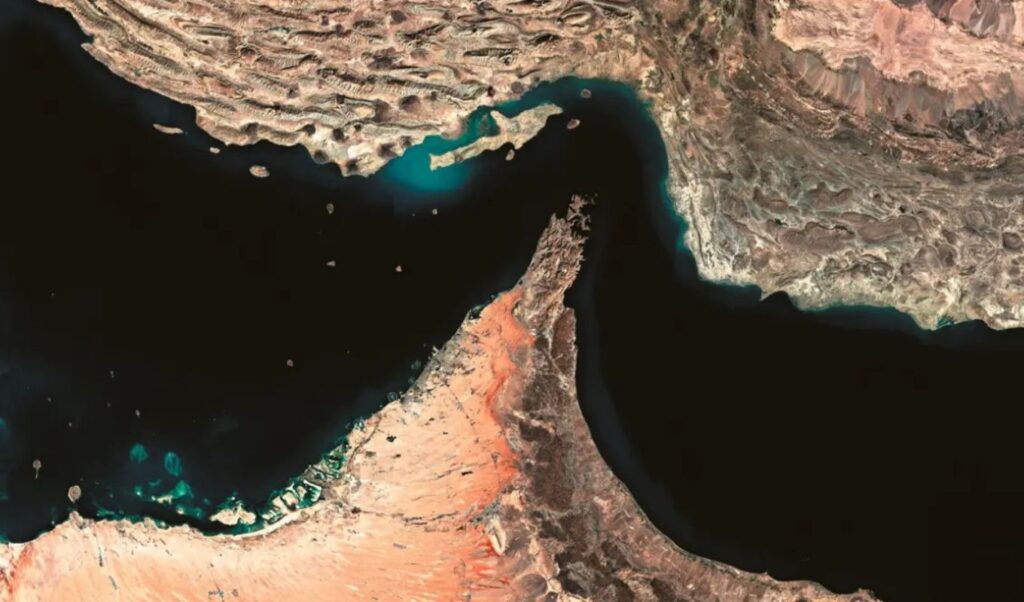
The Revolutionary Guards Navy announces that safe and stable passage through the Strait of Hormuz will be possible after the end of “threats from attackers” and under new procedures. At the same time, the same announcement expresses gratitude to captains and ship owners operating in the Persian Gulf and Gulf of Oman for their cooperation and compliance with Iranian guidelines during ship passages. “With enemy threats neutralized and new protocols in effect, safe passage is ensured,” they characteristically state.
US and Iran close to agreement with Pakistan mediating
At the same time, as it became known, according to a source from Pakistan, which is playing a mediating role in negotiations, the United States and Iran are close to an agreement on a one-page memorandum that could signal the end of the war in the Gulf.
The same source confirmed that a report by American media outlet Axios regarding the proposed memorandum was accurate. The Axios report was based on statements from two American officials and two other people with knowledge of the talks.
“We will close it very soon. We are close,” the Pakistani source said. Last month, Pakistan hosted the only peace talks on the war to date and continues to convey proposals between the two sides.
Information about a possible agreement caused oil prices to plunge, with Brent crude falling more than 8% to around $100 per barrel. Meanwhile, international stock markets moved higher while bond yields declined due to optimism about the potential end of the war that has disrupted energy markets.
The White House, State Department and Iranian officials contacted by Reuters did not immediately respond to requests for comment. American network CNBC reported that a spokesperson for Iran’s Foreign Ministry said Tehran is evaluating a 14-point American proposal.
According to Axios, the White House believes it is close to achieving a one-page memorandum to end the war with Iran. The report came hours after President Donald Trump’s decision to freeze the three-day naval operation to open the Strait of Hormuz.
The 14-point memorandum
Axios reported that the US expects responses from Tehran on critical issues within 48 hours. Among other things, the agreement provides for a moratorium on uranium enrichment by Iran, lifting of American sanctions and unfreezing of frozen Iranian assets. Meanwhile, both sides would proceed with gradual lifting of restrictions on shipping through the Strait of Hormuz.
The one-page memorandum, which includes 14 points, is being shaped through negotiations between American envoys Steve Witkoff and Jared Kushner and Iranian officials, both directly and through mediators, according to Axios.
At this stage, the memorandum provides for the formal end of war in the region and the start of a 30-day negotiation period for a more detailed agreement regarding opening the straits, limiting Iran’s nuclear program and lifting American sanctions.
During this period, Tehran’s restrictions on shipping and the American naval blockade would be gradually lifted. If talks fail, the US would be able to reimpose the blockade or repeat military actions, according to an American official cited by Axios.
Suspension of “Project Freedom” operation
Earlier, Trump had announced the temporary suspension of “Project Freedom,” which began Sunday with the goal of escorting ships through the blocked straits. The mission had failed to restore shipping, instead provoking a new wave of Iranian attacks on ships and targets in neighboring countries.
In a recent incident, a French shipping company reported that one of its vessels was hit in the straits, with injured crew members evacuated for medical treatment.
Announcing the suspension of the operation, Trump cited “significant progress” in negotiations with Iran, without providing further details. “We have mutually agreed that while the blockade remains in effect, Project Freedom will be temporarily suspended to see if the agreement can be finalized and signed,” he wrote on social media.
Trump had launched the operation after rejecting Iran’s latest proposal, which also included 14 points and provided for postponing nuclear program discussions until the end of the war and resolution of the shipping crisis.
During his visit to China, Iranian Foreign Minister Abbas Araghchi did not comment on Trump’s statements but emphasized that Tehran seeks “a fair and comprehensive agreement.”