The importance of further strengthening cooperation with Greece and Cyprus, during a particularly critical geopolitical period, was emphasized by members of Congress as well as the ambassadors of both countries to the United States, during the annual congressional celebration for Greek Independence Day.
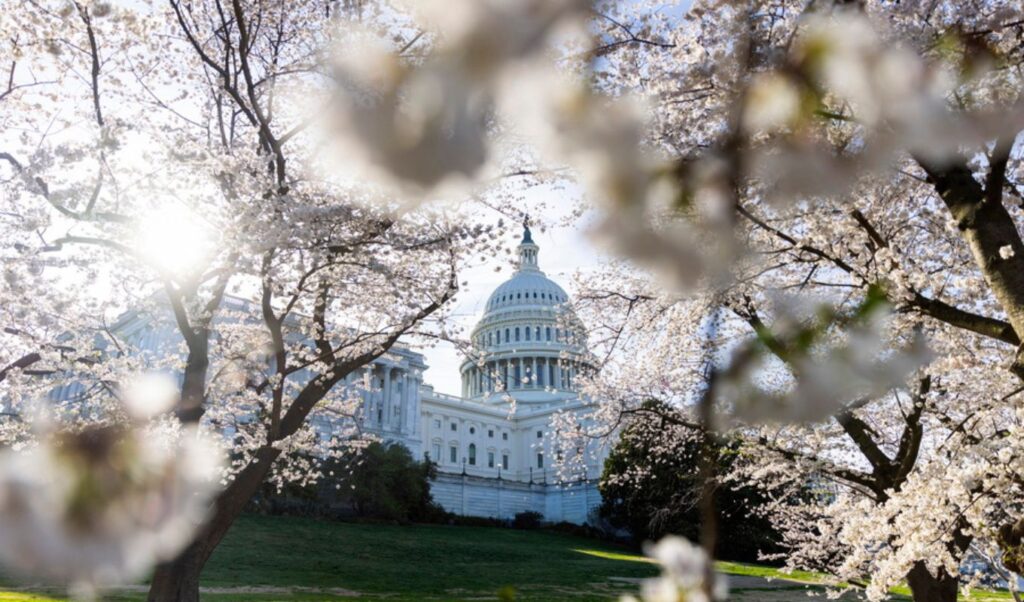
The event took place at the Capitol and was organized by the American Hellenic Institute (AHI), in cooperation with the Hellenic Caucus of the House of Representatives. It’s worth noting that celebrations of national anniversaries by the Greek-American community don’t always coincide with the official date. This year, the completion of 205 years since the Greek Revolution of 1821 coincided with the 250th anniversary of American Independence, a point highlighted in the messages of most legislators.
The tone was set by Hellenic Caucus co-chair and Democratic Representative from New Hampshire Chris Pappas, who referred to energy, military and economic cooperation, saying “we have never relied on Greece and Cyprus as much as we do today.” He characterized the Hellenic Caucus as a “truly bipartisan” group during an era of deep political divisions in the US, explicitly stating as the group’s goal to counter “Turkey’s malicious influence.”
Greece in “pivotal geopolitical position,” Turkey a “problematic and unreliable ally”
Greek-American Democratic Representative from Nevada Dina Titus moved along the same lines. As a member of the Foreign Affairs Committee, she characterized Turkey as a “problematic and unreliable ally,” estimating that Greece is in a “pivotal geopolitical position” and functions as a reliable partner cooperating with Cyprus and Israel in the energy sector.
Republican Representative from New York Mike Lawler took the baton, who serves as chairman of the Subcommittee on the Middle East and North Africa. During his speech he explicitly expressed his opposition to the sale of F-35 fighter jets to Turkey. This position was shared in the speech by Democratic Representative from Rhode Island Gabe Amo, who is also a member of the Foreign Affairs Committee.
Democratic Representative from New Jersey Frank Pallone was the only one who openly expressed concern about broader American foreign policy. “Our alliances are being tested, not with Greece, but overall, even in NATO.” Nevertheless, he assured of his absolute commitment to maintaining the alliance and reiterated the standing American position for Cyprus reunification.
Meanwhile, Hellenic Caucus co-chair and Republican Representative from Florida Gus Bilirakis referred to Greece’s recent inclusion in the SPP program and the military cooperation that the Greek Armed Forces will have with the Florida National Guard.
Greek Ambassador to the US Antonis Alexandridis placed Greek-American relations in historical context, saying “Greek revolutionaries were inspired by the American Revolution, just as the founders of the United States were inspired by Athenian democracy.” He characterized the relationship as “mutual” and emphasized that Greece within an unstable geopolitical environment remains a “pillar of stability and prosperity.”
The Ambassador of the Republic of Cyprus, Evangelos Savvas, emphasized that in a “particularly difficult geopolitical environment,” Cyprus and Greece fight for “freedom, rule of law, human rights and proper relations between states,” characterizing the two countries as “pillars of stability in the Eastern Mediterranean.”
For his part, American Hellenic Institute (AHI) President Nick Larigakis reminded the audience that Cyprus continues to suffer illegal occupation for 52 years, that Turkey continues to challenge Greek sovereignty, and that the Ecumenical Patriarchate still lacks full religious freedom. He also mentioned that Greece has already achieved NATO’s defense spending target of 5% of GDP.
The event was also attended by Representatives Jim Costa and Josh Gottheimer, while Senator Chris Van Hollen sent a message. The event is organized annually by the American Hellenic Institute (AHI) in cooperation with the Hellenic Caucus in Congress.