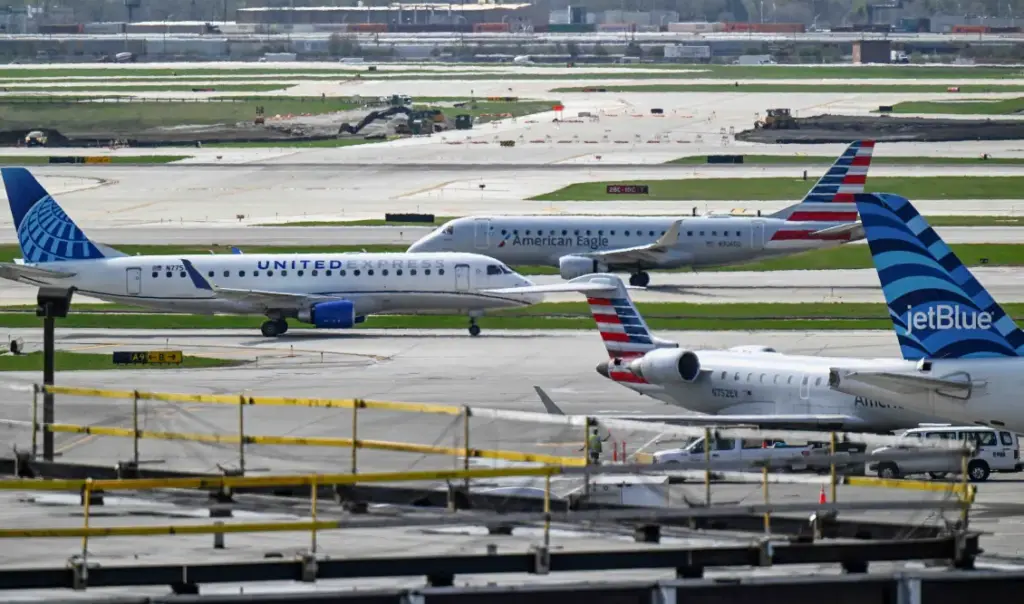
The Executive Director of the International Energy Agency (IEA), Fatih Birol, issued a serious warning, stating that Europe has aircraft fuel reserves sufficient for approximately six weeks. He also mentioned potential flight cancellations if disruptions in energy flows continue due to the situation in the Middle East.
“This is the biggest energy crisis we have ever faced”
Specifically, in his interview with the Associated Press, Birol described a particularly troubling picture of the global impacts of the crisis, which he characterized as “the biggest energy crisis we have ever faced.” As he noted, the crisis is due to the disruption of oil, natural gas, and other critical energy resources flowing through the Strait of Hormuz.
“In the past there was a band called Dire Straits. Now we have a truly ‘dangerous strait’ and this will have significant impacts on the global economy. The longer this situation lasts, the more negative the consequences will be for growth and inflation worldwide,” he stated characteristically.
The IEA chief warned that the crisis will lead to increased prices for fuel, natural gas, and electricity. “The impacts will be higher gasoline prices, higher natural gas prices, and higher electricity costs,” he noted.
According to Birol, the economic consequences will not affect all countries to the same degree. As he mentioned, countries like Japan, South Korea, India, China, Pakistan, and Bangladesh are on the front lines of the energy crisis.
“The countries that will be hit hardest are not necessarily those whose voices are heard the most. They will mainly be developing countries, poorer states in Asia, Africa, and Latin America,” he stated. As he added, the impacts will extend to Europe as well as the American continent. Speaking from his office in Paris, he emphasized that if the Strait of Hormuz does not reopen, Europe may soon face problems with air traffic. “I can say that we will soon hear news of flight cancellations from city A to city B due to lack of aircraft fuel,” he noted.
Birol also expressed his opposition to the so-called “toll” system that Iran applies to certain ships, allowing them passage through the Strait of Hormuz in exchange for payment. As he argued, the permanence of such a practice could create a precedent for other strategically important maritime routes, such as the Strait of Malacca in Asia.
“If we change it once, it may be difficult to return to the previous regime,” he said. “It will be difficult to implement a toll system here and not implement it elsewhere,” he added. “I would like to see oil flow unconditionally from point A to point B,” he concluded.