The escalatory rhetoric adopted by Turkey recently is not a random occurrence, but a systematic attempt by Ankara to place all issues at the center of the bilateral agenda, including the Muslim minority of Thrace. This strategy manifests through official statements from the Turkish Foreign Ministry, which challenge the existing legal framework and seek to assign national characteristics to a group that the Treaty of Lausanne explicitly defines as religious.
The latest trigger for this escalation was the 99th anniversary of the establishment of the so-called “Turkish Union of Xanthi.” The Turkish Foreign Ministry rushed to declare its support for an organization that Greek judicial authorities have refused to legitimize. They base this refusal on the organization’s connection to the Turkish Nationalist Movement Party, but mainly on the fact that the use of the term “Turkish” in its name is not provided for by any international treaty, as the Treaty of Lausanne recognizes only Muslim religious identity.
Ankara seeks to present the minority as a homogeneous “Turkish” group
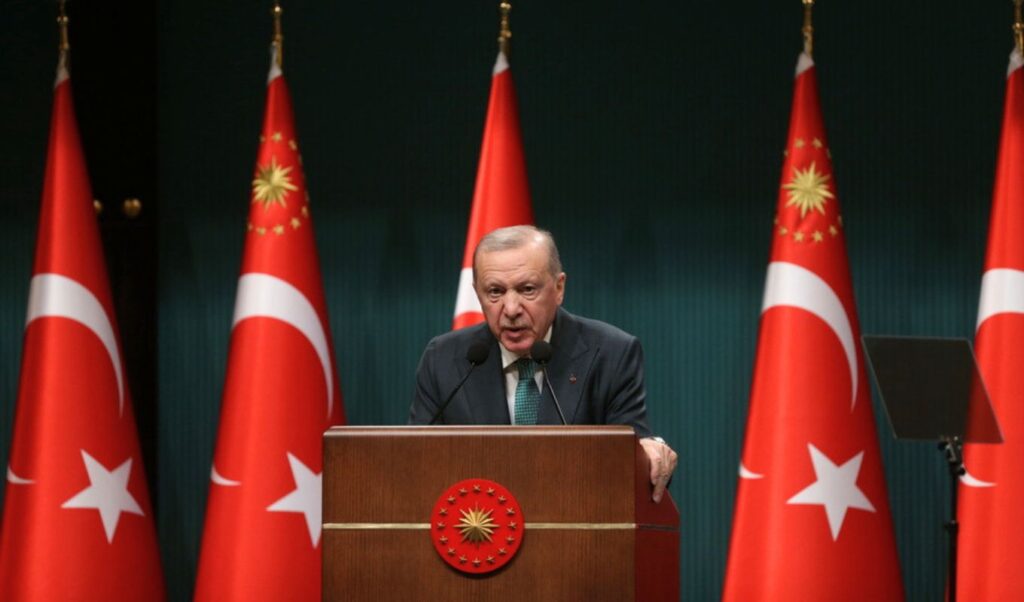
According to International Law Professor Angelos Syrigos, who spoke to parapolitika.gr, Turkey’s attempt to equate religion with national identity dates back to 1957. Ankara seeks to present the minority as a homogeneous “Turkish” group, deliberately ignoring that three distinct groups coexist in Thrace: Turkish-speakers, Pomaks, and Roma. This homogenization constitutes a basic pillar of its revisionist rhetoric, which was expressed even at the highest level by President Recep Tayyip Erdogan during his meeting with the Greek Prime Minister in Ankara, within the framework of the High-Level Cooperation Council.
A critical point of friction fueling Turkish aggressiveness is the implementation of the new Greek law for the appointment of muftis. This law provides for a transparent process where a committee composed exclusively of Muslims (including women for the first time) proposes candidates based on objective qualifications to the Minister of Education, such as their studies and curriculum vitae. This process has already led to the appointment of a new mufti in Didymoteicho, while similar moves are expected in Komotini and Xanthi, likely to be completed within the spring.
Turkey reacts strongly to this institutional safeguarding, as its long-term goal is to fully control the election of persons of its own choosing. Ankara proposes a process of “raising hands” in controlled gatherings within mosques, seeking to maintain its influence through the mufti, who is a person with great acceptance in the minority. As Mr. Syrigos notes, “procedures are proceeding for staffing mufti positions according to the law and soon we will have legitimate muftis in Thrace, as the law has not been implemented for many years.”
Staffing positions with legitimate muftis nullifies Turkey’s attempt to impose its own control mechanisms in a border Greek region. The escalation of Turkish rhetoric is also interpreted as a pressure tool for revising the Treaty of Lausanne. The Greek side, on the other hand, responds by reminding Ankara of its international obligations, emphasizing that the Muslims of Thrace are Greek citizens protected by the rule of law and international agreements.