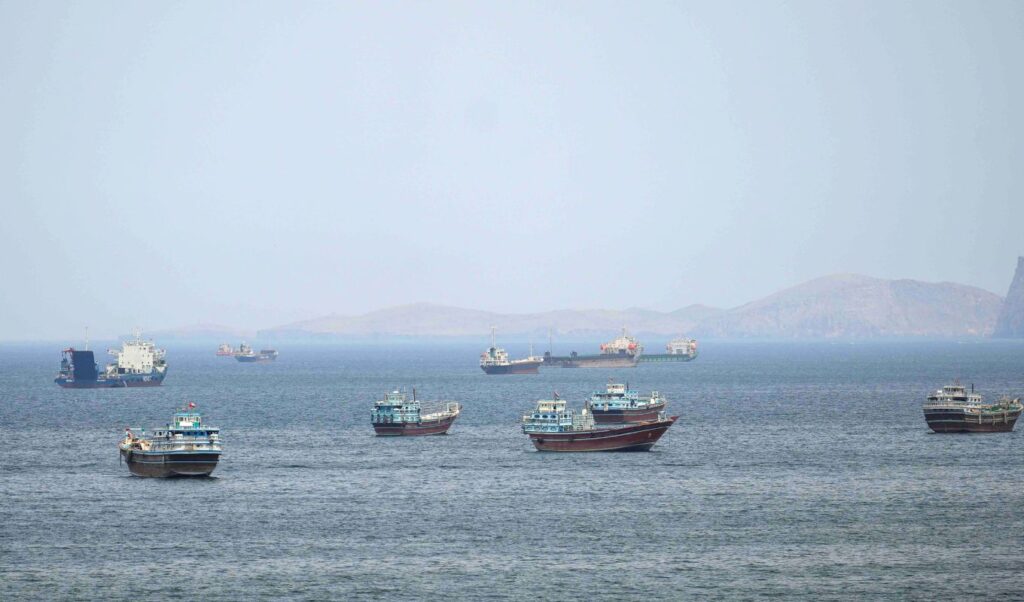
Iran has sent a new message to the United States, warning that the Strait of Hormuz will remain closed until Washington changes its position and accepts the conditions set by Tehran. This stance was expressed by the secretary of Iran’s Supreme National Security Council, Mohsen Rezaei, as efforts to reach an agreement that would restore calm to the Strait continue.
Read also: Iran: “We are not currently considering imposing transit fees through the Strait of Hormuz” — Iran’s position on the Saudi Arabia-Pakistan-Turkey defense agreement
What Iran is demanding
Iran is demanding, among other things, that the United States end the war and release frozen Iranian assets held abroad as preconditions for any change in the situation at the Strait of Hormuz. According to Rezaei, Tehran has additional conditions that have already been communicated to the American side through intermediaries.
Trump’s two options for dealing with Tehran
Meanwhile, Donald Trump outlined two distinct paths the United States could take toward Tehran: either waiting for economic pressure to inflict even greater damage on Iran, or launching a massive military strike.
The US president described Iranians as “very good negotiators” while revealing that some form of negotiation is already underway. “I’m doing something like negotiations,” Trump said in a phone interview with Real America’s Voice. “They’re very good negotiators.”
Pakistan: the US and Iran are close to reaching “some kind of” deal
It is worth recalling that the US president has repeatedly threatened further escalation since the conflict erupted in late February, while simultaneously leaving open the possibility of a deal that could lead to de-escalation.
Pakistan stated on Tuesday that the US and Iran are close to reaching “some kind of” agreement. Qatar, for its part, has said that talks on managing the Strait of Hormuz have reached an advanced stage. All of this is unfolding against a backdrop of reports of new attacks on vessels in the wider region.
Trump on Iran: “Economically, it’s a mess”
Speaking about the strategy he could pursue against Iran, Trump said: “Do what I’m doing now: just keep moving forward calmly and watch how badly they’re doing.” The US president argued that Iran’s economic situation is extremely precarious, placing particular emphasis on the country’s frozen assets.
“Economically, it’s a mess. They can’t borrow money. We control their money — what they had, which is a lot. They had a lot, and we have absolute control over it. I’m their banker,” he said.
Nevertheless, Trump also left the door open to a far more aggressive option, stating that the US could “hit them very, very hard.”
The US president also addressed reports that stockpiles of certain American munitions have been significantly depleted. Reuters had previously reported that the US military used a large portion of its long-range precision missile stockpiles during the conflict, raising concerns about American military readiness in the event of a new confrontation.
Trump dismissed concerns that this represents a serious problem, insisting that production is running at a high pace, while placing blame for the depleted stockpiles on his predecessor, Joe Biden.
“We don’t have a problem with ammunition… The reason the stockpiles are low — and we’re manufacturing like crazy — is because he (Biden) gave $300 billion worth of ammunition to Ukraine,” Trump said.