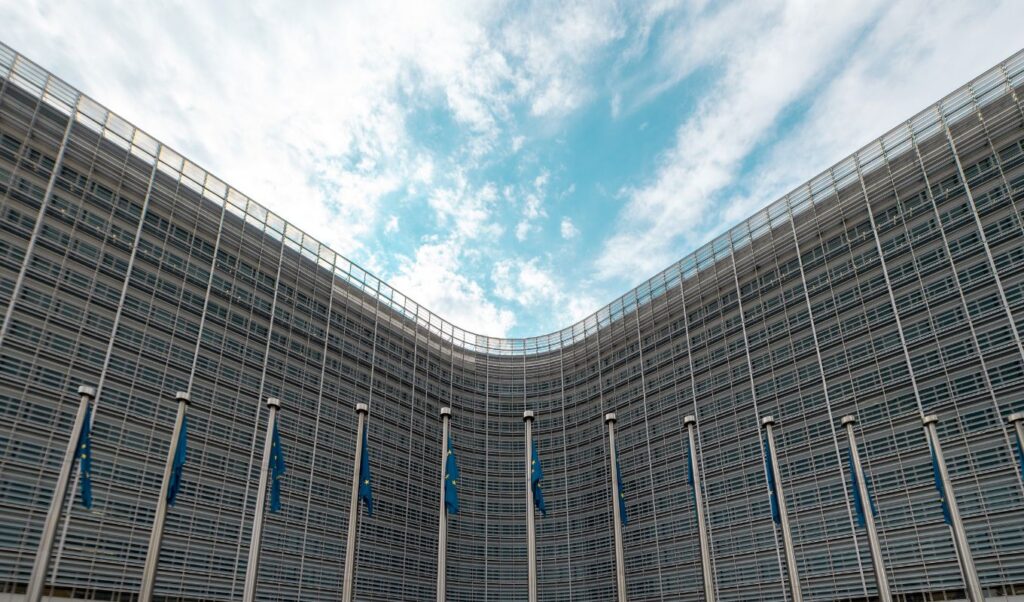
The European Commission announced today the deployment of the largest wildfire response operation with a record number of firefighters and aircraft to assist six high-risk countries. According to ERT, a total of 777 firefighters from 14 European countries will be strategically positioned in high-risk areas across Greece, Cyprus, Italy, France, Spain and Portugal. Additionally, 22 firefighting aircraft and 5 helicopters from the European fleet are ready to support countries under pressure.
Read: Commission against Turkey: Cyprus exclusion from COP31 processes unacceptable
Commission: Copernicus satellite services will provide mapping and analysis
Meanwhile, as stated by Hadja Lahbib, Commissioner for Crisis Preparedness and Management, this response is supported by 24-hour coordination. Throughout the fire season, experts at the EU Emergency Response Coordination Centre will monitor risks and support deployments based on meteorological and scientific analysis.
The European Forest Fire Information System will provide continuous risk forecasting, while Copernicus satellite services will offer mapping and analysis to support field decision-making.
Furthermore, the EU will inaugurate a new regional firefighting station in Cyprus in 2026, strengthening preparedness across Europe and the broader Southern Mediterranean region. The station will be able to host six aircraft and will support training and exercises.
The EU fleet for summer 2026 includes aerial assets from multiple European countries participating in the civil protection program. Specifically, Greece contributes four amphibious aircraft, Croatia provides two amphibious aircraft, while Cyprus offers two light aircraft, with an additional four supported by other European programs. The Czech Republic contributes two helicopters and France four amphibious aircraft along with one helicopter, while Italy provides two. North Macedonia and Portugal each provide two light aircraft. Romania and Slovakia each contribute one helicopter, while Spain provides two amphibious aircraft and Sweden two light aircraft.
The EU, through the Civil Protection Mechanism, assists countries when their own forces are insufficient, coordinating aid delivery through the Emergency Response Centre.