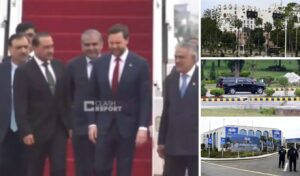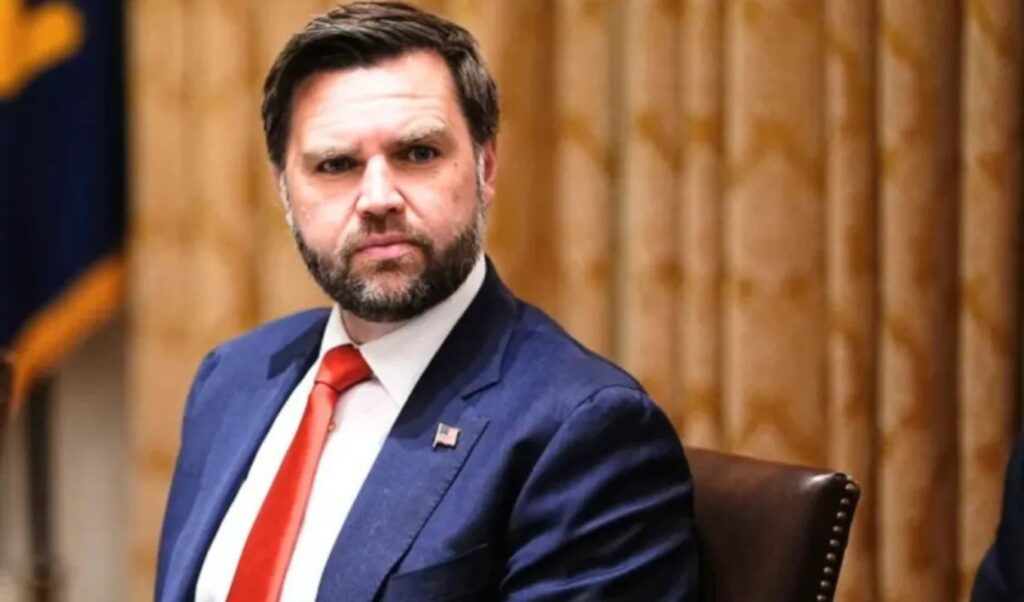
The marathon talks in Islamabad between the USA and Iran ended without results, as their delegations failed to reach an agreement to end the war in the Middle East, according to US Vice President JD Vance. He departed by air for Washington after submitting what he called “the final and best offer” he could make to Tehran’s envoys.
US-Iran talks end without results
Vance stated during a brief press conference in Islamabad, where American and Iranian negotiators had been talking since Saturday for 21 hours until early morning today, that: “We will return to the US without having closed a deal” and added: “I think it’s worse news for Iran than for the US” that the negotiations ended without agreement.
He specifically criticized the lack of a “clear commitment” from Tehran to abandon Iran’s nuclear energy program, as Donald Trump demands. He also stated: “We’re leaving after submitting a very simple proposal, an approach that represents our final offer and the best we could make. We’ll see if the Iranians choose to accept our terms or not,” emphasizing that “we made very clear what our red lines are.”
Iran: US demands unreasonable
For its part, Tehran confirmed the end of negotiations, attributing their failure to “unreasonable demands” from the US, according to reports broadcast by Iranian state television IRIB. The talks between the two countries, mediated by Pakistan, were conducted at an unprecedented level since the Islamic revolution in Iran in 1979. They aimed to find agreement for lasting ceasefire, following the announcement of a two-week ceasefire on Wednesday (8/4).
On the American side, Vice President Vance was accompanied by Steve Witkoff, White House special envoy, and Jared Kushner, Trump’s son-in-law and associate. Iran was represented primarily by parliament speaker Mohammad Bagher Ghalibaf, an influential politician, and Foreign Minister Abbas Araghchi. The delegation had about 70 members.
The spokesman for Iranian diplomacy Esmail Baghaei, before the failure and termination of negotiations was announced, emphasized that the talks concerned “various components of the basic issues under negotiation, including the Strait of Hormuz, the nuclear program, lifting sanctions, and the definitive end of war against Iran and in the region.” US Vice President Vance suggested that Washington would give Iran some time to consider the US “offer.”
No “official commitment” from Iran
“The fact is simply that we need official commitment from their side that they will not pursue acquiring nuclear weapons and will not pursue obtaining the means that would allow them to build (nuclear weapons) quickly,” JD Vance insisted. He emphasized: “The question is simple: will we see official commitment from the Iranians that they will not develop nuclear weapons — not just today, not just in coming years, but long-term? We haven’t seen it yet. We hope to see it.”
The US Vice President placed Iran’s nuclear program at the center of explaining why the talks failed, without mentioning the Strait of Hormuz issue in the press conference. This maritime artery of the Gulf, strategically important for global hydrocarbon supply, has been de facto closed since the American-Israeli war against Iran began, with serious cascading consequences for the global economy — shortages, price increases…
The US military announced yesterday that two of its destroyers entered the Strait of Hormuz for preparatory operations before clearing the naval mines that have been planted. “We’re sweeping the strait,” US President Trump bid to the press. The Revolutionary Guards, the ideological army of Iran’s Islamic Republic, conveyed they would take “harsh” action against any warship attempting to cross the Strait of Hormuz.
“I don’t care,” whether a deal is closed with Iran or not, US President Trump told the press yesterday while negotiations were still ongoing in Pakistan. “We defeated them militarily” and whatever happens “the US has won,” he declared.
Over 2,000 dead in Lebanon
It’s worth noting that in six weeks, the Middle East war has cost thousands of lives, most of them in Iran and Lebanon. After the ceasefire took effect, Israel maintained that Lebanon, where it continues war against the Shiite Hezbollah movement aligned with Tehran, was not included in the agreement.
Lebanese authorities announced yesterday they now count 2,020 dead and 6,436 wounded since the war spread to the country on March 2nd. Yesterday, Israeli airstrikes in southern Lebanon killed a total of 18 people, according to the Health Ministry. For its part, the Israeli military announced yesterday it hit over “200 Hezbollah targets” in the last 24 hours.
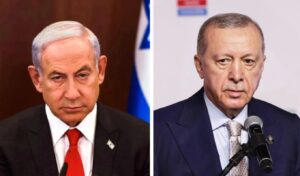
On Wednesday, Israel unleashed the most intense and deadly bombings of this war in Lebanon, with 357 deaths in just a few hours, according to the most recent official count. According to Lebanon’s presidency, talks will be held Tuesday at the State Department with Israel. Hezbollah rejected them. Israeli Prime Minister Netanyahu said yesterday his goal is to secure peace that will last “for generations.”