A two-week ceasefire between the USA and Iran was announced just before Donald Trump’s ultimatum expired. This development aligns with what “Parapolitika” had reported two weeks ago, regarding a possible ceasefire either on April 9 (as Israeli media also wrote) or April 28, to avoid the “pitfall” of Congressional authorization.
Such authorization would have been necessary if hostilities exceeded the 60-day limit, in a war that appears unpopular domestically (just weeks ago, the American president recorded his lowest approval rating since returning to the White House, something that certainly doesn’t leave him unmoved, as he himself had stated at the White House Easter event that the American people want the war to end and he wants to make them “happy”). This, of course, means anything but something definitive regarding peace prospects and participants in any peace framework, if such a thing is possible.
Unclear landscape in US-Iran negotiations
The picture regarding the basis of discussions is confused: Iran maintains that it’s proceeding based on 10 points that it has proposed and which the US has “accepted” (according to reports from the United States, this is not the same as the rather maximalist plan presented a few days ago). However, at the same time, there reportedly is a 15-point plan on the table, of American origin, which, nevertheless, if international media reports are accurate, doesn’t look very different from what Tehran had rejected. A major question also exists regarding the opening of the Strait of Hormuz, which remains a “weapon” in Tehran’s hands, with tolls paid in cryptocurrency being what’s required for passage, as well as the uranium enrichment issue, about which there are many conflicting views.
Israel remains unyielding
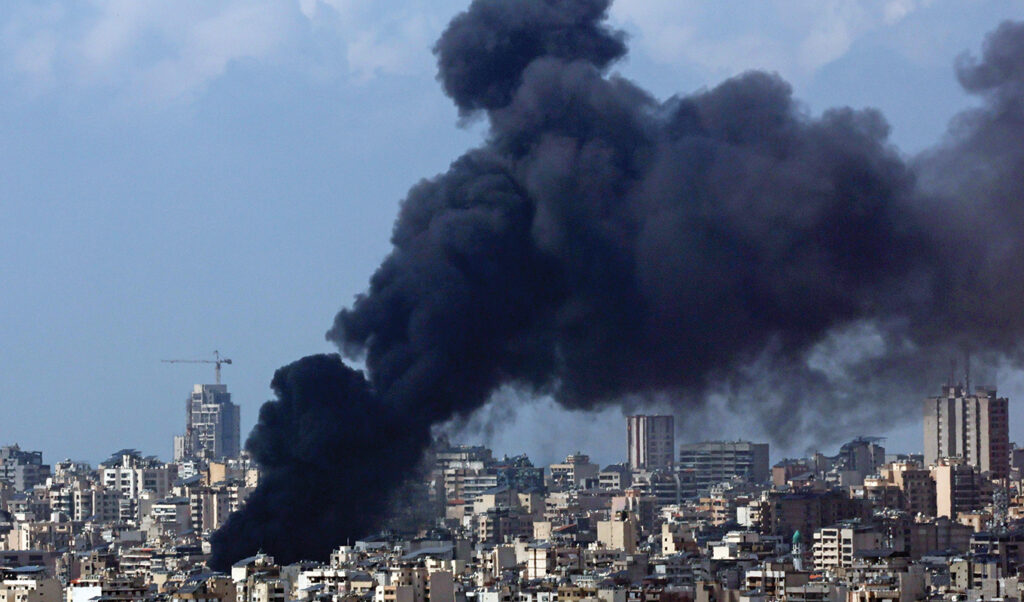
At the same time, and while not even the first 24 hours had been completed since the ceasefire announcements, there were significant changes regarding Lebanon: While Pakistan (and Iran) stated that the ceasefire extended there as well, Israel (immediately), and Trump (several hours later) seemed to adopt the view that Beirut is not part of the agreement, with the logic that it’s a different front. Thus, April 8 (in the early hours of which the ceasefire was announced) became the day when Israel’s strikes against Lebanon were the most intense since the war in the Middle East resumed, with 254 dead and 1,100 wounded being the toll, according to the Health Ministry of the affected country. The intensity was such that -according to the IDF- 50 fighter jets launched 160 bombs at 100 targets connected to “Hezbollah” in 10 minutes – this is the operation with the code name “Eternal Darkness.”
From the above, it becomes clear that Israel doesn’t seem to be backing down regarding its goals against “Hezbollah,” possibly in a quid pro quo with the US, in order to make acceptable the development of reaching a ceasefire with Iran, with Israeli media reporting that the American president was not opposed to continuing operations, despite the ceasefire with Iran, in a phone call he had with the Israeli prime minister. After all, the organization continues to pressure Israel’s northern regions, which, at the same time, doesn’t show willingness to abandon the “security zone” it wants to create within Lebanese territory. Moreover, simultaneous ceasefire with “Hezbollah,” beyond the one reached with Iran, would put Benjamin Netanyahu in an even more difficult position, as he already faces criticism from the opposition for developments regarding Iran and for a potential agreement without consent from Tel Aviv.
As long as both sides, each of which has reserved for itself the character of “winner,” show some conciliatory disposition, then the development can be the desired one
Diplomacy under pressure – Pakistan’s key role
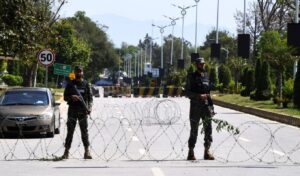
Regarding the possible prospect for a more long-term peace, this is clearly being questioned. Attention is already turning to Islamabad, as Pakistan has assumed the primary role for the ceasefire between the US and Iran, transmitting messages between the opposing sides. And for this reason, it’s expected to organize talks, which appear to be held behind closed doors and for which negotiators reportedly have been locked in (the president of the Iranian Parliament, Ghalibaf, on one side, American Vice President J.D. Vance, on the other). These are individuals who had their own role throughout the hostilities period, in order for some agreement to exist. The American vice president, moreover, was the one who -according to Axios- criticized Netanyahu for “selling” Trump an easy war, while simultaneously being considered a proponent of a more “isolationist” America.
That talks are even happening should already be considered a “victory” for diplomacy, as everything hangs by a thread and while the experience of these (talks) constitutes, at least for Tehran, a rather “bitter” experience. As long as both sides, each of which has reserved for itself the character of “winner,” show some conciliatory disposition, then the development can be the desired one and the -even if flawed- ceasefire can be maintained. After all, markets seem to desperately want this possibility, if one sees the plunge that oil prices took just in the first hours after the ceasefire began. And this will in any case have its own significance, provided the US and Iran can find common ground.
Published in Parapolitika