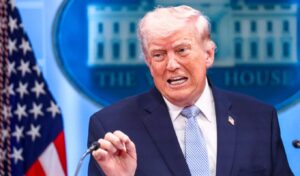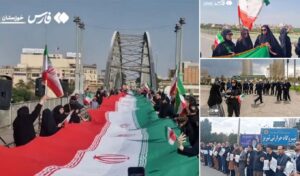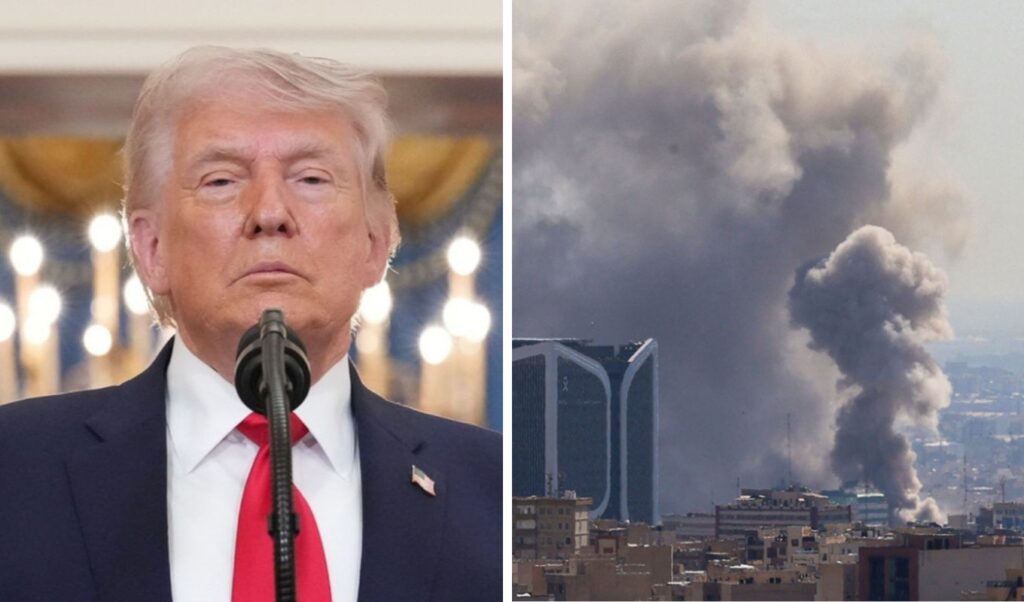
American President Donald Trump stands with his finger on the trigger, tightening the noose around Tehran and pressuring the Iranian side to reach a ceasefire agreement to reopen the Strait of Hormuz and remove the shadow of widespread turmoil over the global community. The choice of certain words in one of the US President’s latest messages on his social platform, Truth Social, was not accidental. He chose to escalate tensions by speaking of annihilation while leaving clear hints about the beginning of the end of a regime that – for Washington – has become associated with obscurantist practices and apparent regression. Given that Trump’s team has encouraged Iranian demonstrations against a regime creating social and economic suffocation, it’s not unlikely that one of the latest American-Israeli strikes could be linked to neutralizing a member connected to the Khamenei circle. On the other hand, the million-dollar question persistently hovering over the international geopolitical chessboard is exactly when Trump will strike. Will he press the button when the ultimatum expires, early Wednesday morning, or at an unsuspecting time afterward?
Among the scenarios presented earlier by the Wall Street Journal regarding the American President’s next moves, one suggests that military action might not ultimately occur. However, this is just one of the circulating scenarios. A second possibility is extending indirect negotiations, and the third is Trump ultimately deciding to unleash a fierce attack against Iran. The chances of continuing ceasefire plan processes at this given moment seem rather unlikely, as Islamabad’s ongoing efforts, delivering texts with ceasefire points, fall on deaf ears. Tehran, in fact, rejected the temporary truce proposal just 24 hours ago and favored continuing the war and extending the Strait of Hormuz blockade regime.
Meanwhile, international analysts estimate that – following his preferred tactics – the American President will conduct a surprise strike possibly within 72 hours, emphasizing regaining control of the Strait of Hormuz. For many, the ground intervention scenario seems rather unlikely as it would amount to activating a slow-burning bomb for US allies.
What is observed, however, is a picture of generalized anxiety and simultaneous readiness across Gulf states, which more or less indicate they will not remain observers to Iranian aggression. This fact might bring Trump closer to deciding to unleash fierce strikes at an unsuspecting time to achieve a more resounding blow against the Iranian regime. Potential Iranian retaliation is anxiously awaited, given that Tehran has threatened to plunge the entire Middle East region into darkness if it receives a major American attack.
Donald Trump: Ultimatums to Iran
This isn’t the first time during Middle East conflicts that Donald Trump has dictated ultimatum politics. The first time he raised deadline issues was on March 21, when he declared he would strike and eliminate energy production stations, starting with the largest ones first, if Iran didn’t reopen the Strait of Hormuz within 48 hours.
Two days later, he stated there had been “very good and productive conversations” between countries and postponed attacks on energy infrastructure for five days.
On March 27, Trump announced he would postpone the energy station attack for 10 days, “according to the Iranian government’s request,” moving the deadline to April 6.
Last Friday, with the April 6 deadline approaching, he warned that Iran had “48 hours” before total hell would break loose.
Meanwhile, Iran has made it clear that whatever political infrastructure the US targets, there will be retaliation against Gulf states. Thus, Kuwait, Bahrain, Saudi Arabia, the United Arab Emirates, and possibly Qatar will prepare accordingly if Trump proceeds with his threat.
Peace talk mediators are meanwhile working on confidence-building measures that Iran could accept regarding opening the Strait of Hormuz and its uranium stockpile. These two issues are the main thorns in negotiations as mediators want to see if Tehran could make certain steps on both issues during the agreement’s first phase.