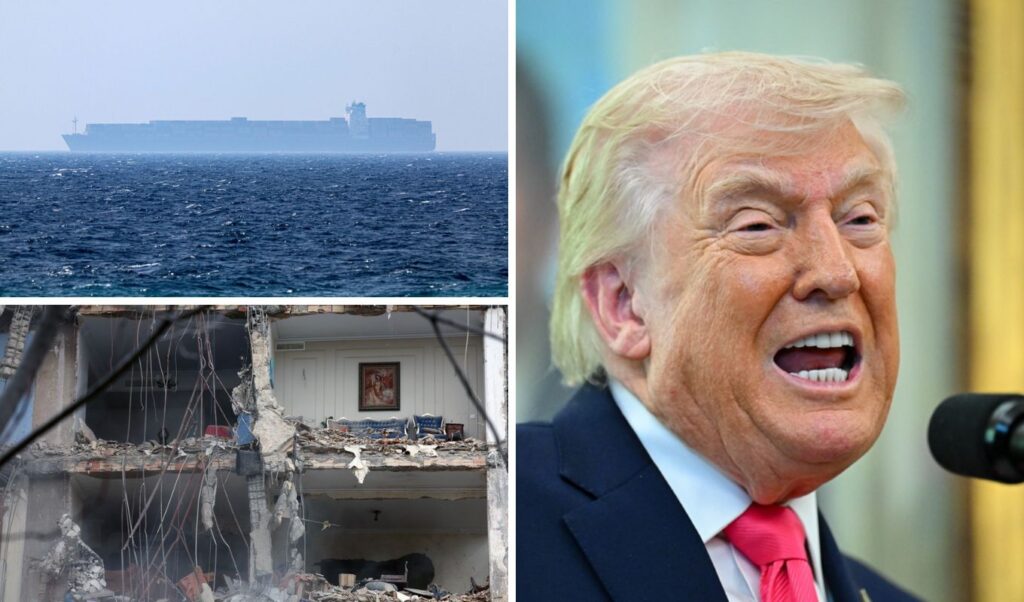
Against the backdrop of a 10-day extension to the moratorium on bombing Iranian energy facilities announced yesterday by Donald Trump, and with the “murky” negotiating landscape as talks apparently extend in Pakistan, the USA and Iran (as well as Israel) continue military operations, which now number 28 days. The focus is naturally on the Strait of Hormuz, with the participation of Western and Gulf states in an operation to open the critical passage node for global shipping and oil transport, while scenarios for an extensive American ground force gathering near the tension epicenter are intensifying. The same applies to mutual bombings in Iran and Israel, with Gulf States also participating in the conflict.
United Arab Emirates wants to “join” the alliance for opening the Strait of Hormuz
Specifically, the United Arab Emirates informed the US and other Western allies that they will participate in a multinational group to open the Strait of Hormuz, the Financial Times reported today, citing sources with knowledge of the matter. The Emirates are trying to pressure dozens of countries to establish a “Hormuz security force” to defend the trade-critical maritime route from Iranian attacks and escort ships, the FT article emphasized.
The country has become the target of more attacks from Iran than any other in the region, including Israel. Many US allies have stated they have no immediate plans to send ships to open Hormuz, rejecting American President Donald Trump’s request for military support to keep the maritime route open.
France noted yesterday Thursday that it had talks with about 35 countries seeking partners and proposals for a mission to open the Strait, but only after the Middle East war ends.
Iran has effectively closed the Strait of Hormuz, through which 20% of global oil and natural gas production passes, causing energy prices to surge and fears of inflation.
Meanwhile, the Emirates are working with Bahrain on a draft resolution to be submitted to the UN Security Council regarding opening Hormuz, but Russia and China – which have veto power – are likely to oppose the move, the FT report added.
Security Council members have begun negotiations on various draft resolutions aimed at protecting commercial shipping in and around Hormuz. Among the drafts is one submitted by Bahrain that would allow the use of “all necessary means” to open the Strait, Reuters reported earlier this week.
This maritime route is vital to the UAE economy, a major oil exporter and commercial hub. Iran has repeatedly attacked a UAE port outside the Gulf used for loading oil intended for export.
“US and Iran are preparing for direct talks,” Germany reports
The United States and Iran have already made indirect contacts and are preparing for direct talks, German Foreign Minister Jochen Wanke stated.
Speaking to Deutschlandfunk radio station, he said processes are underway for a meeting between representatives of both sides, expected to take place soon in Pakistan. “Based on my information, there have been indirect contacts and preparations have been made for a direct meeting. This will happen very soon in Pakistan,” he said.
Iran: Our targets are hotels hosting American soldiers throughout the region
Iran’s military warned that hotels hosting American soldiers throughout the region will become targets in its war with the United States and Israel.
“When all Americans (forces) enter a hotel, then from our perspective, that hotel becomes American,” Armed Forces spokesman Abolfazl Shekarchi told state television Thursday.
“Should we just wait passively and let the Americans hit us? Of course we must strike wherever they are.”
The Fars news agency, citing anonymous sources, reported that Iran had sent “clear warnings” to hotels in the region, particularly in the United Arab Emirates and Bahrain. It added that Iran’s military had identified American forces using similar locations in Syria, Lebanon, and Djibouti.
Thursday, Iran’s Foreign Minister Abbas Araghchi accused American soldiers of using people in Gulf Cooperation Council (GCC) countries as “human shields.”
“Since the beginning of this war, American soldiers abandoned military bases in the GCC to hide in hotels and offices,” he said in an X post, calling on hotels in the region to refuse them reservations.
Scenarios for US ground intervention – Iranian missile threat not “neutralized,” Tehran “has the upper hand for the Strait of Hormuz”
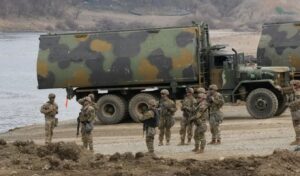
Parallel to developments, the Pentagon is considering sending an additional 10,000 troops to the Middle East to offer Donald Trump more military options, while peace talks with Tehran are underway, according to a Wall Street Journal report Thursday.
The newspaper cites Defense Department officials with knowledge of the planning, emphasizing the government’s military readiness and diplomatic balances in the region. Axios reports the same. The big question will be how “exposed” to hostile fire this force will be (beyond the Marines arriving in the region via USS Tripoli), as Tehran maintains its missile capabilities, though reduced, as the WSJ reports, with CNN “over-emphasizing” in its analysis, explaining why Iran maintains the upper hand in controlling the Strait of Hormuz, both due to geography (extensive coastline, nearly 1,000 miles, allowing missile system deployment, plus mountains, islands, difficult terrain providing cover for mobile military units) and available weapons systems, making any operation inevitably “costly.”
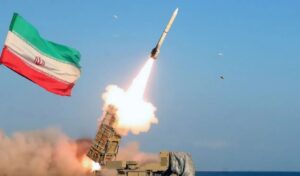
New extensive strikes on Tehran from Israel – Bombed the “most central facility” for naval missile and mine production
Meanwhile, the Israeli military announced this morning that it conducted extensive strikes on the Iranian capital Tehran, almost a month after the war outbreak, while shortly ago announced it detected missiles launched from Iran toward Israel, after 8 hours of “silence.”
“The military completed a short while ago a series of large-scale strikes targeting infrastructure of the Iranian terrorist regime in the heart of Tehran,” it noted in a brief statement, without further clarification.
Hours later, it announced it “targeted sites and infrastructure” used by Iran “for weapons production, mainly ballistic missiles.”
It also announced it “struck various targets connected to the regime’s firepower means” in western Iran, including “missile launchers and missile storage sites, which posed a threat” to Israel.
Simultaneously, the Israeli Air Force bombed Iran’s “most central” facility for naval missile and mine production. According to the announcement, the facility in Yazd was used by Iran for designing, developing, assembling, and storing “advanced missiles intended for launch from cruise ships, submarines, and helicopters toward mobile and fixed maritime targets.”
“This is a location where most missiles and naval mines are developed by Iranian naval forces,” the military states.
The raid, conducted after intelligence provided by the Military Intelligence Directorate and Naval Intelligence Directorate, “constitutes a significant blow to naval forces’ production capabilities,” the IDF adds.
Kuwait’s main commercial port hit
Meanwhile, Kuwait’s main commercial port was targeted this morning by “hostile” unmanned aerial vehicle (drone) attacks, Kuwait port authorities announced. The attack on Shuwaikh port caused material damage but no casualties, authorities clarified in their X post.
Meanwhile, Saudi Arabia announced it intercepted two drones in Riyadh and eastern areas of the country, as reported by the country’s state news agency.