The armed forces of Iran launched new barrages of missiles and unmanned aerial vehicles in the early morning hours against neighboring Gulf countries and Israel, while simultaneous American announcements about peace negotiations appeared to somewhat calm the markets.
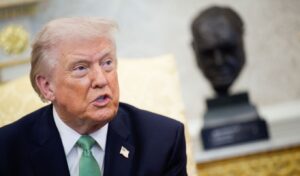
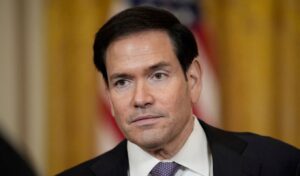
Iran and the US are negotiating “right now” the terms to end the war, American President Donald Trump assured yesterday, adding that his special envoy Steve Witkoff, his son-in-law Jared Kushner, Vice President J.D. Vance and Secretary of State Marco Rubio are participating in the supposed process.
Media outlets, including the New York Times and Axios in the US, and Channel 12 in Israel, reported that the Trump administration transmitted a 15-point plan to Iranian authorities to end the war, through Pakistan, as Islamabad maintains relations with both conflicting sides.
Channel 12 sources, who were not named, said Washington proposed a one-month ceasefire for Tehran to consider the proposal.
The 15 points for ending the war in Iran
The first five of the fifteen points of the plan concern Iran’s nuclear energy program, demanding that Tehran commit never to pursue nuclear weapons – something Iran has insisted for decades it never intended to do – surrender all highly enriched uranium to the International Atomic Energy Agency (IAEA) on an agreed date, completely stop enriching uranium, and permanently cease operations at major Iranian nuclear facilities, including the three main ones (Natanz, Isfahan, Fordow). Another demand is for Iran to stop supporting, financing and arming various movements in the region, from Hezbollah in Lebanon to Hamas in Gaza, and furthermore, to impose restrictions on the quantity of missiles the Iranian army can possess and their effective range.
In exchange, Iran would secure the lifting of international sanctions against it and support for its nuclear energy program, according to the reports.
Strait of Hormuz tensions ease – Trump speaks of “big gift” from Iran
Iranian authorities announced yesterday that “non-hostile ships” will henceforth be able to “safely” cross the Strait of Hormuz “in coordination with competent authorities,” according to the International Maritime Organization (IMO).
Nearly 20% of global hydrocarbon production passes through this strategically important maritime route under normal conditions, and its blockade by Tehran over the past nearly four weeks has driven up oil prices.
Donald Trump spoke yesterday of an Iranian “big gift” to him regarding oil and gas, without explaining what he meant. However, he may have simply been referring to the Iranian authorities’ announcement that they would ease the blockade.
Apparently in reaction to American promises of negotiations and the Iranian announcement about ship passages through the strait, oil prices fell and Asian stock markets returned to positive territory.
Iran denies negotiations
For now, however, Iran has not confirmed that any negotiation is taking place. Mohammad Bagher Ghalibaf, president of the Iranian parliament, who is presented by Axios as the main US interlocutor, categorically denied that talks are being conducted. Iranian diplomacy has only confirmed that it received American messages from “friendly countries” informing that Washington wants “negotiations.”
At the same time, reports in the American press speak of sending at least 3,000 military personnel, especially special forces elements, to the region, where the war shows no signs of de-escalating, with new Israeli bombardments in Iran and Lebanon and new Iranian missile launches against Israel, Jordan and Gulf monarchies.
Fire in Kuwait, two US bases targeted – US bases in Jordan, Bahrain under attack – 12 injured in Tel Aviv
The Revolutionary Guards, Iran’s ideological army, reported today that they launched attacks targeting northern and central Israel, including the Tel Aviv area, two American bases in Kuwait, one in Jordan and one in Bahrain.
According to an Israeli first aid service, 12 people were injured last night near Tel Aviv by one or more Iranian missiles.
In Kuwait, a drone raid caused a fire in a fuel tank at the emirate’s international airport, according to the civil aviation service, which reported no casualties.
New strikes on Tehran
For its part, as in previous nights, the Israeli army announced it began conducting a “new wave of strikes targeting infrastructure of the Iranian terrorist regime in Tehran.”
“The bangs, explosions and missiles are now part of our daily life,” a 35-year-old from Iranian Kurdistan, who is a permanent resident of Tehran, told the French Press Agency by phone.
At least 9 killed in Lebanon
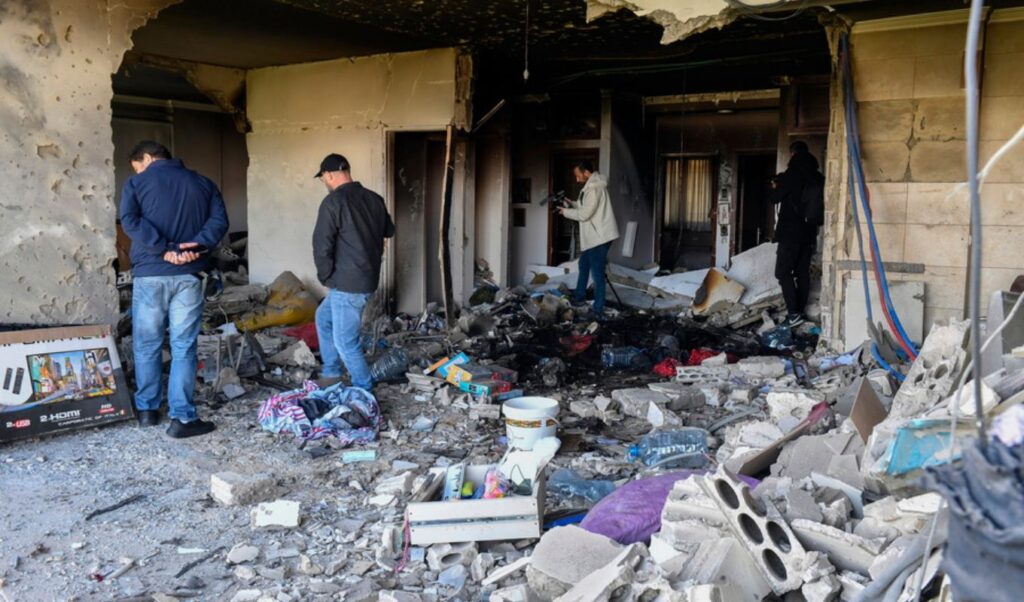
Israel also continues its offensive in Lebanon, where at least nine people lost their lives in airstrikes that targeted communities in southern Lebanon, considered a stronghold of the Shiite Hezbollah movement, according to the official Lebanese news agency ANI.
The Israeli army simultaneously ordered citizens of seven neighborhoods in the southern sector of Beirut, another Hezbollah stronghold aligned with Iran, to evacuate urgently ahead of bombardments.
Since Lebanon was drawn into the war on March 2nd, Israeli bombardments have killed over a thousand people and displaced more than a million, according to authorities.
Israeli Defense Minister Israel Katz stated yesterday that his country’s army was ordered to make “maneuvers inside” Lebanon and establish an “advanced defense line” up to the Litani River, about 30 kilometers from the border between the two countries, defying calls, particularly from France, not to proceed with a ground invasion and not to attempt to seize Lebanese territories.
APE-MPE