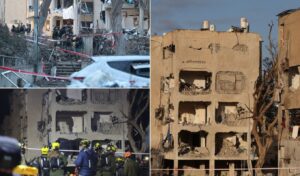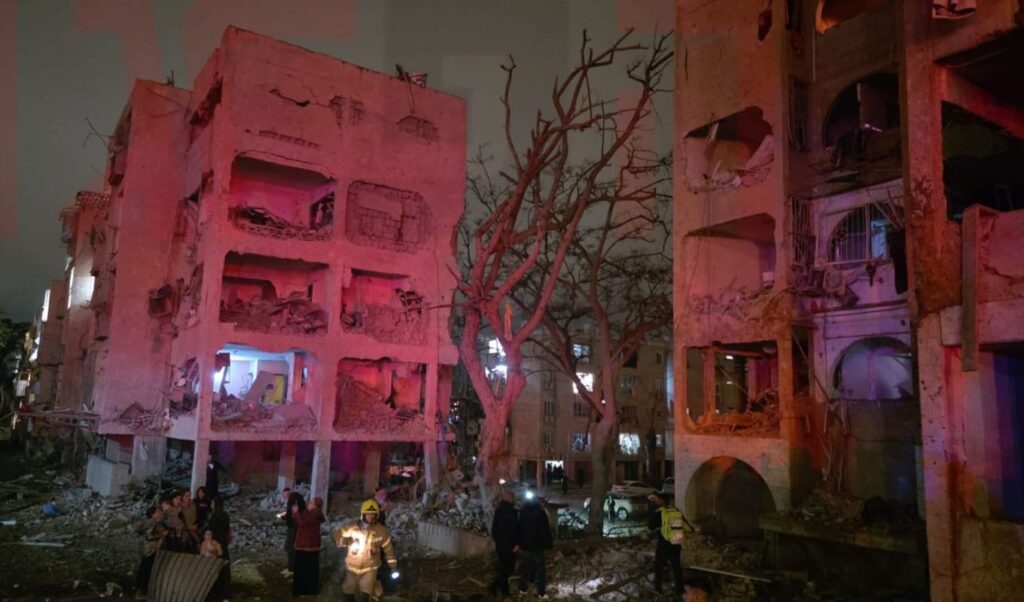
Scenes of chaos unfolded on Saturday night in southern Israel, when Iranian ballistic missiles struck residential areas in the cities of Arad and Dimona, causing approximately 100 injuries and extensive damage. According to initial reports, at least two missiles were not intercepted by air defense systems and hit urban areas.
Among the injured are a 12-year-old boy and a five-year-old girl, both hospitalized in critical condition. Meanwhile, Israeli media earlier reported possible fatalities, though there has been no official confirmation so far.
View this post on Instagram.
Fears of people trapped in destroyed buildings in Arad
In Dimona, at least 27 people were injured, including a teenager who sustained serious shrapnel wounds. In Arad, the number of casualties is even higher, reaching 68, of whom 10 are in serious condition and 14 have moderate injuries. The remaining received first aid for minor injuries.
Israel confirms the strike in Arad and reports casualties and injuries pic.twitter.com/Idl2Yi21kF
— olympiaGR (@olympiada) March 21, 2026
The situation was deemed particularly serious, with Soroka Hospital in Beersheba declaring a mass casualty event as rescue teams operated at multiple impact sites. Magen David Adom emergency service CEO Eli Bin stated there are fears of people trapped in destroyed buildings in Arad, describing the incident as “a massive scale event.” He said there are people whose fate remains unknown.
According to initial assessments, one of the missiles carried a conventional warhead weighing hundreds of kilograms and fell between residential buildings, causing serious damage and fires in neighboring structures.
Videos circulating online reportedly show the moment of impact just seconds after sirens were activated, though their authenticity has not been independently verified.
Israel: investigation into air defense failure
Meanwhile, the Israeli Air Force announced it has launched an investigation into the failure to intercept the missile that struck Arad, while the Home Front Command is conducting a parallel investigation. Israeli military spokesperson Brigadier General Efi Defrin noted that “air defense systems operated but failed to intercept the missile,” adding that the incident will be thoroughly investigated. “This is not some unknown type of ammunition,” he remarked.
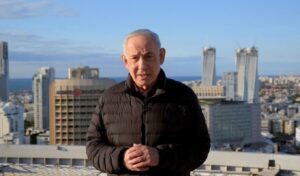
Prime Minister Benjamin Netanyahu described it as “a very difficult night in the struggle for our future,” emphasizing that Israel will continue to strike its enemies “on all fronts with determination.”
Warnings of nuclear accident risk in Dimona
Particular concern arises from the fact that Dimona hosts the Shimon Peres Negev Nuclear Research Center, which is considered pivotal to Israel’s undeclared nuclear program. The International Atomic Energy Agency announced that while it has received reports of strikes in the area, there are no indications of damage to nuclear facilities, nor were elevated radiation levels detected.
At the same time, the agency’s head, Rafael Grossi, appealed for restraint, warning of the risk of nuclear accident.
Exchange of accusations and escalation
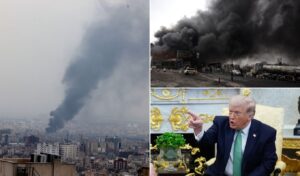
Iranian state-linked media claimed that the strikes on Dimona were a response to alleged US and Israeli attacks on nuclear facilities in Bushehr and Natanz. Israel denied any involvement in an attack on Natanz.
“The enemy received yet another unforgettable lesson. No area is safe from Iranian missiles,” the Iranian Tasnim agency characteristically stated, in a declaration that has not been confirmed.
Air raid sirens sounded repeatedly throughout the night in Dimona, indicating that the threat remains active.
It should be noted that just days earlier, Israeli authorities had relaxed certain restrictive measures in parts of the country, allowing among other things the reopening of schools – a decision that is now being questioned again.
Very close footage of Iranian missile hitting Dimona tonight. https://t.co/k0eps71ROl pic.twitter.com/sDso1Zqv3E