Tensions in the conflict between the US and Israel against Iran are escalating as the war enters its fourth week. The Israeli military announced the detection of a new series of missiles launched from Iran toward Israel, shortly after a previous attack. This marks the second such warning within an hour. So far, there are no confirmed reports of casualties or damage, while the situation remains particularly tense due to continuous attacks and retaliations between both sides.
This morning, AFP reporters reported hearing powerful explosions in Jerusalem, following an Israeli military warning about incoming Iranian missiles toward central Israel. The Magen David Adom emergency service stated that no injuries have been recorded so far. Meanwhile, explosions also occurred in other areas of central Israel, with sirens sounding and air defense systems attempting interceptions. According to the Israeli armed forces, ballistic missiles caused explosions in areas such as Rishon LeZion. The Israeli military reiterated that air defense systems are in full operation to counter the threats.
At the same time, the “Islamic Resistance in Iraq” organization claims to have launched 21 attacks against American bases in Iraq and other Middle East regions within the last 24 hours, using drones and rockets. These specific claims have not been confirmed and are part of the broader context of increasing regional tensions.
Trump’s ultimatum to Iran over Strait of Hormuz: “The US will strike and destroy their various energy production stations”
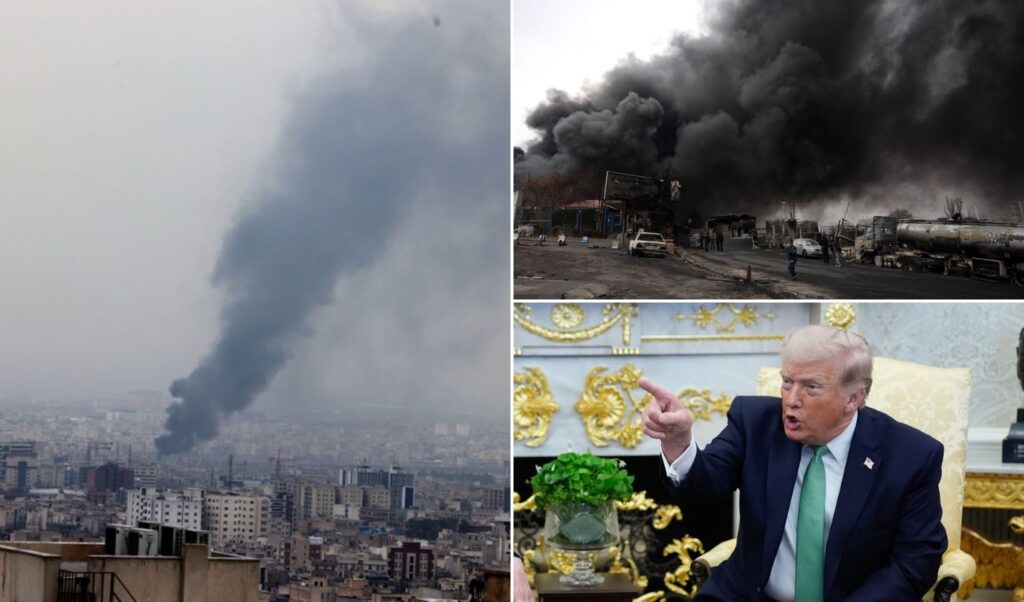
Donald Trump sent a stern message to Iran, giving a 48-hour deadline for the full and unimpeded reopening of the Strait of Hormuz. Otherwise, he warned that the United States would proceed with targeted strikes against the country’s energy infrastructure.
In a post on his Truth Social platform, Trump emphasized that if Iran does not ensure free passage without threats through the strategically important strait within the specified deadline, the US will attack and destroy energy production facilities, starting with the largest ones. “If Iran does not fully open, without threat, the Strait of Hormuz within 48 hours from this exact moment, the US will strike and destroy their various energy production stations, starting with the largest,” Trump threatened in a Truth Social message.
The Strait of Hormuz is one of the world’s most important commercial routes, through which one-fifth of the world’s oil and natural gas transported by sea passes.
Several NATO members and other US allies committed last week to participate in “appropriate efforts to ensure safe passage” through the Straits, although they have not provided details on how they will do this. Trump earlier called the alliance members “cowards” for not intervening to help protect the strait.
Iran threatens humanitarian catastrophe – “Desalination plants will become targets”
Tehran gave an immediate response to Donald Trump’s ultimatum through a spokesperson for the Central Command Khatam al-Anbiya. “If Iran’s fuel and energy infrastructure is attacked by the enemy, all energy infrastructure, information systems, and desalination facilities belonging to the United States and the ‘regime’ (Israel) in the region will become targets,” the official stated characteristically. The reference to desalination units is considered indirect blackmail toward the Arab Gulf countries (Saudi Arabia, United Arab Emirates, Kuwait, Qatar).
This statement is the Iranian response to the 48-hour ultimatum given by Trump on Saturday, threatening to “level” Iran’s power generation stations if they do not immediately open the Strait of Hormuz.
The Gulf countries (Saudi Arabia, United Arab Emirates, Qatar) depend almost 100% on desalination for their drinking water. An attack there would mean a humanitarian catastrophe. Iran also threatens massive cyber attacks that could paralyze the banks and energy networks of the US and its allies in the region.
It should be noted that Israel has large desalination units in the Mediterranean, but for the Arab monarchies of the Gulf, desalination is a matter of survival. Without them, their cities (Dubai, Riyadh, Doha) run out of water within days.
Iranian official: “Attackers must stop their attacks for Tehran to show restraint”
For his part, Iranian Foreign Ministry spokesperson Esmail Baghaei told Sky News that it is futile to expect restraint from Iran while the country is continuously bombed by airstrikes.
Baghaei said that the “attackers” who started the attack must first stop before receiving any response from Tehran.
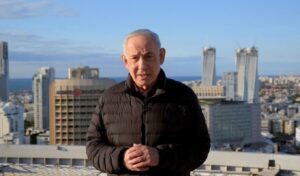
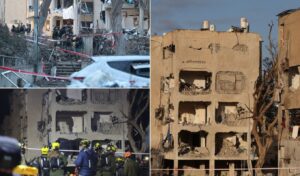
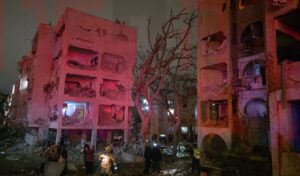
Iran retaliated against the American-Israeli attacks by striking the southern Israeli cities of Dimona (where Israel’s nuclear research center is located) and Arad, injuring 100 people, 11 seriously, with Israeli Prime Minister Benjamin Netanyahu speaking of a “difficult night of battle in the fight for our future” and emphasizing that US and Israeli attacks on Iran will “increase significantly” this week.
BBC: Trump at crossroads as US weighs difficult choices on Iran
The BBC, in its article, presents Trump’s latest statements regarding the war, commenting that Trump finds himself at a “crossroads as the US weighs difficult choices on Iran.” After presenting Trump’s ultimatum, the British outlet recalls that the previous day he had used Truth to publish a list of American military targets for the war with Iran, which, he said, the US is “very close” to fulfilling. However, the Strait of Hormuz was not included in the list he presented.
Trump had emphasized that opening the Straits should be the responsibility of other countries that depend on oil exports from the Gulf. The American has pointed out that the US does not depend on Middle Eastern oil; however, price fluctuations affect the US as well.
The BBC highlights that Trump’s post contains no reference to regime change in Iran. As the British outlet comments, references to Iran’s leader and “unconditional surrender” no longer exist.
As it reports, an escalation scenario is also on the table, with the deployment of American ground forces to the Middle East and possible occupation of Kharg Island, a major oil export hub, to damage Iran’s revenues and force it into concessions.
At the same time, Iran warns that such a move would provoke retaliation, threatening shipping in the Red Sea and energy infrastructure in the broader region, significantly increasing the risk of generalized conflict. Meanwhile, the Trump administration appears to be preparing for a long and expensive involvement, requesting emergency funding of $200 billion, although Congress, even Republicans, appears skeptical and demands more explanations.
The BBC concludes by writing that “the war with Iran, it seems, is at a critical point. But the direction it will take from here is an enigma.”