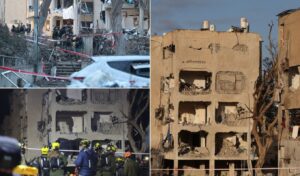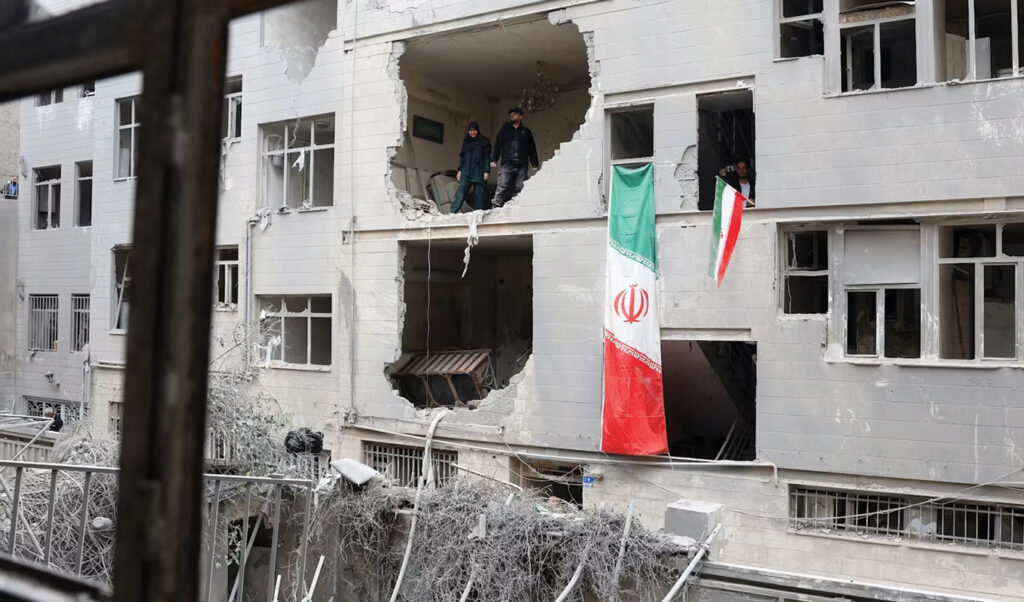
The war between Israel and the US against Iran has entered a new phase, as three weeks have now passed since the beginning of intense strikes against Tehran’s regime.
Middle East: Israel’s “decapitation” tactics
Israel, as it did in the war against Hamas and Hezbollah, and to a large extent in June against Iran, targets enemy leadership, applying the classic “decapitation” tactic. From the mastermind of Hamas’s October 7, 2023 attack, Mohammed Deif, to Hezbollah’s Hassan Nasrallah, to Ayatollah Ali Khamenei, often referred to as the de facto head of Iran’s state apparatus, Ali Larijani, and even Information Minister Esmail Khatib, the pattern remains the same: surgical strikes through Israel’s complex intelligence network, aimed at paralyzing the enemy and creating substantial confusion by neutralizing their leaders.
Iran’s response capabilities and the Strait of Hormuz
However, every operation has certain factors that must not be forgotten amid the murky landscape created by war: First of all, Iran appears to retain the ability to strike both Israel (with reports of using cluster bombs) and primarily Gulf states, in a tactic of spreading the conflict. Iran, specifically Tehran’s regime, does not aim to win as much as to survive, creating turbulence in the global economy through probably the most anticipated move it could make: closing the Strait of Hormuz.
Indeed, it appears to have anticipated Israeli tactics, if one recalls the “Mosaic Decentralized Defense,” Iran’s war doctrine. This was the lesson Tehran learned from the collapse of Saddam Hussein’s regime, with this strategy being developed in 2008 by the then-head of the Revolutionary Guards, Mohammad Ali Jafari.
The central idea is organizing the state’s defensive structure into multiple regional and semi-autonomous levels, instead of a unified command chain that could be paralyzed by a surgical strike on leadership. This gives great operational autonomy, so the system continues to function under any circumstances, without waiting for orders from above to, for example, launch a missile attack or deploy a swarm of drones. At the same time, by neutralizing leadership, Israel cannot be certain it has “solved the problem.”
The Hezbollah example and consequences of leadership elimination
Hezbollah’s example is indicative: The assassination of Abbas al-Musawi brought Hassan Nasrallah to the forefront, who transformed the organization into what it is today. This was documented in the book “Rise and Kill First” by Israeli journalist Ronen Bergman, noting that there were officials in the Israeli Defense Forces who disagreed with Musawi’s “elimination,” as he could be replaced “by someone more radical.”
Trump does not seem willing to retreat – At the center of concerns are the Strait of Hormuz, which he desires to keep open, even if it requires deploying warships
Donald Trump’s role and American strategic priorities
In any case, Israel appears willing to continue its tactics, seeking to crush Tehran’s theocratic regime. The question, of course, is keeping Donald Trump on its side until achieving its objective—definitively, if possible. The American president has specific issues requiring his attention: for example, the existence of at least part of his electoral base that takes positions in Washington’s governmental structure and is influenced by isolationist tendencies, seeking to limit US international presence, at least in “adventures” in places like Europe and the Middle East.
However, what can keep Washington in this “war game” (a game that certainly marks the loss of human lives) is how it can change in favor of the American-Israeli axis and what is often understood as the “West,” particularly in the energy sector and power projection against China primarily. Thus, a possible overthrow of Tehran’s regime reorders the balance, with Iran, which was a “hub” on the “Silk Road” (as in antiquity, with monuments in its territory testifying to this) and China’s partner in the Middle East, potentially changing priorities. Alternative routes-counterweights already exist, such as the IMEC corridor, resulting in Beijing (which seeks to remain “in the game” mainly through diplomacy) seeing its influence diminish. This, after all, is Washington’s strategic goal consistently since Trump’s return to the presidency, having started a similar “campaign” in the Western Hemisphere (e.g., Panama, Venezuela, etc.) and now proceeding to Eurasia’s “fertile crescent.”
With this reasoning, Trump does not seem willing to retreat. At the center of concerns are the Strait of Hormuz, which he desires to keep open, even if it requires deploying warships, as this serves American interests as the dominant sea power seeking free navigation. Beyond that, there’s the possibility of a potential landing, an operation with clear risks and casualties: already, the “USS Tripoli” reportedly, according to American media, is moving toward the Middle East and is believed to be carrying soldiers from the 31st Marine Expeditionary Unit (MEU) based in Okinawa. This force could potentially be used in different operations, expanding the American president’s range of options.
Published in Parapolitika