“We are on track” – the meaningful message Washington sends at a critical juncture for the Middle East war, explaining why continued actions against Iran are paying off, delivering maximum results – namely, according to American leadership, eliminating the terrorist threat while reducing Tehran’s missile and nuclear capabilities. However, no clear answers have been given regarding the Strait of Hormuz issue, for which six countries issued a joint statement calling on Iran to stop attacks and demanding guarantees for free navigation – a basic prerequisite for compliance with International Law principles. Meanwhile, anxiety remains high over energy prices, an issue that has divided the EU “27” on whether to take a holistic approach, with the rally continuing as geopolitical turmoil hit markets during three “hot” days, pushing oil prices beyond the “psychological barrier” of $100 per barrel.
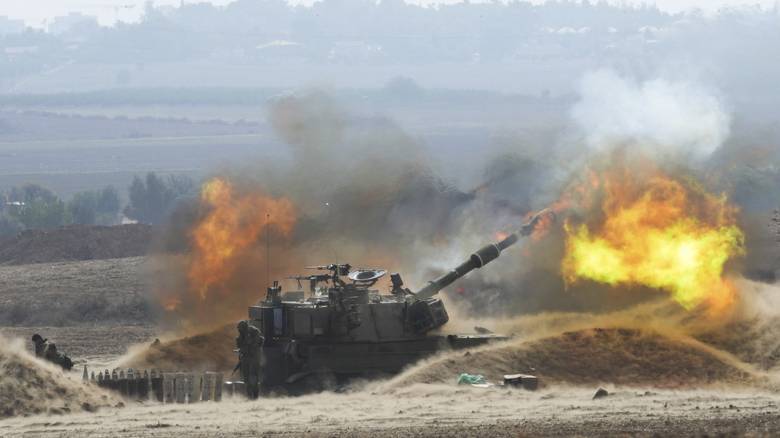
With politicians, allies, and business circles criticizing the Republican leadership and suggesting the start of an “unnecessary war,” US Defense Secretary Pete Hegseth presented detailed results of American operations in the Middle East and provided his own answers. He didn’t avoid the contentious question of why the US decided to participate in joint strikes with Israel during a period when informal reconstruction operations have begun in the region following the elimination of high-ranking Hamas and Hezbollah officials.
Despite not yet achieving the desired elimination of Iran’s new Supreme Leader Mojtaba Khamenei, who continues issuing threats and promising blind revenge in the name of the theocratic regime, Donald Trump’s associates explain why the current picture of the operation’s progress is significant, having substantially weakened Tehran’s defense systems.
How the war against Iran is developing, the next targets
Pete Hegseth, outlining the military operation’s objectives, spoke about destroying missile launchers, destroying Iran’s defense-industrial base, destroying Iran’s navy, and ensuring Iran never acquires nuclear weapons.
He emphasized that the US has sunk more than 120 Iranian warships, while noting that all 11 of Iran’s submarines have been neutralized.
Comparing the Iranian regime to Hamas in Gaza, Hegseth emphasized that Iran has invested money in tunnels, missiles, projectiles and unmanned aircraft.
The US has struck over 7,000 targets in Iran to date, he continued, adding that Thursday will see the largest attack package to date.
The US Defense Secretary noted that Iranian ballistic missile attacks and unilateral drone attacks against American forces have “decreased by 90% since the conflict began.”
Criticism of Europe
The US, he added, has destroyed or sunk at least 120 Iranian warships, with their surface fleet “no longer a factor” and their submarines “disappeared.”
“Such a regime, which refuses to abandon its nuclear ambitions, is not simply a regional problem, it is a direct threat to America, freedom and civilization,” Hegseth emphasized regarding Iran.
He also stated that “the world, the Middle East, our ungrateful allies in Europe, even parts of our own media should be saying one thing to President Trump – ‘thank you.'”
Oil prices and the US Treasury Secretary’s commitment
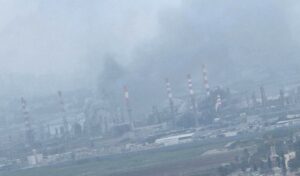
Natural gas prices soared to four-year highs while oil prices rose again following escalating attacks between Israel and Iran on natural gas deposits, intensifying fears of prolonged international energy supply disruption.
Brent crude oil, the global oil benchmark, rose 8% to $116 per barrel. Crude prices have increased 60% since the US-Israel war against Iran began on February 28.
Natural gas prices in Europe rose, with Dutch wholesale natural gas prices increasing 24% to 68 euros per megawatt-hour, the highest since late December 2022.
Meanwhile, US Treasury Secretary Scott Bessent focused on the fact that the US may lift sanctions on Iranian oil as they seek ways to keep energy prices under control.
This move would affect approximately 140 million barrels of oil, as the Secretary implied in his Fox Business interview. When asked about concerns that the US is funding its enemies, Bessent emphasized they would use “Iranian barrels against the Iranians” to keep prices low for the next 10-14 days.