Ankara is once again raising the stakes with familiar aggressive rhetoric against Greece’s defensive presence in the Aegean, triggered by moves to strengthen island defenses amid broader tensions caused by the Middle East conflict. The vice president of Turkey’s ruling Justice and Development Party, Hüseyin Yayman, commenting on Greek defensive measures, chose to deliver a direct and aggressive warning to Athens, stating that if Greece arms its islands against Turkey, those weapons are not sufficient against the unity and solidarity of the Turkish nation. With this rhetoric, Turkish leadership returns once more to familiar pressure politics, combining threatening implications, challenging Greece’s right to defense, and appealing to diplomacy only at the rhetorical level. The essence, however, is that Ankara is attempting to present Greek defensive fortification not as an obvious right of self-protection, but as a move that allegedly changes the character of the Aegean and undermines regional balances.
Read: Milliyet: Turkey’s protest letter to NATO, EU and USA over Patriot missiles in Karpathos
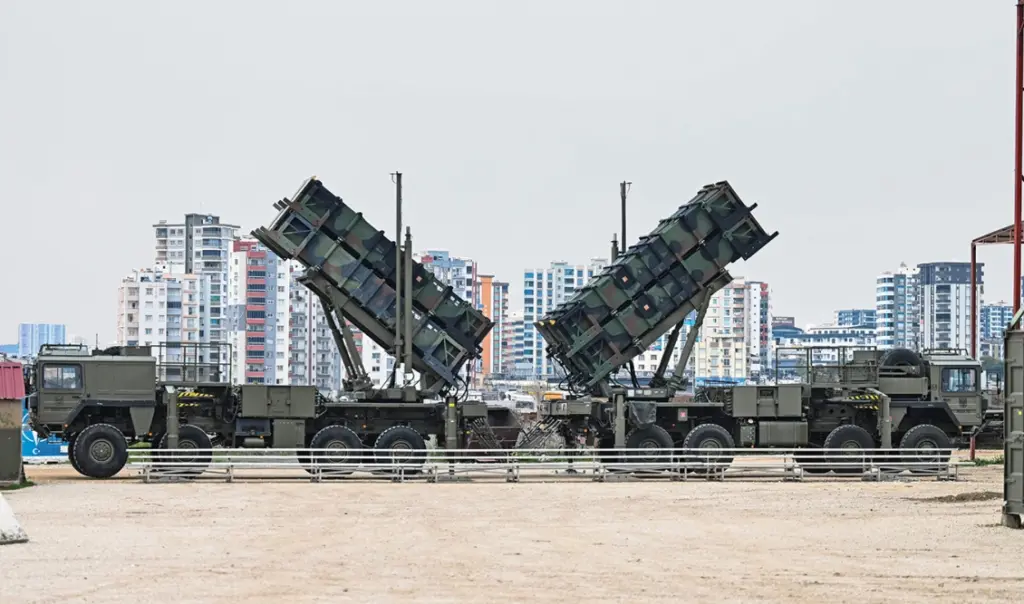
Turkey’s Defense Ministry had already accused Greece of violating the status of certain islands by deploying Patriot systems in Karpathos, claiming actions contrary to treaties and warning it is taking “all necessary measures.” Athens’ response was immediate, with the Greek side rejecting Turkish claims as legally unfounded and insisting that the country’s defensive stance is non-negotiable. Kathimerini reported that Athens characterized Greek support and defensive presence on the islands as purely defensive actions, while Anadolu presented the Patriot deployment in Karpathos from the Turkish perspective as a violation of international treaties.
New provocation from AKP over islands and Greek defense
Hüseyin Yayman’s statement follows exactly the same line. It attempts to frame Greek moves within a narrative claiming Athens is systematically militarizing the Aegean with support from the United States, NATO and Israel, seeking to appear as a critical player in potential regional crisis. In practice, Turkish rhetoric tries to transform Greece’s purely defensive choice into an allegedly aggressive message against Turkey. However, the picture that has emerged recently shows Greece strengthened its air defense in Karpathos and more broadly along the Crete-Karpathos-Rhodes axis due to Middle East instability and fears of broader regional escalation. This is exactly what Greek and international reports indicated when the transfer of the Patriot battery to Karpathos was recorded in early March.
The Turkish side, however, insists on interpreting these moves through the permanent prism of demilitarization. This includes analyses hosted or reproduced by Turkey’s state and semi-official media network, claiming Greece allegedly violates clauses of the Treaty of Lausanne and the Paris Peace Treaty. Greece’s response to this remains consistent: Turkish claims are unfounded, the country’s right to defense is non-negotiable, and the threat emanating from Turkey’s stance makes defensive fortification not only legal but necessary.