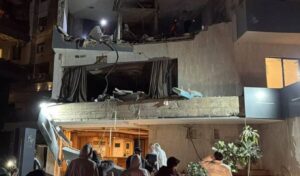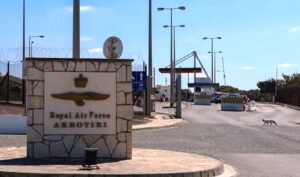
Cyprus remains on high alert, despite the fact that no new attacks have been recorded from Iran and Lebanon. Authorities are proceeding with preventive measures, such as evacuating residents from areas around the Akrotiri base, who are being transferred to safe locations until the situation becomes clearer. Under these conditions, allies of the Republic of Cyprus have mobilized, sending significant military assistance.
However, in Cyprus, as parapolitika.gr noted on Tuesday, great displeasure was expressed toward London, mainly due to the fact that it took no protective measures for the island after deciding to allow the US to use the bases for military purposes, thus putting the island at risk. Diplomatic sources from Cyprus estimate to parapolitika.gr that “the declared dissatisfaction of many officials of the Cypriot government and, seeing the readiness of other countries to help, ultimately led the British to make the decision to defensively assist Cyprus.” Another reason, according to the same sources, was also the intense intra-party criticism that Keir Starmer received.
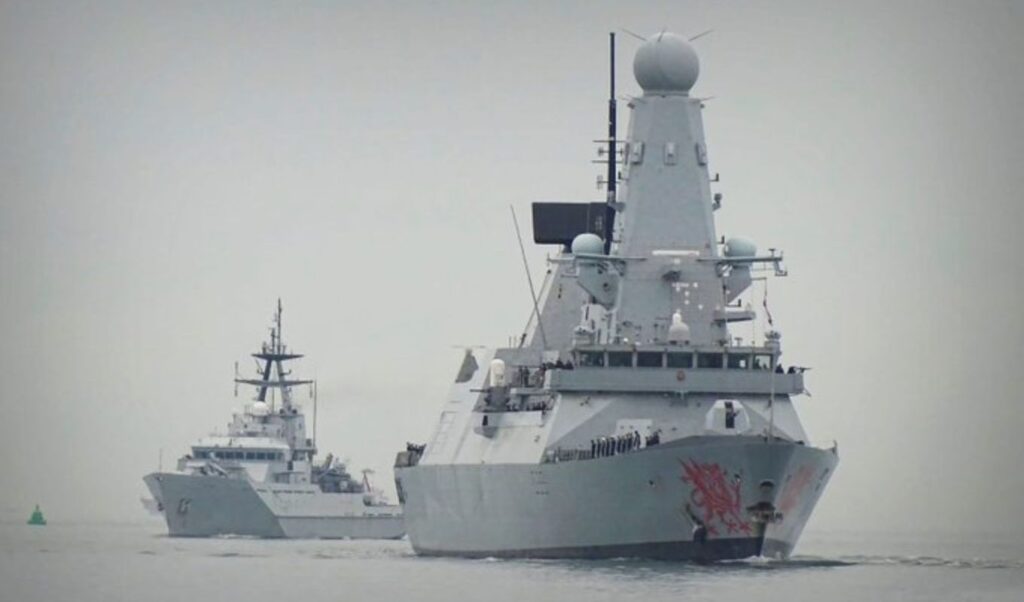
How Britain decided to send helicopters and the destroyer HMS Dragon – The role of European allies
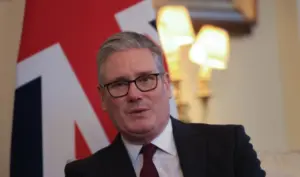
Thus, late Tuesday afternoon, he was led to announce on “X” that the United Kingdom is sending aid to Cyprus which includes deploying helicopters with anti-drone capabilities, as well as the deployment of the destroyer HMS Dragon in the region. The British Prime Minister emphasized in his announcement that “the United Kingdom is fully committed to the security of Cyprus and the British military personnel stationed there.” The climate is now very tense and in Cyprus intense concern has begun about the presence of British bases on the island.
Beyond this, since Tuesday Greece’s presence in Cyprus has been significant with the deployment of military forces. Two pairs of Greek F-16 fighter jets are already located at the “Andreas Papandreou” base in Paphos, while today the arrival of the frigates “Kimon” and “Psara” is expected to strengthen the naval presence.
The Greek Defense Minister, Nikos Dendias, during his meeting with the President of the Republic of Cyprus, Nikos Christodoulides, made it clear that Greece remains totally and absolutely at the disposal of Cypriots for whatever is required. France is strengthening the island’s defense, while there was also a positive response for providing assistance from Germany and Italy. It is worth noting that this European mobilization seems to have influenced the change in Britain’s stance.
Controlled situation in Cyprus according to diplomatic sources
The picture, however, in Cyprus, as conveyed by diplomatic sources to parapolitika.gr, is one of a now controlled situation. The same sources also evaluate as particularly significant the stance taken by Iran’s Embassy in Nicosia, which with its official announcement confirmed the “chronically cordial and constructive relations of the two countries, which are based on mutual respect and the absence of tensions,” while it is noted that “Iran firmly believes that differences and misunderstandings should be resolved through dialogue and diplomacy.”
Meanwhile, Turkey’s Foreign Minister Hakan Fidan appeared reassuring regarding Cyprus’s targeting on Tuesday in Ankara. Speaking to journalists, he said characteristically: “I do not consider that there is particularly great danger for ‘Northern Cyprus’ at this moment. And in the South I estimate that the danger is limited, very limited.” However, the stance that Hakan Fidan maintained toward Iran is also of interest, expressing his concern about the retaliation they are unleashing against American bases in the Gulf and other Arab countries, increasing, as he said, the risk of the conflict turning into an escalation of regional security. On Tuesday, Foreign Minister Georgios Gerapetritis had telephone communication with his Turkish counterpart and, as announced, the subject of their conversation was developments in the Middle East.