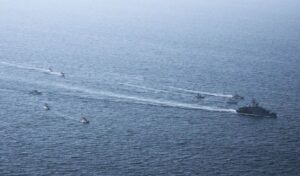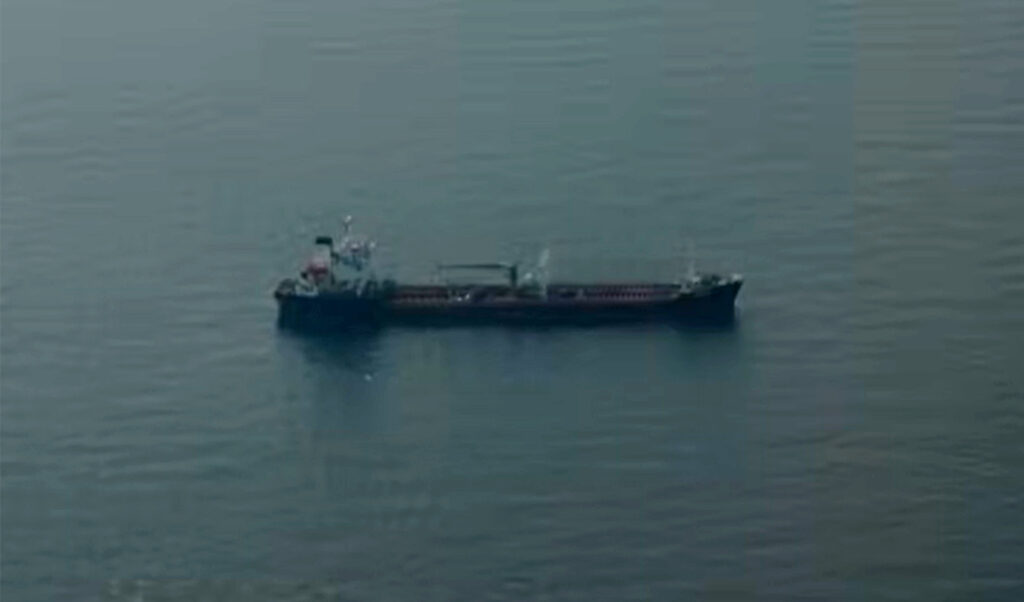
It is always the sea that commands global trade and determines economic trends on the planet, and the Strait of Hormuz, which leads from the Persian Gulf to the Gulf of Oman, is no exception, as Goldman Sachs noted. Its forecast for what will happen to natural gas prices if the strait remains closed for one month paints a grim picture, with the bank predicting a 130% increase in natural gas prices in Europe. Indeed, we’ve already seen a preview of what’s to come. Specifically, barchart.com reported that prices surged by 42.4% and exceeded 45 euros per megawatt hour (45.460), while later on Monday afternoon, March 2, it touched 47 euros. This signaled a 50% increase in European natural gas futures contracts. Additionally, it marked a yearly high. You don’t need to be a specialist analyst to understand that LNG is now transported to Europe with much greater difficulty. When one considers that LNG appears to be the only option within the framework of de-Russification, then QatarEnergy’s order to suspend production at the Ras Laffan and Mesaieed complexes, facilities that represent about 20% of global LNG supply, following a drone attack on a water tank at the facilities, constitutes a massive blow to the “Old Continent.”
Read: Qatar: QatarEnergy suspends LNG production – 50% surge in natural gas
LNG: 15% under threat
The price of natural gas, which has been on an upward trajectory over the past four years anyway, faces further threats, as Qatar provides Europe with 15% of the LNG it sources globally. Thus, competition for cargo loads is intensifying and there is aggressiveness in terms of international bidding. Since the Strait of Hormuz closed, several LNG tankers could not pass through, so the natural gas remains in the Middle East with producers who prefer to give it away rather than sell it at lower prices.
Europe once again, after realizing the lack of nuclear power, finds itself in a position that shows how vulnerable it is, as well as its lack of strength. The percentage of stored natural gas is just over 30%, about 9% less than last year. It’s not just that this number is a bad indicator regarding the beneficial consequences of an external shock, but also that the energy risk for a continent that relies on imports is particularly heightened. The next winter may potentially be catastrophic because, as the songwriter wrote in the 1983 song “This Winter,” “If we get through this winter, we’ll be clear for another ten years.”