With the US and Israel operation against Iran in full swing, the critical objective is to prevent Tehran from acquiring nuclear weapons. Consequently, beyond the extensive strikes already carried out against Iran, Washington’s priority in this operation is to hit the strategic nodes that determine Iran’s capability to produce nuclear weapons. If these targets collapse, Iran loses the ability to produce nuclear warheads for the next decade, according to estimates.
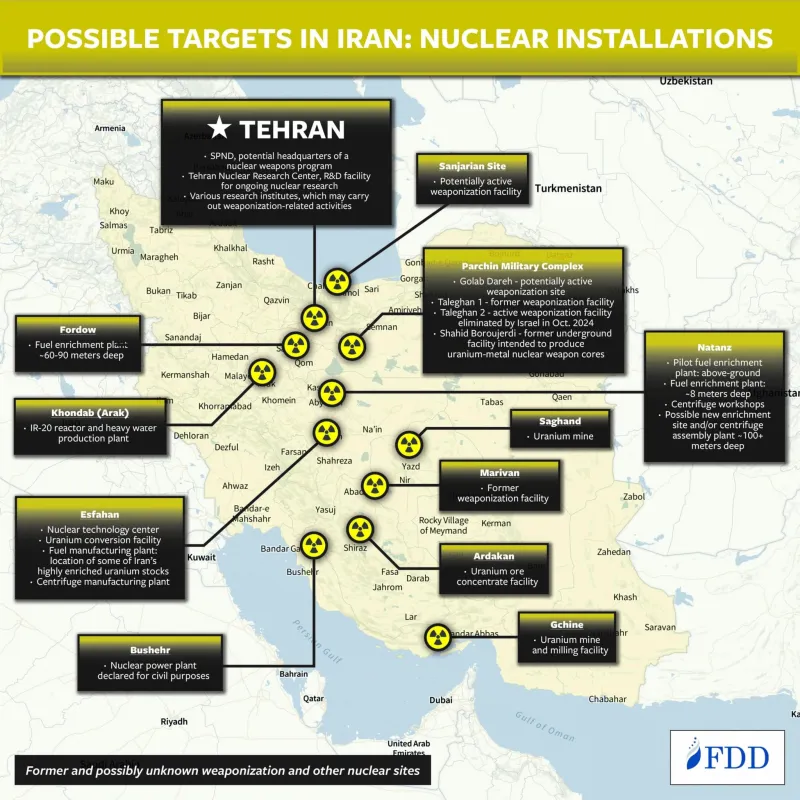
1. Natanz: The uranium “factory”
What it is: Iran’s largest uranium enrichment facility.
Why it’s a critical target: In Natanz’s underground halls, thousands of centrifuges (IR-6 and IR-9) spin to separate uranium isotopes. Without Natanz, Iran cannot produce uranium on an industrial scale.
The challenge: While the older halls are located 8 meters underground, Washington’s interest now focuses on the new, massive underground facility beneath the Zagros Mountains, at depths reaching 100 meters. Destroying this “iron fortress” requires weapons capable of penetrating rock layers that were considered impenetrable until recently. Washington’s goal is to destroy the equipment in such a way that reconstruction would take years.
2. Fordow: The fortress inside the mountain
What it is: The most secretive and fortified enrichment facility, built deep inside a granite mountain near the city of Qom.
Why it’s a critical target: At Fordow, uranium enrichment reaches the critical level of 90% – the percentage considered suitable for nuclear warheads. There, the nuclear program touches the so-called “threshold.”
It should be noted that enrichment is not a linear process. The technical leap from 20% to 90% is significantly smaller than that of the initial stages. 90% is internationally considered the “point of no return,” as from there the transition to weapons-grade material requires minimal additional time.
The challenge: Conventional bombs cannot effectively strike it. Washington deploys B-2 Spirit bombers and 14-ton GBU-57 bunker buster bombs, aiming for structural collapse of the tunnels and definitive neutralization of the facilities.
3. Isfahan: The “brain” of the process
What it is: The Uranium Conversion Facility.
Why it’s a critical target: At Isfahan, uranium is converted from solid to gas (uranium hexafluoride), the only form that centrifuges can process. Without Isfahan, the production chain is broken at its root.
The challenge: The target includes chemical installations and conversion laboratories, essential for producing the raw material that feeds enrichment facilities throughout the country.
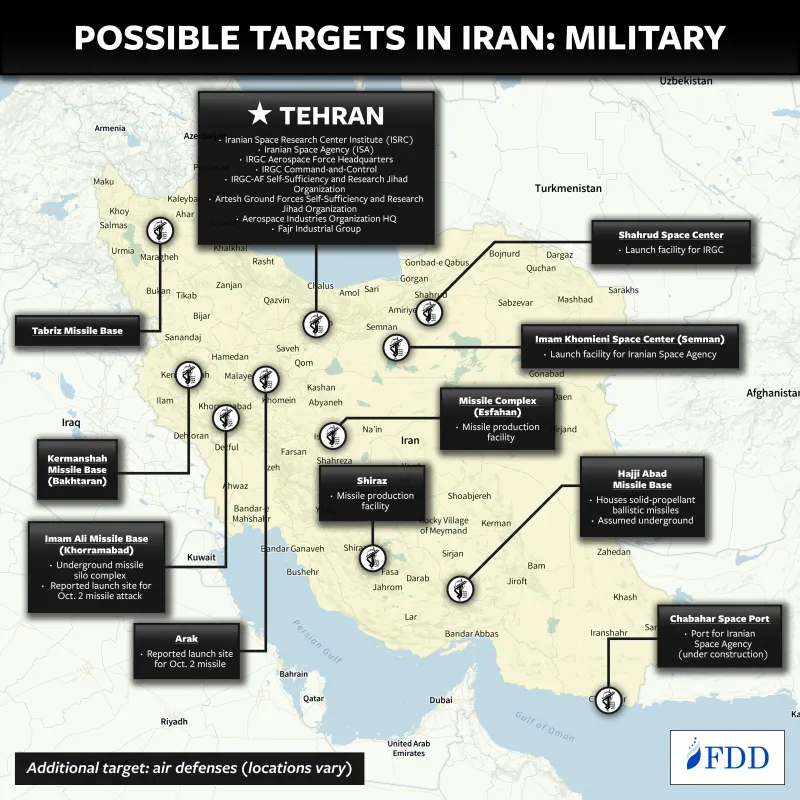
The “cherry on top” of terror: Arak
There is also a fourth target considered the “back door” of the program: the heavy water reactor at Arak. It produces plutonium, the second pathway to nuclear warhead construction. Its destruction would close any possible alternative route to nuclear weapons, drastically limiting the program’s recovery capability.
Why now? The race against time
The decision for strikes was made when intelligence services estimated that Iran has essentially zeroed the so-called “Breakout Time.” The term describes the time required to produce sufficient nuclear material for bomb construction.
With enrichment having reached 90% at Fordow, Tehran reportedly stands just weeks away from producing weapons-grade material. Washington chose to act before Iran acquires full deterrent capability, attempting to reverse its nuclear timeline.
The coming hours will show whether US “smart” weapons can penetrate granite and steel – and stop Tehran’s nuclear clock.