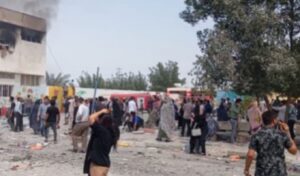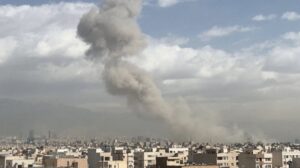
Everything seemed ready and ultimately Israel, together with the United States, chose to strike Iran, with both sides officially implementing a policy of regime change through weapons, as negotiations, with the most recent round of talks in Geneva, did not produce the results the American side desired. The “step back” from Tehran, which was referenced yesterday, was not sufficient to prevent “pressing the button” and ultimately launching Operation “Roar of the Lion” (as Israel calls it) or “Operation Epic Fury”.
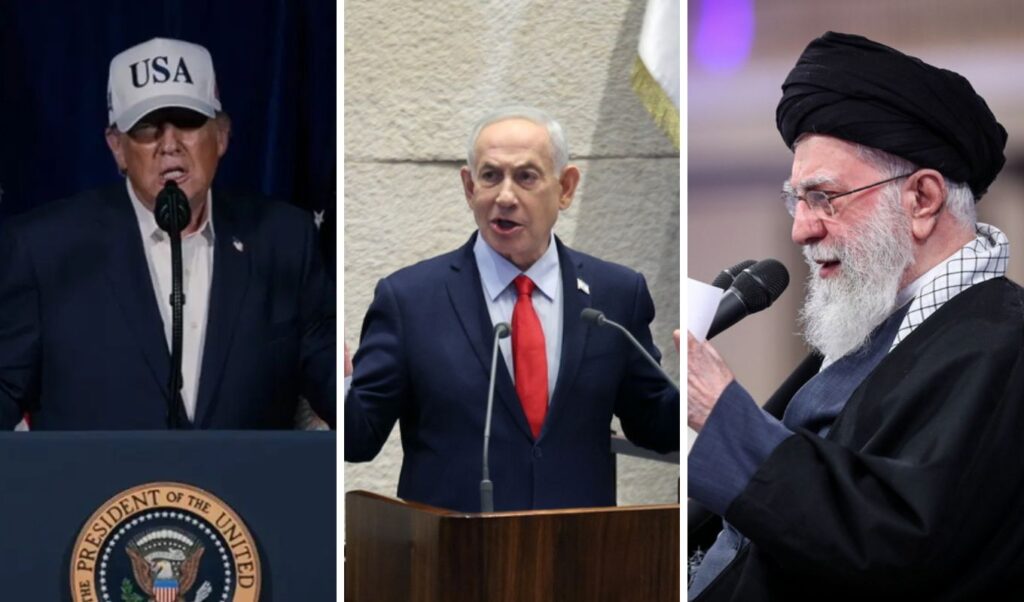
Donald Trump in his address (American media report he is monitoring operations from Mar-a-Lago and his Florida residence) called on the Iranian people to “take matters into their own hands,” insisting on potential threats even to the American homeland (despite intelligence reports to the contrary), while Benjamin Netanyahu stated that the goal is to “eliminate the existential threat” posed by Iran’s “terrorist regime,” using identical terminology to Trump’s reference today, and to Congress in his State of the Union address Wednesday night, describing the country as the number 1 “sponsor of terrorism.” Netanyahu also made specific references to “segments of the Iranian people” (Persians, Kurds, Azeris, Baluchis) to “shake off the yoke of tyranny and bring about a free and peaceful Iran.”
Israel and US strike Iran: Oman’s foreign minister’s White House visit and the “step back” that proved insufficient
Diplomacy clearly takes a backseat, with what appears to be the final episode being the visit of Oman’s Foreign Minister, Al Busaidi, with American Vice President J.D. Vance, with information from the Gulf state speaking of “significant and unprecedented progress.” However, all this proved to be “empty of content,” as Tehran essentially did not consent to the harsh terms that the US and Israel wanted to impose, namely the substantial limitation of ballistic arsenal, combined with the nullification of uranium enrichment. Iran reportedly went as far as surrendering enriched uranium and resuming inspections, something that in practice proved insufficient to prevent “weapons from taking over the conversation.” At the same time, the American president repeated
The operation, as reported from the Israeli side, was planned months in advance and the goal was, as American media also reported, to strike the regime’s central points in the first wave of attacks, aiming for “surprise.” In any case, Iran already appears ready to strike US allies in the Middle East, with the risk of regional escalation appearing more than visible.
Similarities and differences with the “12-Day War”
A common element with the June operation partially concerns the naming from the Israeli side: “Operation Rising Lion” is now called “Roar of the Lion,” with the connection being made directly to religion, from which Israel apparently seeks to draw legitimacy at the expression level. The Lion of Judah (Hebrew: Aryeh Yehudah) symbolized the tribe of Judah, which was later connected to the Kingdom of Israel and Jewish identity. The lion is primarily associated with strength, kingship, and divine approval — values that the Israeli state projects both through its military stance and through its national narrative. The same tactic is naturally maintained at the diplomatic level, in pursuing the redrawing of the Middle East map, with the backdrop of the “Abraham Accords,” as well as the “Cyrus Accords,” which focus precisely on a new Iran, bringing it back to Israel’s side, as was the case until 1979.
From there, the differences begin: The US has assembled unprecedented force around Iran, for the first time since 2003 and the Iraq war, not limiting itself to specific strikes with bunker buster bombs from the air on Natanz, Fordow and Isfahan, at nuclear facilities. Meanwhile, in the 12-day war, Israel conducted war with Iran, with the US proceeding with the above strike chronologically toward the end of the above operations, on June 22, shortly before the ceasefire on June 24.
Finally, another element of interest relates to domestic American political affairs: neither in June nor now is there an official declaration of war by the US. The reason is that such a move requires Congressional approval, however Trump preempted the move being prepared by Representatives Ro Khanna (Democrat) and Thomas Massie (Republican), who would have brought to a vote in the American legislative body a resolution that would require Congressional approval for any military activity against Iran.