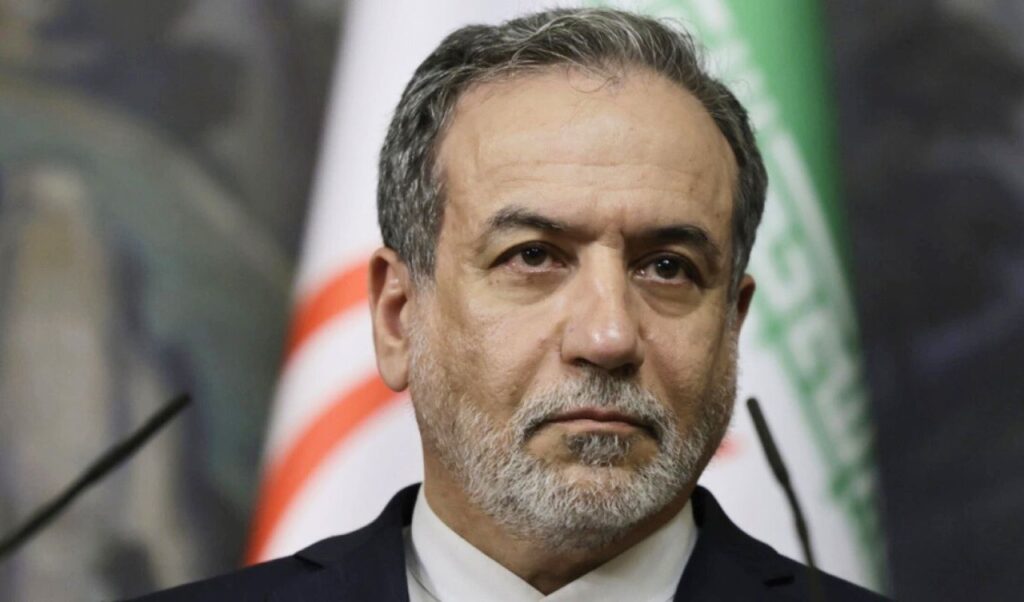
Iran’s Foreign Minister Abbas Araghchi sent a clear message to the United States, demanding Washington abandon its “excessive demands,” one day after talks between the two sides in Geneva. During a phone conversation with Egyptian Foreign Minister Badr Abdelatty, Araghchi discussed the progress of consultations and the conditions that Tehran believes are required to reach an agreement.
“Success in this process requires seriousness and realism from the other side, as well as avoiding any miscalculations and excessive demands,” Abbas Araghchi stated, according to reports about the conversation’s content. The Iranian minister’s statements come in the aftermath of Geneva contacts that failed to produce any agreement, with both sides remaining far apart on critical issues.
What the US demands from Iran
During consultations that lasted until late evening, American envoys Steve Witkoff and Jared Kushner indicated that Iran must destroy its three main nuclear facilities at Fordow, Natanz, and Isfahan, and surrender all remaining enriched uranium stockpiles to the US, according to officials familiar with the contacts. Additionally, they clarified that any new nuclear agreement must be permanent and not include expiration clauses, unlike the agreement reached during Barack Obama’s presidency, which Republicans had consistently characterized as inadequate. Donald Trump had withdrawn the US from that agreement during his first term, reinstating strict sanctions against Tehran.
Iran: Rejected proposal to transfer uranium stockpiles abroad
Iran rejected the proposal to transfer uranium stockpiles abroad. Meanwhile, according to Iranian state media and sources familiar with the talks, it expressed objections both to ending enrichment and to dismantling its nuclear facilities and imposing permanent restrictions on its program.
What Trump mentioned in his Congress speech
Oman’s Foreign Minister and an American official reported that progress has been made and that the two sides are likely to meet again. The Omani diplomat stated that technical-level negotiations will continue next week in Vienna. The strict American demands were formulated after Donald Trump’s speech to Congress, during which he warned that Iran continues to pursue nuclear weapons and ballistic missiles capable of striking the United States, charges that Tehran rejects.
Notably, Trump has threatened military action in case of failure to reach an agreement and has further strengthened US military presence in the region ahead of a potential strike, according to publicly available data and American officials. At least two dozen fighter aircraft crossed the Atlantic from the United States, based on flight tracking data, and are expected to join squadrons already stationed at bases in the Middle East and Europe, including in Israel and Jordan.
“This may be the last chance to reach an agreement”
Meanwhile, an additional destroyer, the USS John Finn, was added to a force of 11 warships already operating in the northern Arabian Sea, Gulf of Oman, and Persian Gulf. These include the aircraft carrier USS Abraham Lincoln, seven more destroyers, and three littoral combat ships. Tehran has warned that it will consider any attack, even of limited scope, as grounds for a generalized response. “This may be the last chance to reach an agreement,” said Saeid Golkar, associate professor at the University of Tennessee at Chattanooga and specialist in Iranian military affairs. “Otherwise, the US will attempt to resolve through military means what couldn’t be achieved through diplomacy,” he added.
Iran insists on its right to enrich uranium
Iran insists on its right to enrich uranium, however it appears to be considering proposals that could appease Washington. These include reducing enrichment levels from 60% to 1.5%, temporarily suspending enrichment for certain years, or processing uranium through an Arab-Iranian joint venture based in Iran. These discussions remain theoretical, as the country’s nuclear program sustained extensive damage during a 12-day conflict with Israel and the US last June.
The United States is pushing for zero enrichment, however, according to American officials, their negotiating team might consider the possibility of restarting a nuclear reactor in Tehran, which would allow limited enrichment of Iranian uranium for producing medical isotopes and equipment.