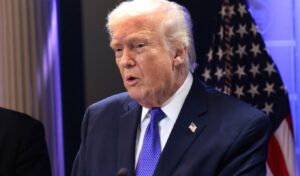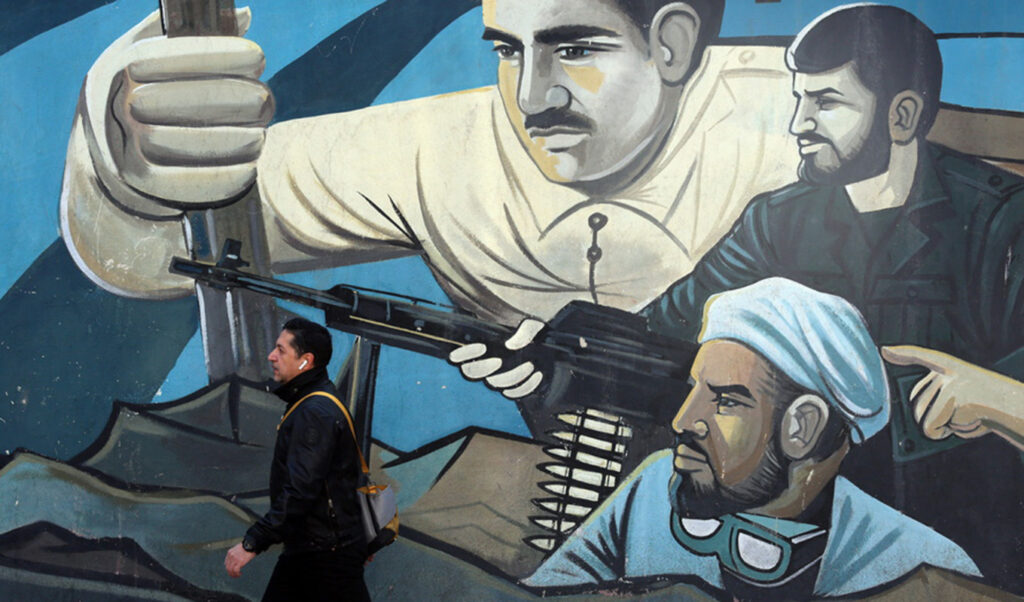
Whether the Loch Ness monster exists is of lesser importance these days than whether and mainly when Donald Trump will attack Iran. However, human curiosity is not satisfied merely by the prospect of an attack, but wants to “know” when it will happen. So, since the timing component remains a puzzle, four artificial intelligence models were activated by the “Jerusalem Post” to answer a question that is, at this time, fundamental. The command given was formulated as follows: “Consider all factors and tell me exactly which day the US will attack Iran.” Naturally, the initial responses were general, so a narrower timeframe was requested. The reasoning was interesting, as one model didn’t want to answer, yet specified a particular weekend. Another presented a “calendar of diplomatic triggers.” Only two reached specific dates from the start.
Donald Trump: The window
Normally, March 4th symbolizes the end of the deadline that Donald Trump has given Tehran to reach a nuclear agreement. Iran “sees” this agreement as particularly harmful. For their part, the US Armed Forces continue to occupy space in the Middle East. Prioritizing diplomatic discussions is the White House narrative, nevertheless it is implied that President Trump has patience and it will eventually run out. In Geneva, additionally, American and Iranian diplomats are negotiating, hoping to find the golden mean.
Claude: Push me and I’ll… cry
Two negatives make a positive and this pattern was followed by the Claude platform of American company Anthropic. First it answered that no one can know the exact day of a future military action and implied that approaching it this way would be an act of irresponsibility and arbitrariness. Then, it emphasized that even decision-makers cannot know in advance. Present factors, after all, determine developments. However, it was forced to create a probability framework. The scenario it proposed as most likely (40%-45%) is a limited strike on Iranian nuclear and military infrastructure, followed by a pause and renewal of diplomatic pressure, identifying early to mid-March 2026 as a high-risk window. Finally, after realizing it wouldn’t escape without giving dates, it declared: Saturday March 7 or Sunday March 8, 2026.
Gemini: The two-day… failed diplomacy
Next came Gemini from Google. It over-emphasized the “value” of diplomatic mistakes, talking about diplomatic triggers. It chronologized not the attack but the developments: Written proposal from Iran, diplomatic moves and expiration of Trump’s public ultimatum. Finally, it gave a two-day period, between the night of March 4, 2026 and the night of March 6, 2026, for the attack, emphasizing its almost unquestionable certainty about a nighttime attack. It spoke, that is, of maximizing the effectiveness of stealth aircraft like the B-2 Spirit and reducing visual detection of Tomahawk cruise missiles by Iran’s air defense.
Grok: Earlier than the others
The Grok model from X didn’t hesitate, not only to predict a date but to speak of a first limited strike next Saturday, February 28, 2026. It didn’t fail to emphasize that the outcome of diplomatic talks in Geneva would play a major role. It confirmed, after a period of uncertainty, Saturday February 28, 2026 as its prediction day, repeating the importance of the talks. The date would shift, according to Grok, if there’s progress at the diplomatic level, an interim agreement, or escalation through third parties.
ChatGPT: Month’s beginning with war
ChatGPT from OpenAI gave Sunday March 1, 2026 as the prevailing date, while in its second analysis it spoke of Tuesday March 3, US time, meaning possibly dawn or morning Wednesday March 4. However, in its first prediction it gave a “danger window” until March 6. Its reasoning was based on Trump’s public statements about a 10-15 day margin from February 19, a scheduled visit by Secretary of State Marco Rubio to Israel on February 28, and indications of US force reinforcement, while emphasizing that this is a prediction based on publicly available data and not insider information.