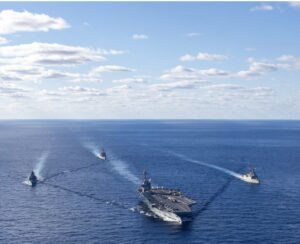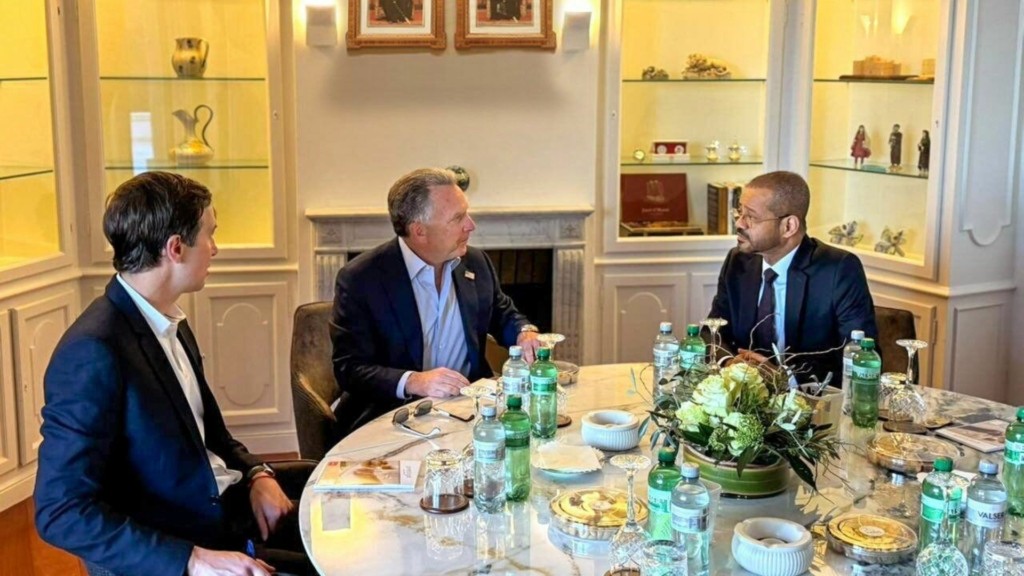
Contradictions, gray areas and underlying terror diplomacy compose the explosive scenario of talks in Geneva where tensions have reached fever pitch as consultations continue between American and Iranian officials regarding the nuclear program. Amid significant US military reinforcement in the Middle East and with the world’s largest aircraft carrier “Gerald Ford” arriving Friday in the Middle East, delegations from Washington and Iran are convening. Iran’s nuclear program issue is not the only factor escalating tensions, as the US had previously supported protests aimed at overthrowing the theocratic regime. The fact that Tehran poses a threat to the Middle East due to uranium enrichment makes an American intervention – either through a high-impact strike with immediate results or a move targeting regime officials to trigger a domino effect for comprehensive change – a real possibility in the coming days.
An Iranian Foreign Ministry spokesperson stated hours ago that “significant proposals were made regarding both the nuclear program and sanctions relief” during the three-hour talks between Tehran and Washington in Geneva. The discussions were “very serious,” the spokesperson told Iranian state television. “Initiatives have been proposed that require consultation with capitals,” he said, implying the need for talks to progress beyond this third round.
Geneva talks: electrified atmosphere over nuclear program
The critical Geneva talks between the United States and Iran focused on the sensitive issue of uranium enrichment by Tehran and Donald Trump’s ultimatum that Tehran must never acquire nuclear weapons.
At the talks’ opening, American officials said it wasn’t yet clear what Iran’s position was on various issues, while some remained skeptical about whether Iran’s supreme leader, who has the final say, would agree to American terms.
According to the Wall Street Journal, American negotiators made clear that Iran must deactivate its three main nuclear facilities – at Fordow, Natanz and Isfahan – and surrender all remaining enriched uranium to the US.
It remains a puzzle whether Trump will choose a high-impact strike that would deal a severe blow to the theocratic regime or follow a Venezuela-style policy – similar to the Nicolás Maduro case – opting for a surprise move to remove officials, which isn’t ruled out given the underlying American intention for regime change, especially since Washington had expressed support for the unprecedented intensity protests in Iran.
According to military assessments cited by analysts, attacks could now happen “at any moment.” American preparations suggest the military operation could be both immediate and long-term.
Regarding other Middle Eastern countries’ involvement, since January, Saudi Arabia, Qatar and Oman, along with Turkey and Egypt, have engaged in intense diplomatic efforts to pull Washington and Tehran back from confrontation. This isn’t solely due to their good relations with Tehran, but because they realize they would be in the front line of Iranian retaliation and consequences following any collapse of the Iranian regime.
Similarities between Iran and Venezuela
Reasonably, international analysts note similarities between the Venezuelan and Iranian regimes – two oil-producing countries standing as US adversaries – leading many observers to wonder if Iran’s supreme leader, Ayatollah Ali Khamenei, could face a similar fate to Venezuela’s Nicolás Maduro.
Iran, like Venezuela, has long faced serious American sanctions, and the US president imposed more sanctions on the regime this week, intensifying the “maximum pressure” campaign. The American government has moved more military assets to the Middle East, including two aircraft carriers.
The next 24 hours will determine US-Iran relations and reveal how successful the Geneva processes were in reducing Iran’s nuclear program.