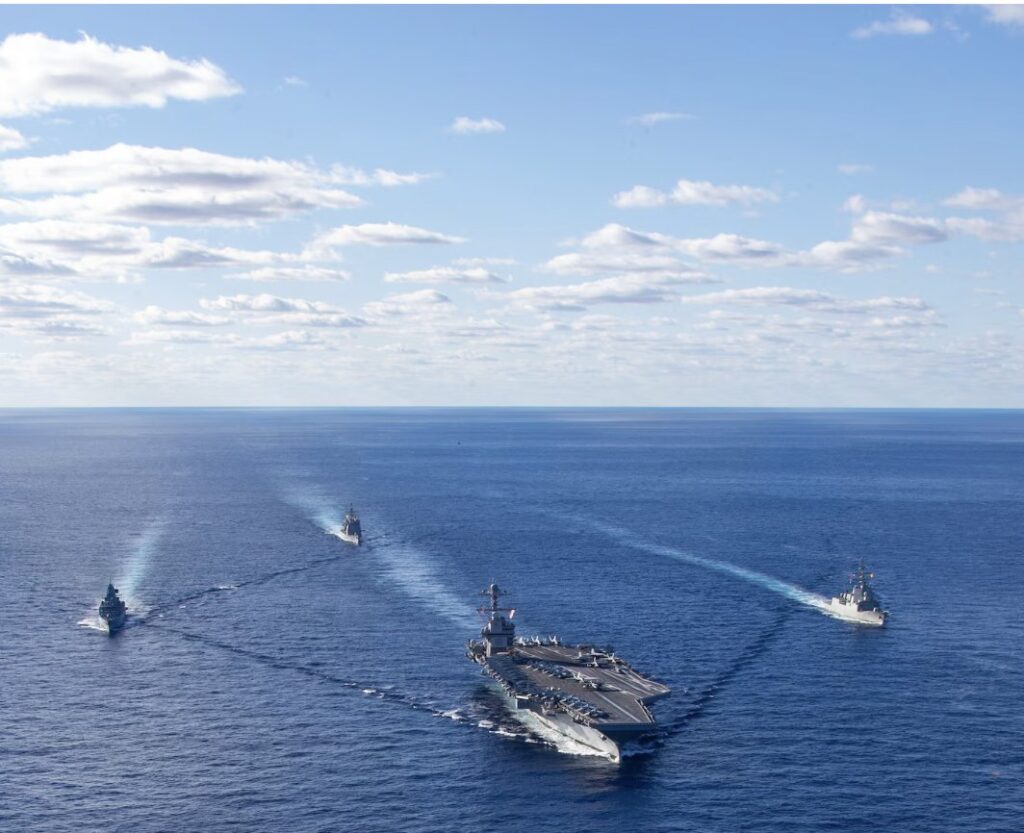
The USS Gerald R. Ford, the largest and most advanced aircraft carrier of the US Navy, departed Thursday from Souda Bay and is heading toward the eastern Mediterranean, with officials expecting its arrival off the Israeli coast within 24 hours, according to Israeli media outlet Israel Hayom. This development comes as negotiations are taking place today in Geneva, focusing on Iran’s nuclear program.
The Gerald R. Ford had been stationed at Souda Bay since Monday for resupply operations. The Gerald R. Ford has been deployed from Virginia since June, completing 8 months of continuous sea operations (previously executing missions under US Southern Command in the Atlantic Ocean), and if it continues its naval presence until mid-April, it would represent something unprecedented since the Vietnam War.
The USS Gerald R. Ford has departed the port in Crete and is heading toward the eastern Mediterranean pic.twitter.com/Iz27jnaWEN
— Faytuks Network (@FaytuksNetwork) February 26, 2026
Donald Trump ordered the deployment of the aircraft carrier to the region this month as part of a massive military buildup, while considering the possibility of taking military action against Iran.
Washington has more than twelve warships in the Middle East: one aircraft carrier, the USS Abraham Lincoln, nine destroyers and three other warships are in the deployed force, according to available information.
It is rare to have two US aircraft carriers, which carry dozens of fighter jets and are crewed by thousands of sailors, in the Middle East, as Al Arabiya notes.
The largest US aircraft carrier: Profile of the USS Gerald R. Ford
The USS Gerald R. Ford (CVN 78) is the newest nuclear-powered aircraft carrier of the US Navy, entering service in 2017. It is capable of operating for nearly 20 years without fuel while crew supplies are substantial.
4,500 personnel serve on the USS Gerald R. Ford (CVN 78), which is 333 meters long and 78 meters wide and can sail at 30 knots. The strike force it carries is divided into six aircraft squadrons totaling 75 aircraft.
-F-35C, the naval variant of the stealth aircraft with reinforced landing gear that withstands deck impact.
-F/A-18E/F Super Hornets, the reliable aviation “tool” the US uses for strike operations.
-E-2D Advanced Hawkeye, the flying “eyes” of the fleet.
-EA-18G Growlers for electronic warfare and enemy air defense suppression.
Besides servicing the aircraft carrier and escort security units, Souda Bay air base has recently been welcoming and bidding farewell to numerous American aircraft, from fighters to flying tankers and airborne radar systems gathering at Middle Eastern bases.