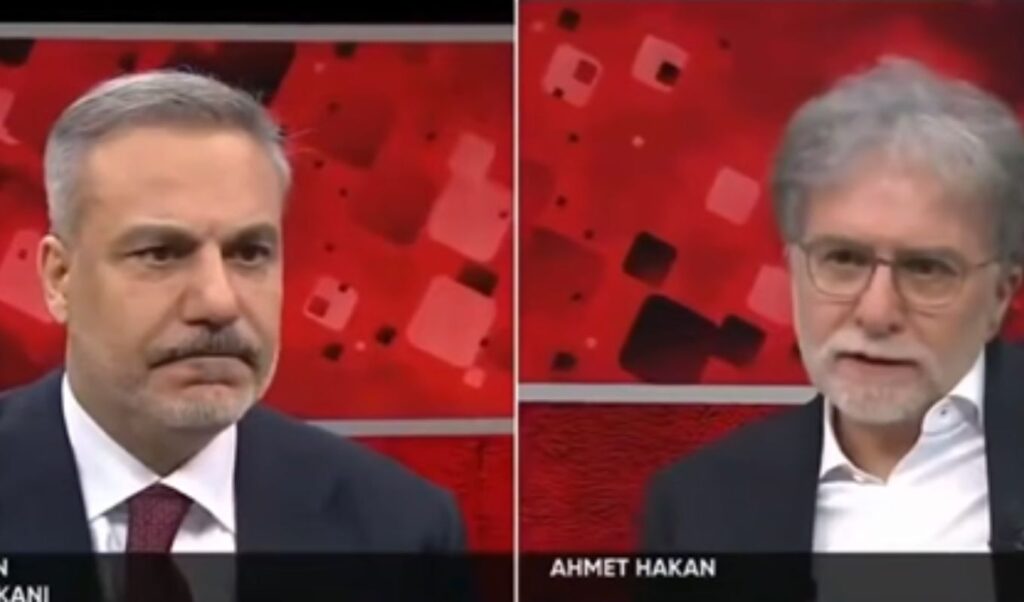
Hakan Fidan “froze” during his appearance on a television show after an unexpected question from a journalist. Seven seconds of absolute silence “fell” on the TV set, with Turkey’s foreign minister taking his time to respond to the evening’s most “hot” question.
Read: Strong response from Greek FM to Fidan-Lavrov: Greece will not abandon international law values
The question that left Fidan speechless
Specifically, journalist Ahmet Hakan brought up the issue of nuclear weapons acquisition by Turkey. At that moment, the head of Turkish diplomacy chose the tactic of… silence instead of answering the journalist’s question.
The discussion, which until that point concerned the progress of the defense industry, took an unexpected turn. Fidan, instead of resorting to a standard diplomatic denial or reassuring the international community, simply stared at his interviewer, maintaining an inscrutable smile that intensified the awkwardness on set.
Even when given the option to respond with “no comment,” he did not react, forcing the presenter to hastily move past the topic to ease the tension.
“Silence equals admission”
However, this refusal to take a position triggered comments on social media, with phrases like “message received” and “silence equals admission” dominating posts by Turkish users, giving their own dimension to the country’s foreign policy.
According to the Israeli newspaper Maariv, this stance cannot be considered coincidental. The publication notes that Fidan’s silence, following the pressing questions, shows Ankara’s intention to keep its cards close to its chest for the region. “There was no denial or any diplomatic evasion. Diplomats consider this stance as an indirect deterrent message,” the newspaper notes, estimating that the discussion about strengthening Turkey’s strategic power seems to be gaining ground domestically.
Fidan’s choice not to close any doors, letting the image speak instead of him, is already fueling analyses about whether Turkey is preparing the ground for a new, more aggressive direction in its defense programs.