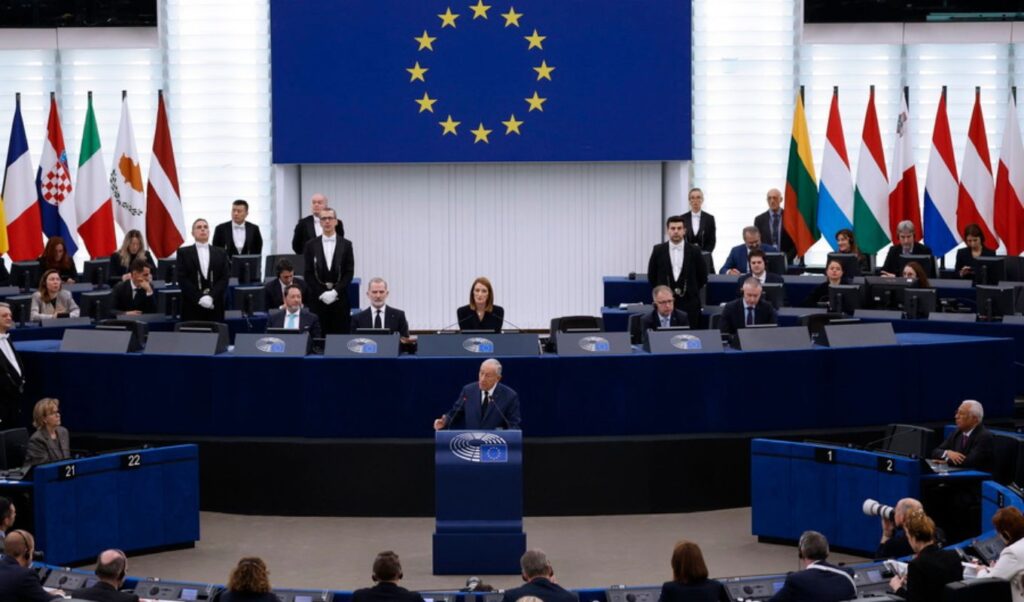
The trade agreement that failed to materialize between the European Parliament and the US in the trade sector certainly has a disruptive character based on the original schedule. The delay is certainly not welcome news, as Washington was expecting the agreement to be reached. The failure to achieve this will likely be attributed to the European Union, as the progress made toward implementing the agreement that had been outlined by Donald Trump and Ursula von der Leyen at the end of last July in Turnberry, Scotland is considered slow. However, the negotiations, according to various sources cited by Politico, are not over but will continue until next week. Moreover, the committee vote had been scheduled for February 24 and the final plenary vote for March.
The decision that needed to be made was about eliminating tariffs on US industrial products, but no unanimity was reached. The same pattern emerged regarding the duration of the clause that would limit the implementation of proposals from 18 to 36 months. There were also different positions on the pending withdrawal of tariff concessions, as the US insisted and failed to reach a compromise with the European Union regarding the 50% tariff they have imposed on steel. Additionally, an issue has emerged, mainly from the liberal Renew group and the Social Democrats, concerning the safeguarding of the agreement in case Donald Trump continues, after a break, to push for the conquest of Greenland. Primarily, they want suspension clauses introduced in the legislation that would allow for the cancellation of the agreement. Meanwhile, the European People’s Party is pushing for the signing, as EU leaders have made appeals. However, this particular development further delays the start of negotiations with the capitals of EU member states and the European Commission.