Against the backdrop of escalating tensions, talks between the US and Iran are set to take place on Friday, with a change in location being noted, as Oman prepares to host them instead of Turkey, as was initially announced. This was revealed by Israeli-American journalist Barak Ravid, who works with Axios and CNN, citing an “Arab source.”
According to him, Donald Trump’s administration accepted the Iranian request to move the talks to the Sultanate of Oman. The participation of Arab and other Muslim states in the talks remains under discussion, alongside limitations on the agenda topics. The White House declined to comment on the matter.
Trump: “There will be more than one meeting with Iran”
Earlier, US President Donald Trump confirmed that the United States is in active negotiation with Iran, expressing hope for achieving an agreement that would prevent a generalized military conflict, as reported by Reuters. “They are in negotiations. They want to do something and we’ll see if something happens. They had the opportunity to do something a little while ago, but it didn’t work out. And we did an overnight negotiation, I don’t think they want that to happen again, but they want to negotiate, we’re negotiating with them right now, yes,” Trump told reporters at the White House on Tuesday evening.
When asked where the meeting would take place, Trump said he couldn’t reveal the location, before adding “but actually there will be more than one meeting.”
Trump has warned in other statements that “if we don’t reach an agreement, very bad things will happen,” referring to the massive American naval force already deployed in the region. Iran was also pushing for last-minute changes to the scheduled nuclear negotiations with the United States.
According to two sources cited by Axios, Iran requested to move the venue from Istanbul to Oman and make it bilateral with the US, without the participation of observer countries such as several Arab and Muslim nations. It should be noted that the relevant announcements about the talks in Turkey were made by Steve Witkoff, Trump’s envoy, as well as Iranian Foreign Minister Abbas Araghchi. Senior officials, possibly foreign ministers, from Qatar, Egypt, Saudi Arabia, Oman and Turkey are expected to participate in the talks, the Jerusalem Post reported, citing its own sources. Trump’s advisor and son-in-law, Jared Kushner, is also expected to attend, according to the Israeli outlet. “It remains to be seen whether the United States is prepared to engage in serious, results-oriented negotiations,” a source commented.
According to the Israeli media outlet, Iran told mediators it was ready to discuss the nuclear issue and was still willing to consider compromises. Additionally, according to a source familiar with details cited by the same outlet, the Islamic Republic appeared willing to discuss the issue of ballistic missiles and its proxies in later talks.
According to information from Israeli media, Iran believes that achieving a nuclear agreement would lead Trump to abandon the idea of war. If a nuclear agreement is reached, it is estimated that this would likely prevent Israel from carrying out attacks against Iran’s missile storage facilities. However, in Israel and the US, the assessment is that the chances of reaching an agreement with the Islamic Republic are minimal to nonexistent.
Witkoff visits Israel before Iran talks
US Special Envoy Steve Witkoff met with Prime Minister Benjamin Netanyahu in Jerusalem on Tuesday, after arriving ahead of the scheduled discussions to be held Friday in Constantinople, where the US and Iran will seek a way to de-escalate tensions.
Netanyahu told Witkoff that “Iran has repeatedly proven that it is not reliable when it comes to honoring its commitments,” according to a statement from the Prime Minister’s office.
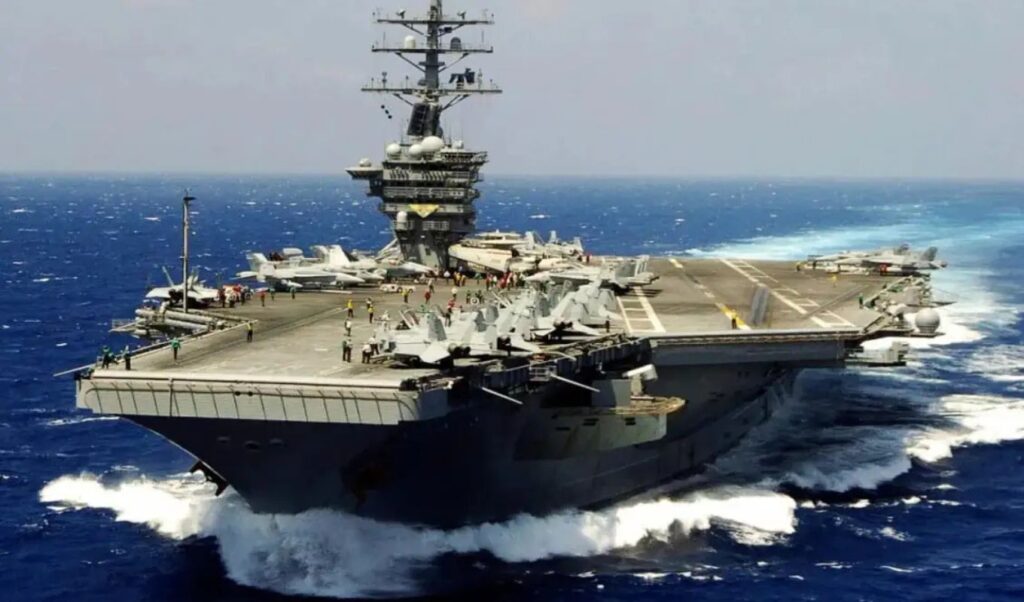
In any case, the change of venue and agenda for the talks comes at a time of heightened tension in the Middle East, as the US strengthens its military presence in the region. On Tuesday, the US military shot down an Iranian drone that, according to its announcement, approached “aggressively” the aircraft carrier Abraham Lincoln in the Arabian Sea, in an incident first reported by Reuters.
The Iranian drone incident
Meanwhile, hours later, Iranian speedboats threatened to board a US-flagged tanker in the Strait of Hormuz, in a particularly tense situation ahead of the scheduled diplomatic contacts between Washington and Tehran.
According to a US Central Command (CENTCOM) spokesperson, the incident occurred on Tuesday, when an Iranian drone approached the USS Abraham Lincoln aircraft carrier, which was sailing in international waters of the Arabian Sea, about 500 miles from Iran’s southern coasts. As Captain Tim Hawkins reported, the unmanned aircraft continued heading toward the ship despite de-escalation measures taken by US forces.
For security reasons, an F-35C fighter aircraft operating from the carrier shot down the drone, with no injuries or damage to US personnel or equipment.
Iran’s version of the incident
On the same day, Iran’s state news agency Tasnim reported that the Revolutionary Guards lost contact with a drone conducting a “reconnaissance, surveillance and recording” mission over international waters of the Arabian Sea. According to an Iranian source, the drone had successfully transmitted its material to the operations center before the signal was lost, while the causes of the loss are being investigated.
Hours after the drone incident, two Iranian speedboats approached the chemical tanker M/V Stena Imperative, under US management and flag, while sailing in international waters in the Strait of Hormuz. According to the US, the boats made repeated close and high-speed passes, and during one of them threatened via radio that they would board and seize the ship. At the same time, an Iranian Mohajer-type drone was flying over the area.
US military forces intervened immediately, with the destroyer USS McFaul escorting the tanker out of the area, supported by US Air Force aviation assets. The situation de-escalated after the intervention.
The CENTCOM spokesperson characterized Iran’s behavior as “unprofessional and aggressive,” emphasizing that it increases the risk of miscalculations in one of the world’s most critical maritime routes.